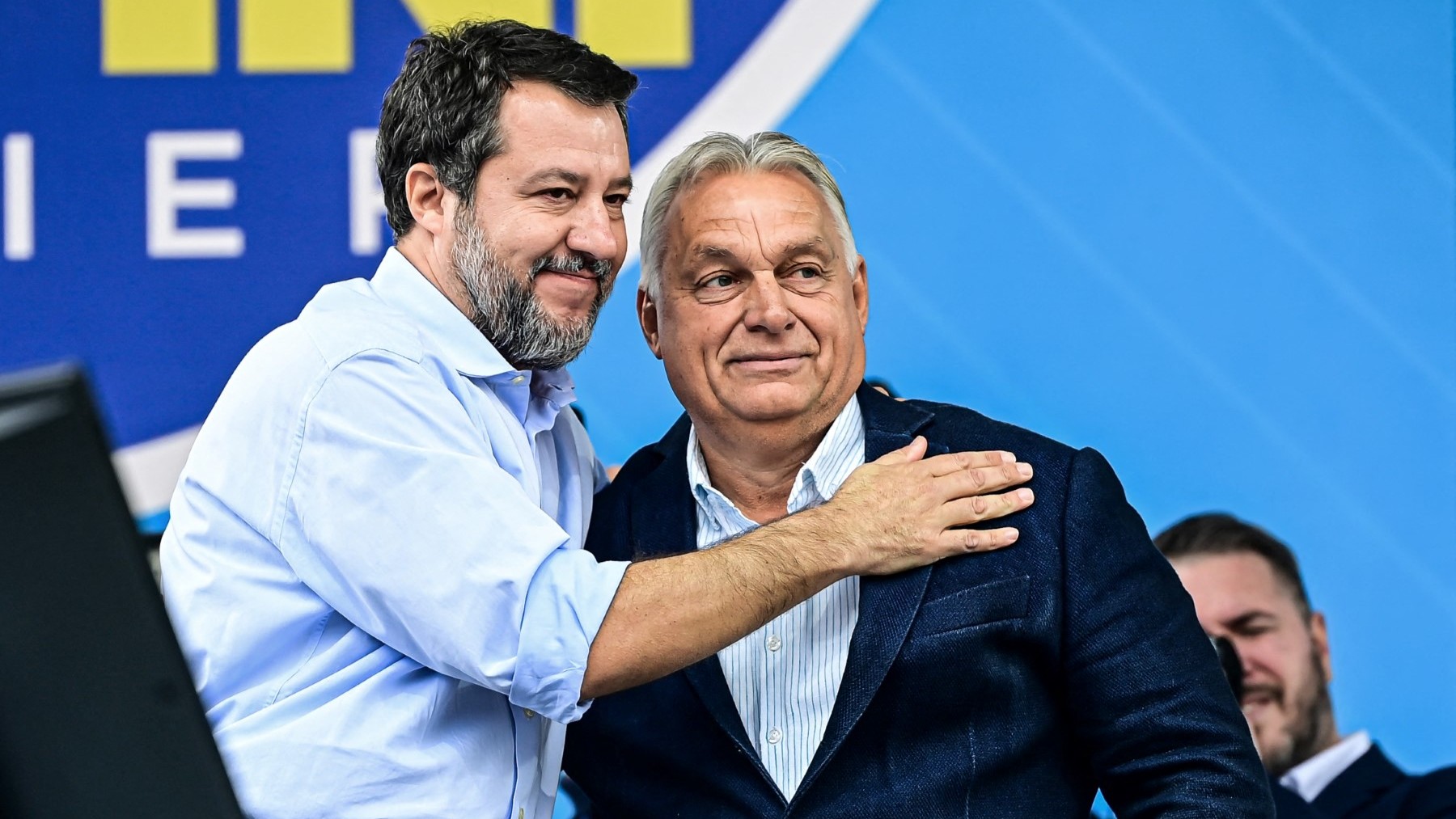
Italian Deputy PM Matteo Salvini and Hungarian PM Viktor Orbán
Photo: Piero Cruciatti / AFP
Italy’s deputy prime minister, Matteo Salvini (Lega/PfE) has publicly stood by Budapest’s move to withdraw from the International Criminal Court (ICC) after the Hungarian parliament approved the decision by a wide margin on Tuesday, April 29th. Supporters of the move cited the politicization of the court that subjected Israeli PM Benjamin Netanyahu to an international arrest warrant for alleged “war crimes.”
While the EU was quick to condemn Hungary for diverging from the mainstream once more, Salvini defended the move as a sovereign choice for all nations to make freely, implying agreement with Budapest that the ICC can no longer be considered objective.
According to a statement posted by the deputy PM on X, Hungary’s decision is
a choice of justice and freedom, of sovereignty and courage.
Scelta di giustizia e libertà, di sovranità e coraggio. pic.twitter.com/Kx45AV2bYQ
— Matteo Salvini (@matteosalvinimi) April 29, 2025
The Hungarian government officially announced its intention to withdraw from the Court earlier this month, right before welcoming PM Netanyahu to Budapest. As an ICC member state, Hungary would have been obliged to arrest the Israeli leader as soon as he set foot in the country. The invitation was therefore considered a major symbolic gesture of Hungary’s support for Israel and its right to self-defense.
Talking before the Hungarian parliament on Tuesday, Foreign Minister Péter Szijjártó argued that the arrest warrant for Netanyahu and his former defense minister clearly proves that the ICC is neither impartial nor apolitical in its operation. He also noted that the ICC made no real effort to correct its mistake, even after facing international backlash, as a follow-up arrest warrant was issued for a Hamas leader who was already dead.
“With this decision, we refuse to be part of a politicized institution that has lost its impartiality and credibility,” Szijjártó declared.
Hungary is out. Today the Parliament voted to withdraw from the International Criminal Court. We won’t be part of a politicised institution. pic.twitter.com/mZTlJyi9oj
— Péter Szijjártó (@FM_Szijjarto) April 29, 2025
On the same day, the European Commission once again condemned Hungary for withdrawing from the ICC and refusing to execute its arrest warrant.
Furthermore, the Commission reminded Hungary that its decision to diverge from the common line on foreign policy violates EU law, although it has so far said nothing about potential consequences.
“Under Article 24(3) of the Treaty on European Union, Hungary is obliged to actively and unreservedly support the Union’s external security policy in a spirit of loyalty and mutual solidarity,” EU Commission spokesman Anouar El Anouni stated.