Protestors hold an effigy of Begoña Gómez and a banner reading “Judge be brave, Begoña to prison”
Oscar DEL POZO / AFP
Spanish prime minister Pedro Sánchez is facing his most serious judicial crisis since taking office. Within days, two separate courts have moved forward with cases involving his wife and his brother, both accused of misusing public funds.
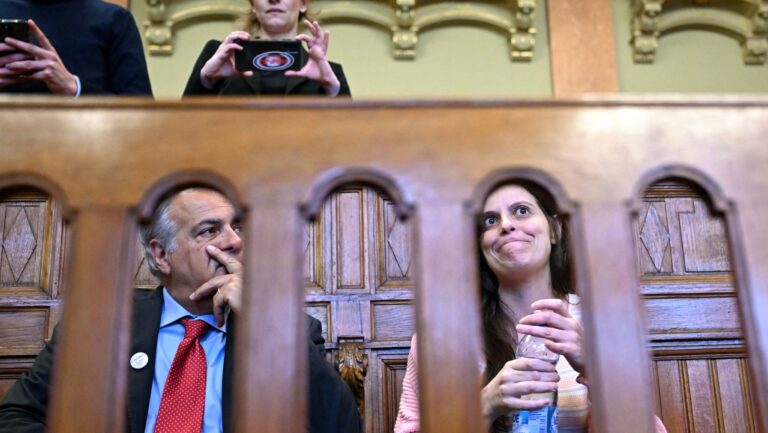
On Saturday, September 27, Sánchez’s wife, Begoña Gómez, will appear before Judge Juan Carlos Peinado to face a jury trial. She is accused of embezzlement of public funds after admitting her government-paid assistant, Cristina Álvarez, occasionally helped with personal tasks unrelated to public duties. She will be tried alongside the Government Delegate in Madrid, Francisco Martín Aguirre.
The judge believes there are “rational, well-founded and solid indications” that a crime has been committed. Gómez and her assistant declined to answer questions from the judge and prosecution, responding only to their lawyers—something the judge said could not be taken as evidence of innocence.
Meanwhile, in Extremadura, the prime minister’s brother, David Sánchez, will be tried alongside ten others, including a senior Socialist Party figure, for influence peddling.
The case centers on a 2017 job allegedly created specifically for David Sánchez to coordinate music schools across the province of Badajoz.
Judges say the job was tailored to “the exclusive personal preferences” of David Sánchez and that evidence—including emails and testimonies—suggested the appointment was predetermined rather than awarded through a fair process.
The judicial investigation revealed that the position was created when Sánchez had no stable employment and had just returned from Milan, where he had been studying. Attempts were even made to modify the job title and legal framing to disguise the ad hoc creation of the post.
The case has already caused controversy after local authorities tried to shield one of the accused politicians with—a move blocked by the regional high court as a “fraud of law.”
The case comes as Spain heads towards general elections in 2027. Opposition parties are demanding explanations from the prime minister, who so far has said little beyond stressing respect for judicial independence, raising questions about a possible early election.