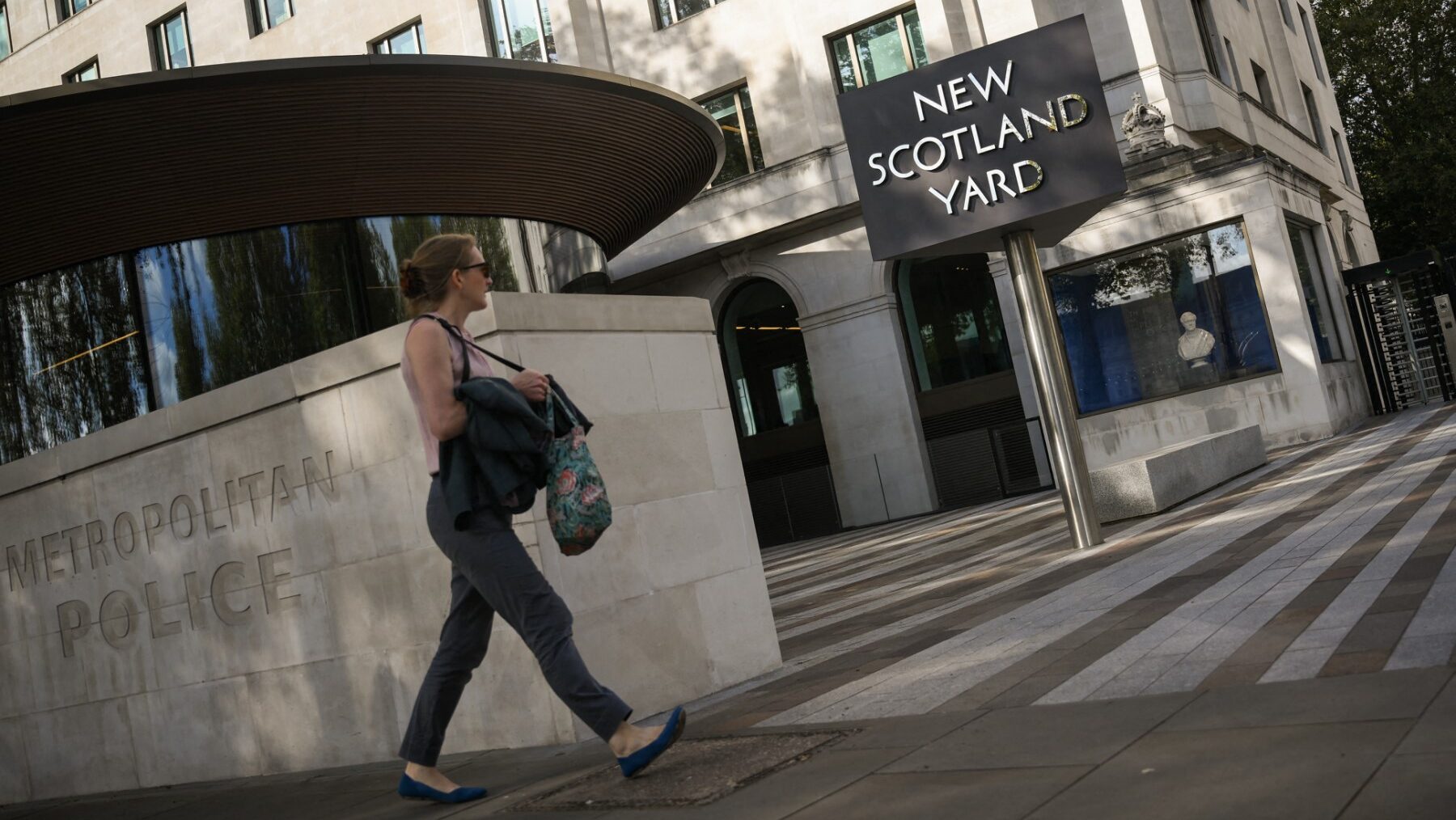
A woman walks past New Scotland Yard headquarters, in Westminster, central London, on September 25, 2023.
Daniel Leal / AFP
Prosecutions for stirring up “racial hatred” through social media posts have reached record levels in Britain, triggering calls for urgent reform of the law amid growing fears for freedom of expression.
Ministry of Justice figures show a dramatic rise over the past decade. In 2015, just one person was convicted of the offence under the Public Order Act. By 2024, that number had surged to 44.
Almost a third of all convictions in the past ten years were recorded last year alone, following nationwide unrest in the wake of the Southport stabbings.
Between 2015 and 2019, 48 people were charged, compared with 93 between 2020 and 2024.
Most convictions have come in the last three years, with the majority relating to online content, though the law also covers leaflets and videos.
Under the Public Order Act, offenders can face up to seven years in prison.
The sharp rise has fuelled concerns that the legislation is being applied too broadly.
Toby Young, founder of the Free Speech Union, said the threshold for these cases must be higher.
Forty-two-year-old Lucy Connolly was freed this week after serving 380 days of a 31-month sentence for a tweet she posted during the unrest following the Southport killings.
In the message, she called for mass deportations and urged people to burn down hotels housing migrants before deleting the post four hours later. By then, the tweet had been viewed over 310,000 times.
Connolly pleaded guilty to intending to stir up racial hatred, though her supporters say there was no realistic prospect of her words inciting violence.
According to Toby Young:
Lucy was convicted for intending to stir up racial hatred, with the prosecution not needing to show that her tweet was likely to do so. Sentencing someone to more than two-and-a-half years in jail for a malign intention is manifestly unjust.
Connolly’s case has become a flashpoint in the debate over free speech.
Richard Tice, Reform UK’s deputy leader, welcomed Connolly’s release, calling her prosecution “two-tier justice.” According to the politician, Connolly “should never have been inside in the first place,” and “we all need to keep the pressure on the Government and [Prime Minister] Keir Starmer as to why she was prosecuted in the first place.”
Campaigners say the issue is not confined to incitement prosecutions. Police data show more than 12,000 arrests were made in 2023 for allegedly offensive online posts under other communications laws—an increase of almost 60% since before the pandemic.