Photo: Photo by Tim Mossholder on Unsplash
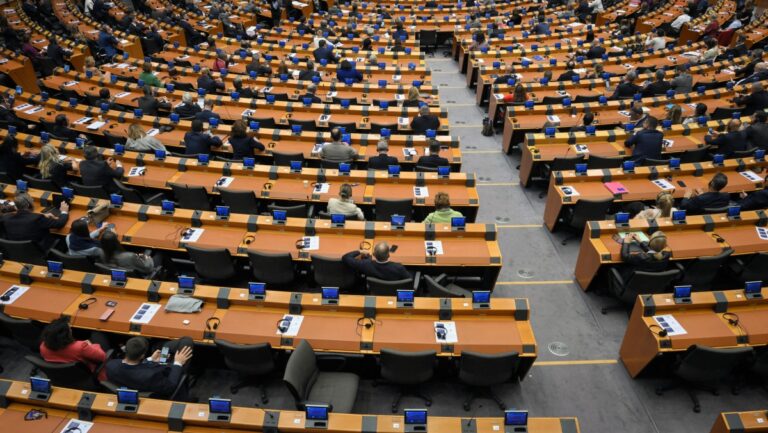
The Spanish government has altered the regulations of the Congress of Deputies into what it calls ‘inclusive language.’
Critics point out that changing the terminology according to political imperatives will also make the wording of public documents and discussion both unwieldy and unclear.
Reports in La Gaceta highlighted this often tortuous task, since Spanish is renowned for being heavily gendered. It’s a language where, like other Romance languages, the masculine form of nouns is also generic, and is used when referring to both men and women.
For example, in Spanish the congress of deputies, the lower house of parliament, is El Congresso de los Diputados, with the last word both the plural masculine form and the form that can encapsulate both men and women.
In its ‘inclusive’ form, though, as adopted by the new regulations, the title has been simplified to Congresso. In other instances in the rule book, the deputies are referred to by the double form, diputados y diputadas. Such usage is becoming increasingly common, despite being linguistically awkward and unnecessary.
In other cases, nouns for president and secretary—gendered in Spanish–—have been changed to the institution’s name to avoid the gendered reference to the person. Other revisions eliminate such newly problematic nouns as “deputy.”
For example, article 31 currently states that “The President will declare the session open and one of the Secretaries will read the Royal Decree of convocation, to the list of elected Deputies and to the contentious-electoral resources filed, with an indication of the elected Deputies who may be affected by their resolution.”
The inclusive version reads quite differently, according to La Gaceta, “The Presidency will declare the session open and one of the people who occupy the Secretariat will read the Royal Decree of convocation, to the list of elected offices and to the contentious-electoral appeals filed, indicating who might be affected by their resolution.”
In the ‘gender-neutral’ version, use of diputados is carefully eschewed.
The changes will touch upon nearly all of the manual’s 207 articles.
‘Inclusive’ language was already bolted onto the regulations late last year, when articles were added following approval by parliament to allow the country’s co-official languages—regional languages such as Catalan and Basque—to be used in Congress. The law also included a mandate to update the entire text to inclusive language, which is now on the verge of obtaining approval from the parliament and final publication.
The Royal Academy of Spanish (RAE) notes
The equality of men and women is not supported by asking citizens (whether they are parliamentarians or not) to make constant syntactic, morphological, and lexical trade-offs to avoid linguistic choices that belong to their natural way of expressing themselves.
Instead, the RAE is in favor of making laws that “lead to equal rights.” In other words, if the goal is equality between men and women, change the law—not the language.
Furthermore, the RAE has said that rather than trying to make bureaucracies more accessible to ordinary people, it suspects that behind the changes in the parliamentary guide lies “the implicit desire to increase the distance, already considerable today, between the official universe and the real world.”