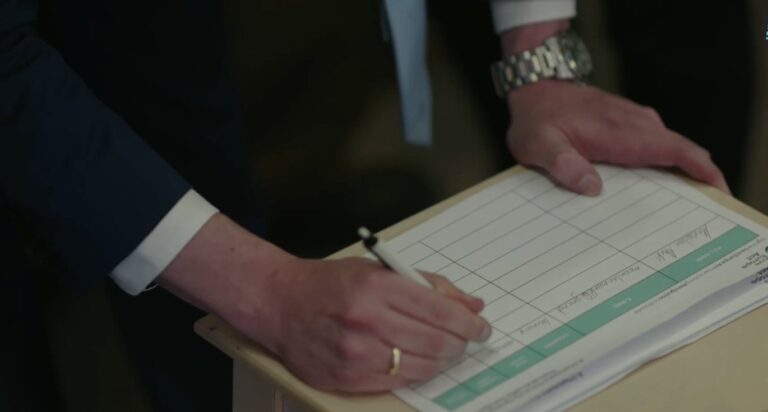
Spanish General Prosecutor Alvaro Garcia Ortiz (L)
Mariscal / POOL / AFP
Spain awoke Monday to a political and judicial storm of rare intensity—and to a major misstep from the opposition. As the Supreme Court began a landmark trial against Attorney General Álvaro García Ortiz for leaking private information about the partner of Madrid’s regional president, Isabel Díaz Ayuso, Valencia’s regional president, Carlos Mazón, suddenly resigned. Hours later, the same court announced the indictment of former Transport Minister José Luis Ábalos and two associates in the so-called mask scandal from the COVID pandemic.
The three stories broke within hours, collapsing into one another and diffusing what should have been a devastating day for Prime Minister Pedro Sánchez. The timing of Mazón’s resignation—authorised by the leadership of the opposition People’s Party (PP)—inadvertently let the government off the hook.
The trial of García Ortiz, the first ever against a sitting attorney general in Spain, began before a panel of seven Supreme Court judges and will continue through mid-November. Prosecutors accuse him of disclosing a private email that revealed tax offenses by Isabel Díaz Ayuso’s partner. The case, they argue, was driven by “government instructions,” an allegation the defendant rejects as politically motivated.
If convicted, García Ortiz faces six years in prison and twelve of disqualification from public office. The defense has asked the court to annul key evidence, claiming investigators violated his rights through unlawful searches.
Regardless of the verdict, the trial marks a major embarrassment for Sánchez’s government, which is already accused of politicizing the justice system.
While the attorney general took his seat in the dock in Madrid, 350 kilometres away, Valencia’s regional president, Carlos Mazón, announced his immediate resignation. Mazón—a prominent conservative figure—cited “personal reflection” and admitted for the first time that he should have canceled his agenda during last year’s deadly flood disaster, which killed over 200 people.
He refused to call early elections and instead urged the right-wing VOX party, the PP’s coalition partner, to help choose a successor who could “finish the reconstruction”. The decision followed consultations with PP leader Alberto Núñez Feijóo the previous evening.
The problem, insiders say, is timing. Mazón’s resignation dominated national headlines that would otherwise have focused squarely on the government’s legal woes. “They had a whole year to resolve this,” a senior PP official lamented. “And they picked the one day when the Moncloa [the Spanish PM’s residence] was cornered.”
Adding to the chaos, Supreme Court judge Leopoldo Puente issued a ruling proposing to try former minister José Luis Ábalos, his adviser Koldo García, and businessman Víctor de Aldama for corruption, influence peddling, embezzlement, and belonging to a criminal network.
According to the indictment, the trio exploited Ábalos’s position in Sánchez’s cabinet during the pandemic to profit from inflated mask contracts. The judge cites alleged cash payments and even a fake rental agreement for a luxury apartment in Madrid. Prosecutors now have ten days to request a full trial.
The case reopens wounds from the pandemic era and threatens to drag the Socialist Party (PSOE) into months of damaging scrutiny.
The PP could have turned the day’s scandals into a political blow for Sánchez—but by confirming Mazón’s resignation, it ended up scattering the headlines instead. By mid-afternoon, Spanish and international outlets divided their coverage between Valencia, the Supreme Court, and the corruption case—dispersing attention that could have concentrated on Sánchez’s troubles.
Analysts across Madrid described the move as a “political own goal.” Some argue Feijóo wanted to “turn the page” quickly in Valencia, but the effect was the opposite: it neutralized the headlines that might have damaged Sánchez the most.
“It was supposed to be a day of reckoning,” one political consultant noted, “and it ended up being a day of relief for the Prime Minister.”
In Spanish politics, timing is everything. And on this Monday, the so-called “conservatives” got it completely wrong.