Photo by Faruk Tokluoğlu
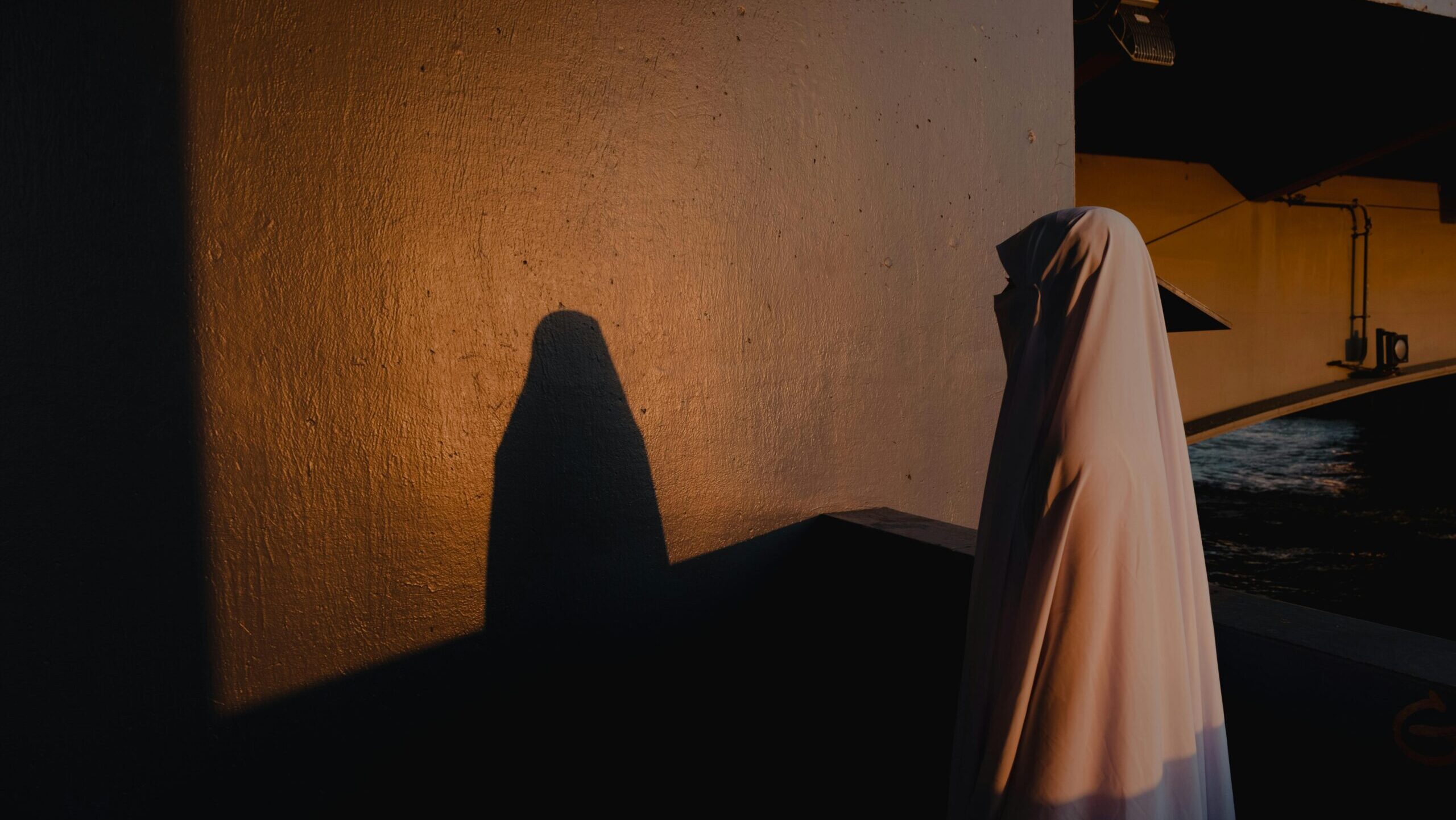
Spain’s Congress will this week debate a bill from the right-wing VOX party to ban the burka and niqab in public spaces—but the real political story is that the country’s main centre-right party, the Popular Party (PP), will support it.
VOX, a nationalist and socially conservative party founded in 2013, has long campaigned for stricter immigration controls and policies it argues defend Spanish identity and public security. The PP, Spain’s traditional centre-right force and the main opposition to the governing Socialists, has historically kept its distance from VOX on issues seen as culturally divisive.
That distance is now narrowing.
The PP’s spokesperson in Congress, Ester Muñoz, confirmed that her party will vote in favor of the proposal. Party leader Alberto Núñez Feijóo described the defense of women’s dignity in relation to the burka as an “attractive” idea put forward by VOX. The framing marks a shift: what was once treated cautiously under the banner of multicultural tolerance is now presented as a question of women’s rights and public security.
El @ppopular seguirá dando pasos para prohibir el burka en espacios públicos, tal y como anunció en su Congreso de julio y ha llevado a parlamentos autonómicos como el balear. pic.twitter.com/vImj739YVf
— ESTER MUÑOZ (@EsterMunoz85) February 15, 2026
The VOX proposal would prohibit the burka and niqab—garments that fully or partially cover the face—in public spaces and in privately owned venues open to the public. It also provides for financial penalties and prison sentences for those who coerce women into wearing them, and possible expulsion for foreigners who commit very serious offenses. The measure would not affect the hijab, which covers the hair but leaves the face visible.
Until recently, the PP avoided endorsing such proposals. For years, Spain’s mainstream parties sought to isolate VOX politically, reflecting a broader European practice sometimes described as a “cordon sanitaire,” in which established parties refuse cooperation with newer nationalist movements. PP leaders previously rejected VOX’s rhetoric linking immigration and security as excessive.
The change reflects political reality.
Regional elections are approaching in Castilla y León, and in regions such as Extremadura and Aragón the PP depends on VOX’s parliamentary support to govern. While Feijóo insists he aims to win an outright national majority, he has acknowledged the need for “specific agreements” with VOX. Supporting the veil ban allows the PP to signal ideological convergence without formally entering into a coalition at the national level.
Electoral pressure also plays a role. Recent opinion polls show VOX approaching 20% of the vote nationally, consolidating its position on the right. For the PP, ignoring that bloc of voters carries risks.
Spain would not be alone in adopting such legislation. France banned full face coverings in public in 2010, followed by Belgium, Austria, and Denmark. Switzerland approved a similar ban in a referendum in 2021. In several cases, these measures were politically controversial but ultimately upheld by courts, including the European Court of Human Rights, which has ruled that restrictions may be justified on grounds of social cohesion and security.
Other European countries have adopted partial bans, limiting face coverings in schools, government buildings, or specific public functions.
Supporters of the Spanish bill argue that face-covering garments hinder identification and pose legitimate security concerns, while also symbolizing gender inequality. Critics counter that such laws stigmatize a small Muslim minority and may infringe upon religious freedom.
What makes this vote significant is not only the substance of the proposal but the broader realignment it represents. A policy once confined to Spain’s political margins will now be backed by the country’s main centre-right party—a sign of how competition on the right is reshaping Spain’s political landscape.