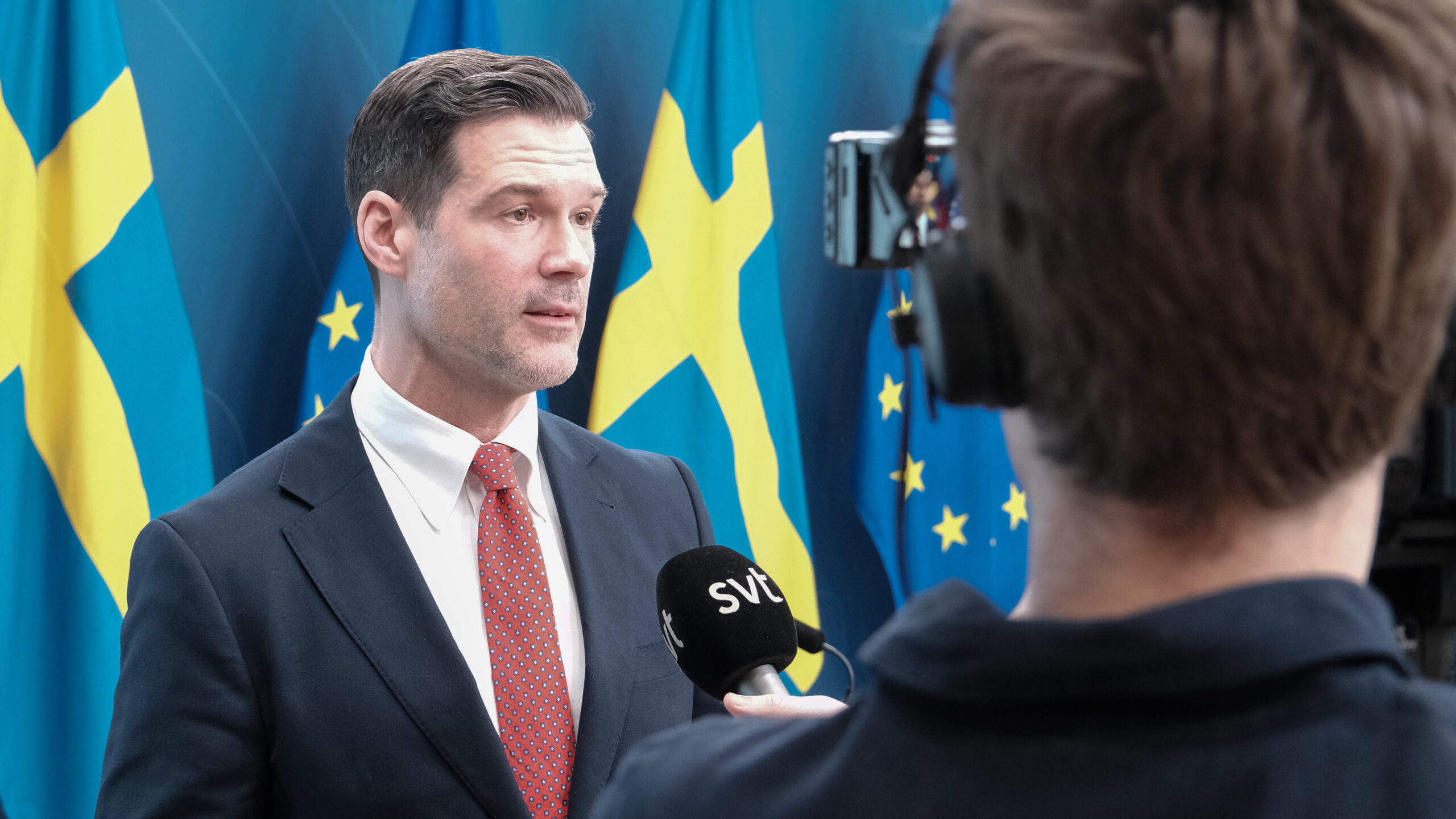
Sweden’s migration minister Johan Forssell
Elma Oijens Sjölin/Regeringskansliet
The Swedish government is proposing scrapping the existing system that allows asylum seekers to arrange their own accommodations, instead planning to house them in migration centers.
Migration Minister Johan Forssell said applicants would need to prove they are living in the centers or risk losing benefits and would be subject to travel restrictions. Sweden has gradually toughened its immigration policies since the 2015 refugee influx, when about 160,000 people applied for asylum, and the issue is expected to play a major role in September’s parliamentary elections.
Äntligen skrotas den gamla ordningen med eget boende för asylsökande och ersätts av en helt ny mottagandelag. Viktigt för att både undvika utsatthet och underlätta för återvändandet. https://t.co/viwcuuazIQ
— Johan Forssell (@JohanForssell) February 6, 2026
The new law is proposed to cover both asylum seekers and those who fall under the EU’s Temporary Protection Directive and apply both during the application process and during a return phase. Under the proposals, asylum seekers should, as a general rule, remain in the county where their accommodation is located and would be subject to attendance checks or reporting obligations.
Forssell argued that the current system, which allows asylum seekers to choose their own housing, has caused serious problems.
“This legislation has had very many negative consequences. Social exclusion, vulnerability, and people disappearing by the thousands. You haven’t even known whether they are in Sweden or not,” he said.
The proposal also removes the right to work for asylum seekers during the application process, but but allow permission to work after six months if no decision has been made and other requirements are met.
Although asylum applications had fallen to around 10,000 by 2024, the minority government, backed by the Sweden Democrats, says further restrictions are needed. The proposed law is expected to take effect in October 2026.