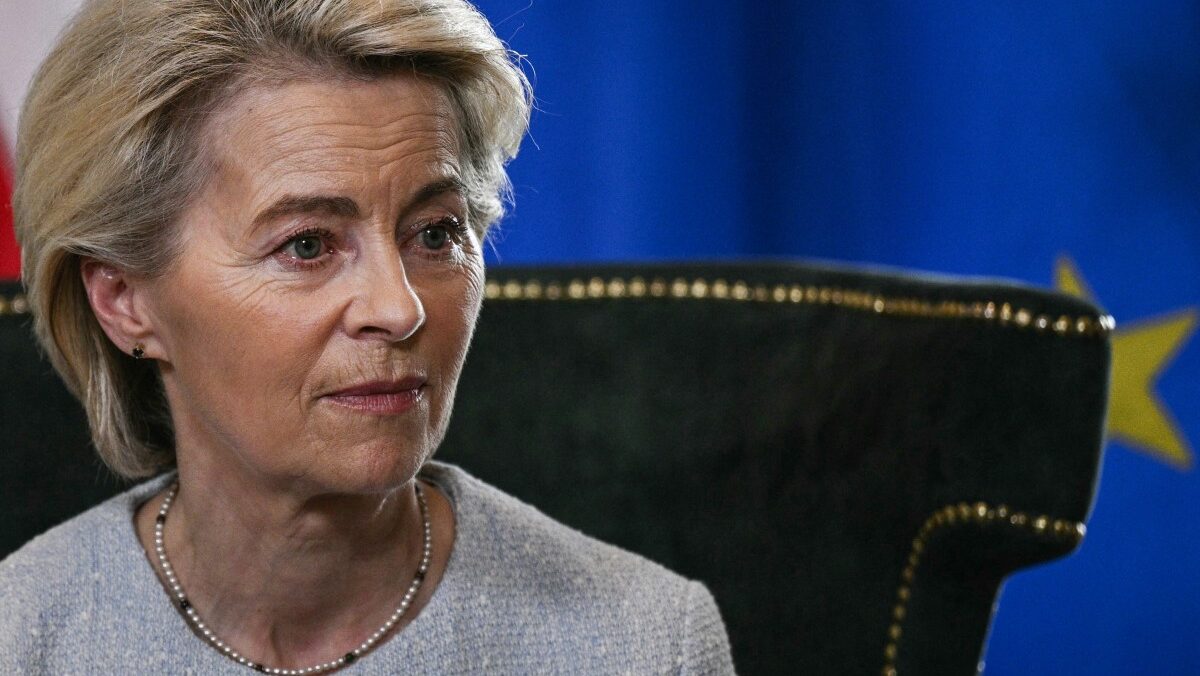
European Commission President Ursula von der Leyen reacts during a joint press briefing with U.S. President Donald Trump (unseen) in Scotland on July 27, 2025.
Brendan Smialowski / AFP
Just as it relies on convincing Donald Trump to provide backup for its Ukraine ‘peacekeeping force,’ Europe is now looking to the U.S. to take the lead on punishing Russia’s invasion with sanctions.
The European Union has approved 18 sanctions packages against Russia since the war began, with varying degrees of success in actually damaging Moscow’s ability to continue the conflict. Trade experts said the most recent package, signed off in July, had not caused “too much concern” and that it would have minimal impact on supplies. Its approval was also not without the stirring of deep tensions.
The situation looks even worse this time around, with officials scrambling to come up with new punitive measures—effective or not.
A report in Politico on Tuesday suggested that Brussels is now low on “sanctions ammo” of its own and is instead waiting to see “whether the White House will ramp up secondary sanctions.” One crude market analyst also told the publication that “we don’t expect there will be much room for any material Russian oil sanctions in the EU’s 19th sanctions package,” adding:
The last sanctions package was a significant one for Russian oil and we think there is little scope for further sanctions at this point.
Security analysts at the Ananke Group agreed that Europe’s “toolbox is empty.”
Trump has already threatened Moscow with “massive sanctions or massive tariffs or both” if he is unhappy with the progress—or lack thereof—made in peace talks, saying last Thursday:
Over the next two weeks, we’re going to find out which way it’s going to go. And I better be very happy.
Brussels’ 19th sanctions package is expected to be presented next month.