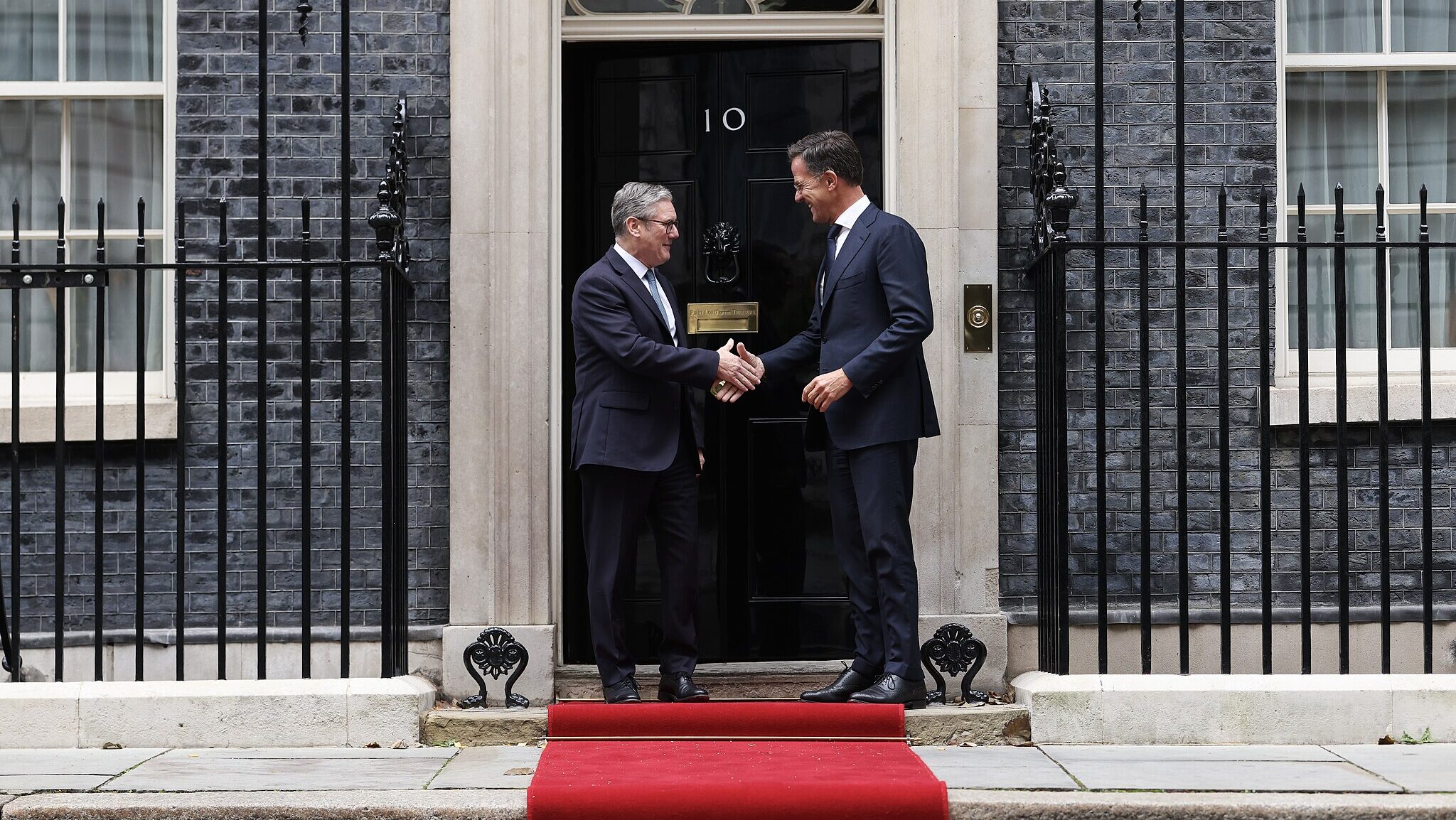
Prime Minister Keir Starmer meets NATO Secretary General Mark Rutte for a bilateral meeting in 10 Downing Street.
Simon Dawson, No 10 Downing Street, OGL 3, via Wikimedia Commons
“The Europe of defence has finally awakened,” hailed Commission chief Ursula von der Leyen after NATO members agreed to increase spending to 5%. Indeed, this decade-long target has been presented as a significant shift by leaders who are desperate to impress Washington and to finally be seen favourably by their voters.
But even a brief glance beneath the surface of their claims reveals that a fair amount of trickery is at play. In particular, officials are trying to have it both ways—‘reaching’ targets while changing as little as possible of meaning.
This is perhaps most clear in Britain, where the Labour PM has committed to spending 5% of GDP on ‘national security’—a deliberately obscure term that encompasses energy security and border control, as well as defence spending as an apparent afterthought. The Daily Telegraph bashed Starmer’s pledge as little more than “creative accounting,” adding that “this is not about more money for the military.”
Likewise, British shadow defence secretary James Cartlidge said the government was using “smoke and mirrors to inflate defence spending,” although his own Conservative Party’s record on defence is hardly any better.
Spain has also been promised “flexible” spending options and may even be permitted to follow a different timeline than other NATO members.
Such trickery will no doubt be employed by other European leaders, as James Shea, a former NATO deputy assistant security general, told Euractiv:
The NATO rules allow countries to designate spending as coming under the ministry of defence and therefore reallocate money from one branch of government to another.
It is already unclear whether the previous 2% target has been met by many European nations. For example, Italy claimed to hit this figure ahead of this month’s NATO summit, but defence analysts said it was “unclear” how this had been accounted for.
Germany also announced it will boost defence spending faster than other European countries, including Britain and France, although this includes €8.5 billion of military aid per year to Ukraine until 2029.