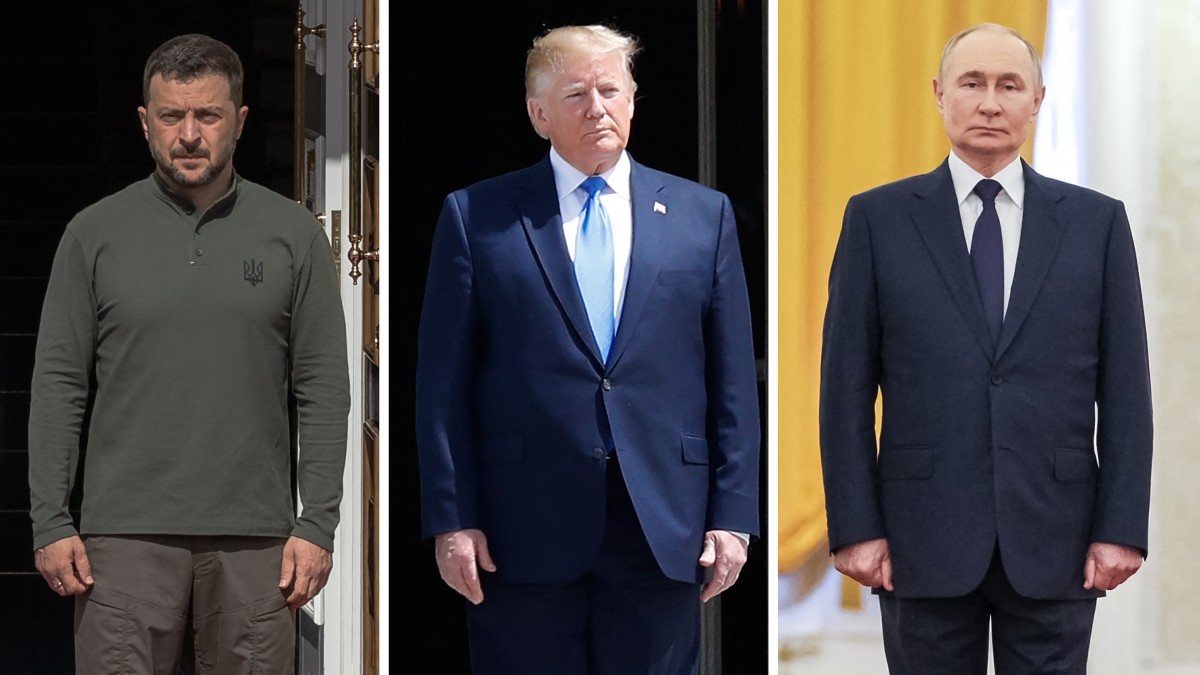
Ukraine’s President Volodymyr Zelensky (L) in Kyiv on August 23, 2024, US President Donald Trump in London on June 3, 2019 and Russia’s President Vladimir Putin in Moscow, on August 6, 2025.
Various sources / AFP
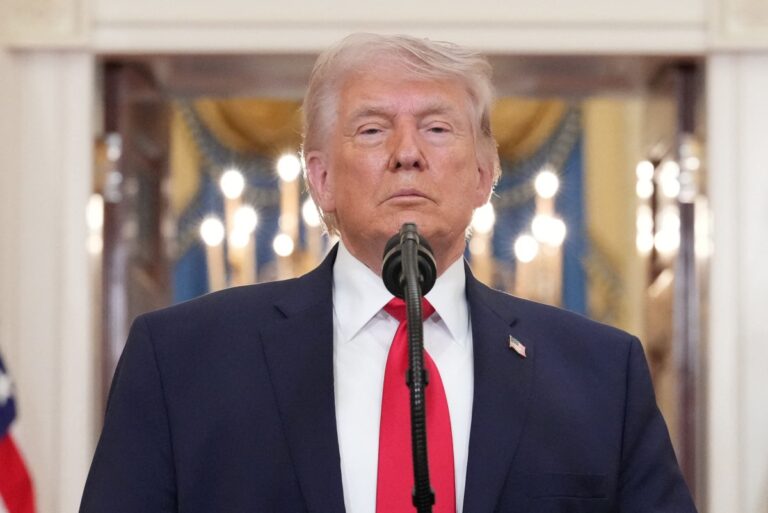
U.S. President Donald Trump has opened the door for a direct meeting with Russian President Vladimir Putin—without the involvement of Ukrainian President Volodymyr Zelensky—sparking alarm in Kyiv over a potential sidelining of Ukraine in crucial peace talks.
“No, he doesn’t,” Trump said on Thursday, August 7th, when asked whether Putin needed to meet with Zelensky before engaging in peace talks with him. “No, no, they would like to meet with me and I’ll do whatever I can to stop the killing,” he said.
This marks a significant departure from previous White House statements that had conditioned any summit on a trilateral format. Now, the Trump administration appears to be pursuing a bilateral summit with the Kremlin.
According to Russian officials, a venue and timing have been agreed to, with the United Arab Emirates floated as one possible host.
Turkey—which hosted three rounds of Ukraine-Russia talks this year—is also in the running, as is Saudi Arabia, where U.S. officials held separate talks with Russian and Ukrainian diplomats in February and March.
Kremlin aide Yuri Ushakov said the summit could take place “in the coming days,” while Dmitry Polyanskiy, Russia’s deputy UN ambassador, confirmed that both sides had settled on a location that “they don’t want to disclose.”
The summit would be the first Trump-Putin face-to-face meeting since 2018 and comes amid growing pressure for a breakthrough in ending the war in Ukraine, now in its fourth year.
Trump had been keen on ending the war at the start of his presidency but diplomacy has failed to bring progress.
Details of a proposed American peace plan have begun to emerge, suggesting a truce along current front lines, allowing Russia to retain de facto control over occupied territories—but without formal Ukrainian recognition or blocking future NATO membership for Kyiv.
The plan, reportedly endorsed by the U.S. side, would also keep open the flow of Western weapons to Ukraine.
The proposal would require Putin to drop his long-standing demands for Ukraine to cede sovereignty over four regions and end all cooperation with NATO. It would not require Ukraine to officially surrender any territory.
Responding to the developments, Volodymyr Zelensky stressed the importance of including Ukraine and Europe in any peace efforts.
“The war is happening in Europe, and Ukraine is an integral part of Europe—we are already in negotiations on EU accession. Therefore, Europe must be a participant in the relevant processes,” Zelensky said on Thursday after calls with French President Emmanuel Macron and German Chancellor Friedrich Merz. He added, “It is time we ended the war.”
I spoke with @bundeskanzler Friedrich Merz. Ukraine and Germany share the view that the war must be ended as soon as possible with a dignified peace, and the parameters of ending this war will shape the security landscape of Europe for decades to come. The war is happening in… pic.twitter.com/WipLdnfIF1
— Volodymyr Zelenskyy / Володимир Зеленський (@ZelenskyyUa) August 7, 2025
Putin, however, remains resistant to meeting his Ukrainian counterpart. On Thursday, he told reporters, “I have nothing against it in general; it is possible, but certain conditions must be created for this. But unfortunately, we are still far from creating such conditions.”
The return of Donald Trump to the White House in January has significantly accelerated international efforts to secure a negotiated end to the war. While earlier Western strategy focused heavily on supplying Ukraine with weapons to resist Russian advances, the tone has shifted markedly in recent months.
Both Ukrainian and European leaders now appear more open to diplomatic solutions, recognising the limitations of a military path to victory. A recent Gallup poll shows war-weary Ukrainians are also increasingly positive to peace negotiations, with 69% supporting the idea.