Donald Trump
Brendan SMIALOWSKI / AFP
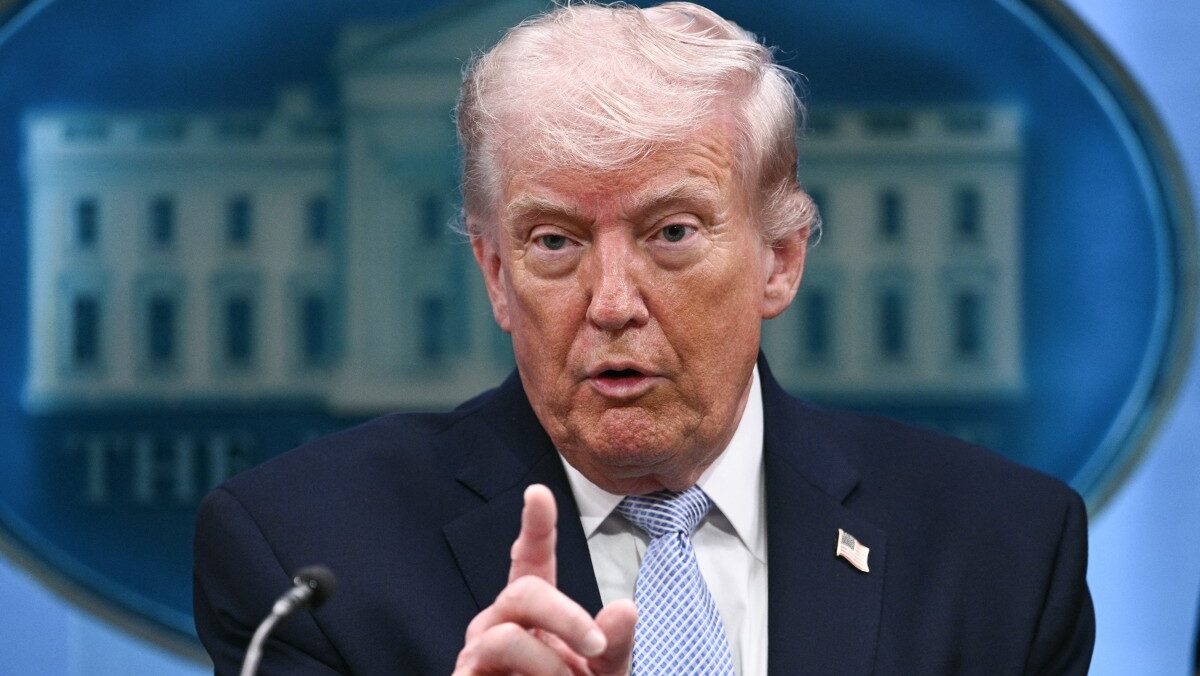
Donald Trump is again threatening to pull the United States out of NATO—even as Washington considers moving more troops closer to Russia.
The mixed signals have left European leaders trying to keep up. Asked about Trump’s warning that he could “destroy the entire Iranian civilization,” NATO secretary general Mark Rutte declined to engage, saying only: “I’m not going to comment on that. What I want you to know is that I support the president.”
Since the start of the U.S.-led strikes on Iran, Rutte has backed Washington, calling the action “important” for European security. At the same time, he has stressed that NATO itself is not involved, describing it as a U.S. and Israeli operation supported politically by some allies but outside the alliance’s formal role.
That balancing act is becoming harder to maintain. Trump has gone further than before, saying he is no longer just “reconsidering” U.S. membership in NATO but weighing more drastic steps. While he cannot withdraw without congressional approval, the threat alone carries weight.
At the same time, Washington is considering shifting troops stationed in Germany and Spain to Eastern Europe. This would not mean leaving the continent, but moving forces from relatively secure western bases to areas closer to Russia and the war in Ukraine.
Spain hosts key U.S. facilities such as Rota and Morón, while Germany remains Washington’s main logistics hub in Europe. By contrast, countries like Poland, Romania, and the Baltic states sit on NATO’s eastern edge, where tensions with Russia are highest.
For those eastern countries, more U.S. troops mean stronger protection, more military exercises, and better air defences. But it also puts them closer to any potential conflict.
The move reflects a broader shift already under way since the war in Ukraine began. NATO’s focus has increasingly moved east, with frontline states gaining importance while countries further west play a smaller role.
There is also a clear political message. Moving troops east rewards governments that spend more on defence and align closely with Washington, while putting pressure on others seen as doing less.
The result is a more uneven alliance. European countries remain dependent on U.S. military power, even as leaders in Brussels continue to talk about “strategic autonomy.”
While Rutte tries to project stability, the reality is changing. The United States is not stepping back from Europe—it is repositioning its forces, and using the threat of withdrawal to push its allies to fall into line.