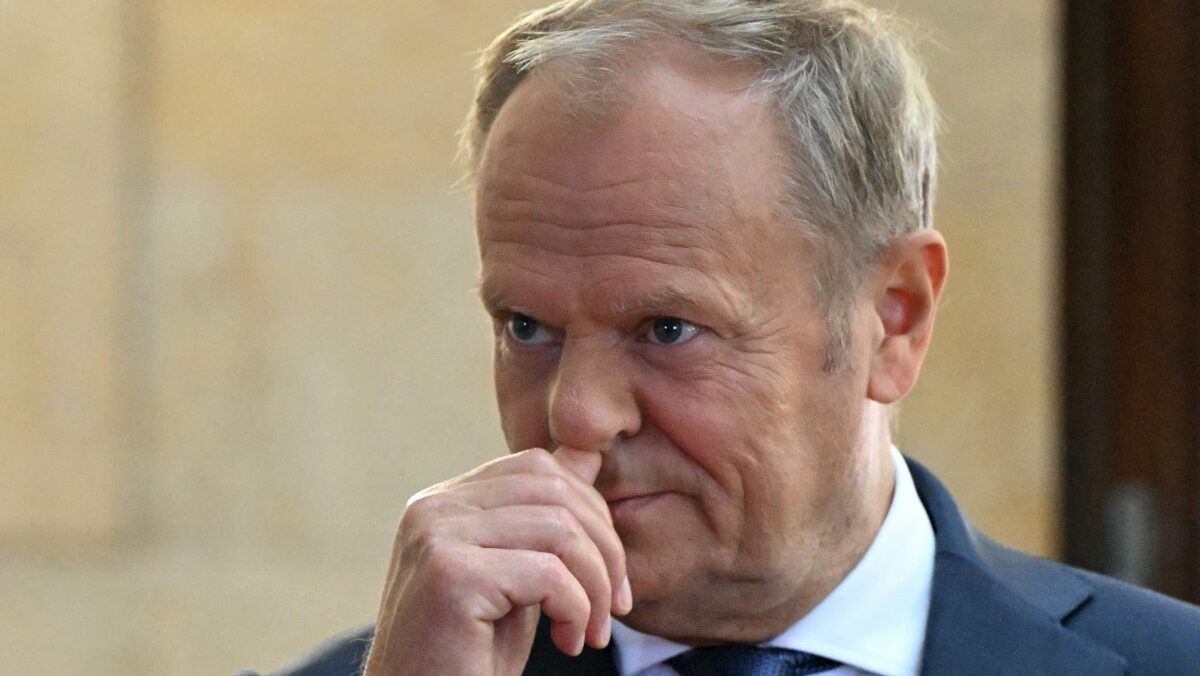
Poland’s Prime Minister Donald Tusk
Sergei GAPON / AFP
In a move widely seen as a diplomatic humiliation for Polish Prime Minister Donald Tusk, U.S. President Donald Trump at the last minute asked that Poland’s new head of state, Karol Nawrocki, represent the country in a high-level teleconference on Ukraine instead of the prime minister.
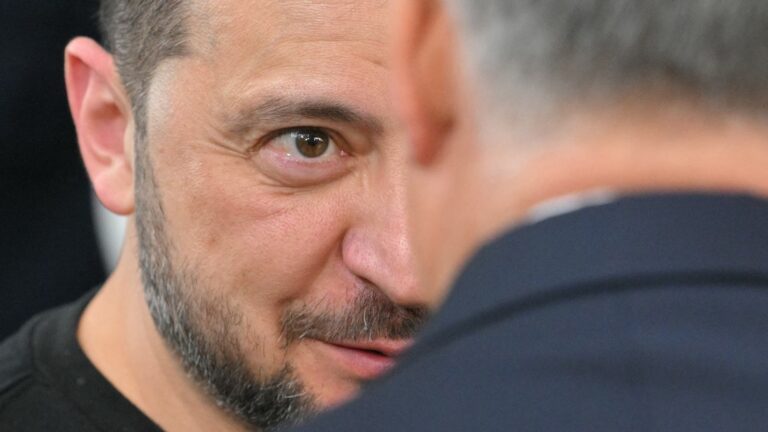
Liberal Tusk had been expected to join European leaders and Ukrainian President Volodymyr Zelensky on the evening of Wednesday, August 13th, ahead of Trump’s Alaska summit with Russian President Vladimir Putin. Instead, he said, he was informed “shortly before midnight” that the U.S. side “would prefer” Nawrocki take part.
“Just before midnight yesterday we received information, alongside our European partners, that the American side would prefer that Poland was represented by the president in contacts with President Trump,” Tusk admitted at a press conference. He added that while the government and presidency had coordinated their stance, the episode had sparked “great interest and emotion.”
Washington sidelined the prime minister in favour of Nawrocki, a conservative nationalist who only entered office last week after defeating Tusk’s pro-EU candidate in June.
The snub was particularly striking because the prime minister took part in a video conference of European leaders earlier in the day to prepare for the call with Trump, and other key nations were represented by their heads of government during the talks with the U.S. president.
Tusk tried to defuse the embarrassment by stressing unity. “In this second part, at the request of the American side, Poland was represented by President Nawrocki. I want to clearly emphasize that we managed to establish a common position,” he said.
The new president has already developed close ties with Trump, who hailed his “GREAT WIN” on social media and welcomed him to the Oval Office during the campaign. Trump has also invited him back to Washington for a working meeting in September.
Nawrocki’s foreign policy advisor Marcin Przydacz twisted the knife further, dismissing Tusk’s claim that he had been slated to attend. He told reporters he had “no information that Prime Minister Donald Tusk had previously planned to participate,” adding that Tusk’s team had misjudged its contacts with the Trump administration.
For Tusk, the incident underscored a loss of prestige both at home and abroad. While he warned that Russia would try to use peace talks “to include … discussions on reducing NATO’s presence,” his absence from the decisive call with Trump drew attention to his diminished influence.