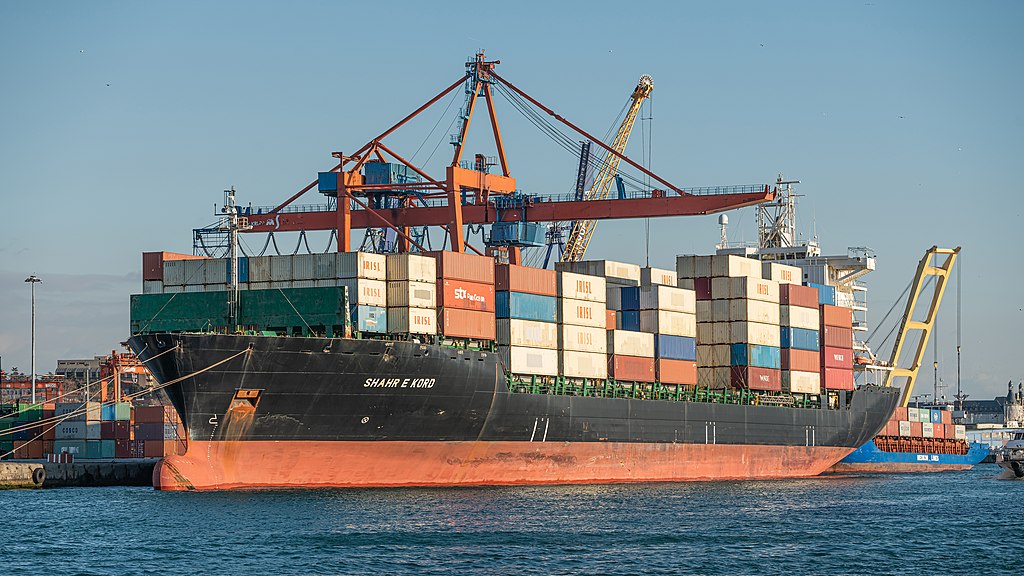
Cargo ship MV Iran Shahr-E-Kord (IMO 9270684) in Istanbul, Turkey.
A.Savin, FAL, via Wikimedia Commons
Turkish port authorities have begun informally requiring shipping companies to provide written guarantees that their vessels have no links to Israel, according to industry sources. The move, which has not been formally announced by Ankara, deepens a rupture in trade that carries wide-reaching implications, particularly given Turkey’s role as a key NATO member and a vital hub for Eastern Mediterranean shipping.
Two shipping sources confirmed that harbormasters across Turkish ports have verbally instructed agents to provide letters certifying that vessels are not connected to Israel. The assurances must cover ship ownership, management, and operation, and also declare that cargo does not include military or hazardous material destined for Israel. One source described the measure as applying “across all Turkish ports,” while another pointed to specific restrictions introduced by the port authority in the northwestern province of Kocaeli.
The requirement is the latest step in Turkey’s campaign against Israel, which began with the suspension of all trade in 2024. That decision halted an estimated $7 billion in annual commerce, with Turkish officials citing Israel’s war in Gaza against Hamas. Ankara has repeatedly accused Israel of committing genocide against Palestinians, a charge Israel strongly denies.
According to the sources, vessels sailing directly from Israeli ports or en route to them will no longer be allowed to dock in Turkey. Similarly, Turkish-flagged ships will be prohibited from calling at Israeli ports, further tightening restrictions on maritime flows between the two nations. The Turkish transport ministry has not responded to requests for comment on the new measures, which remain informal but are already being enforced on the ground.
The impact is expected to be felt far beyond Turkey and Israel. Global shipping companies operating in the Eastern Mediterranean now face additional compliance hurdles amid an already volatile environment. Since 2023, Yemen’s Iran-aligned Houthi movement has targeted commercial ships in the Red Sea, a campaign it describes as solidarity with Palestinians. With Turkey’s restrictions, maritime trade routes in the wider region face another layer of uncertainty.
The action underscores the widening rifts within the alliance. While Turkey has long been an outspoken critic of Israel’s policies, the imposition of de facto shipping bans by a NATO member questions the unity of the Alliance.