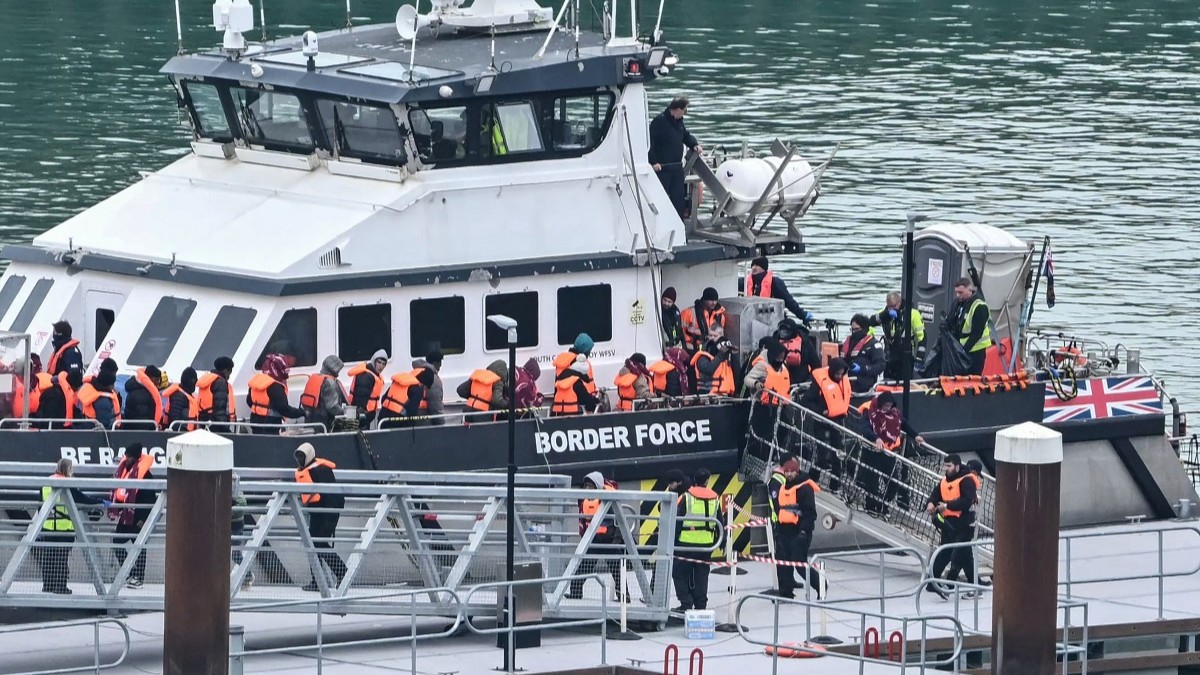
Migrants disembark a British Border Force vessel after being picked up at sea, while attempting to cross the English Channel from France, at the Port of Dover in southeast England, on April 1, 2026.
JUSTIN TALLIS / AFP
More than 21,000 migrants have crossed the Channel to Britain in seven months, while fewer than 500 have been sent back under a flagship returns deal with France.
The stark imbalance has piled pressure on Home Secretary Shabana Mahmood to rethink the “one-in, one-out” scheme, which was designed to deter small boat crossings by returning arrivals to France in exchange for accepting a limited number via legal routes.
In practice, the policy has seen around 43 migrants arrive for every one removed, raising fresh doubts about its effectiveness.
The agreement, backed by Prime Minister Keir Starmer, was meant to curb crossings from northern France. But arrivals remain high. Nearly 700 migrants made the journey in the first nine days of April alone—more than the total number returned over several months, according to GB News.
Overall, 21,172 migrants are reported to have completed the crossing since the scheme came into force in August 2025. Over the same period, 498 people were returned to France, while 482 asylum seekers were transferred from France to the UK under the legal route established by the deal.
The total number of arrivals—21,654—is only slightly lower than the 26,874 recorded over a similar period the previous year, suggesting the policy has had a limited impact.
The government had pledged to ramp up removals to 50 a week, but returns have averaged just under 15 per week since the scheme began.
The plan has also faced legal obstacles. In one recent case, the removal of an Eritrean asylum seeker was halted after a High Court judge raised concerns about the risk of harm. In another, a migrant was granted a 14-day reprieve to support a claim of being a victim of modern slavery.
Despite these challenges, the government insists enforcement is improving. Officials say more than 42,000 attempted crossings have been stopped since the last election, and nearly 60,000 people without legal status have been removed or deported.
At the same time, the UK continues to rely heavily on cooperation with France. Talks between London and Emmanuel Macron are ongoing, with Britain expected to increase financial support for French patrols along the Channel coast.
The UK has already spent £100 million on the current scheme, on top of hundreds of millions of pounds committed under previous agreements. Despite this, interception rates have fallen, with around one-third of attempted crossings stopped in early 2026—down from a peak in 2023.
The Home Office maintains the policy is part of a broader strategy to deter illegal migration. But a former Home Office official said the figures show the opposite effect, warning: “If there’s only a two per cent chance of being returned to France, it’s little wonder the boats keep coming.”