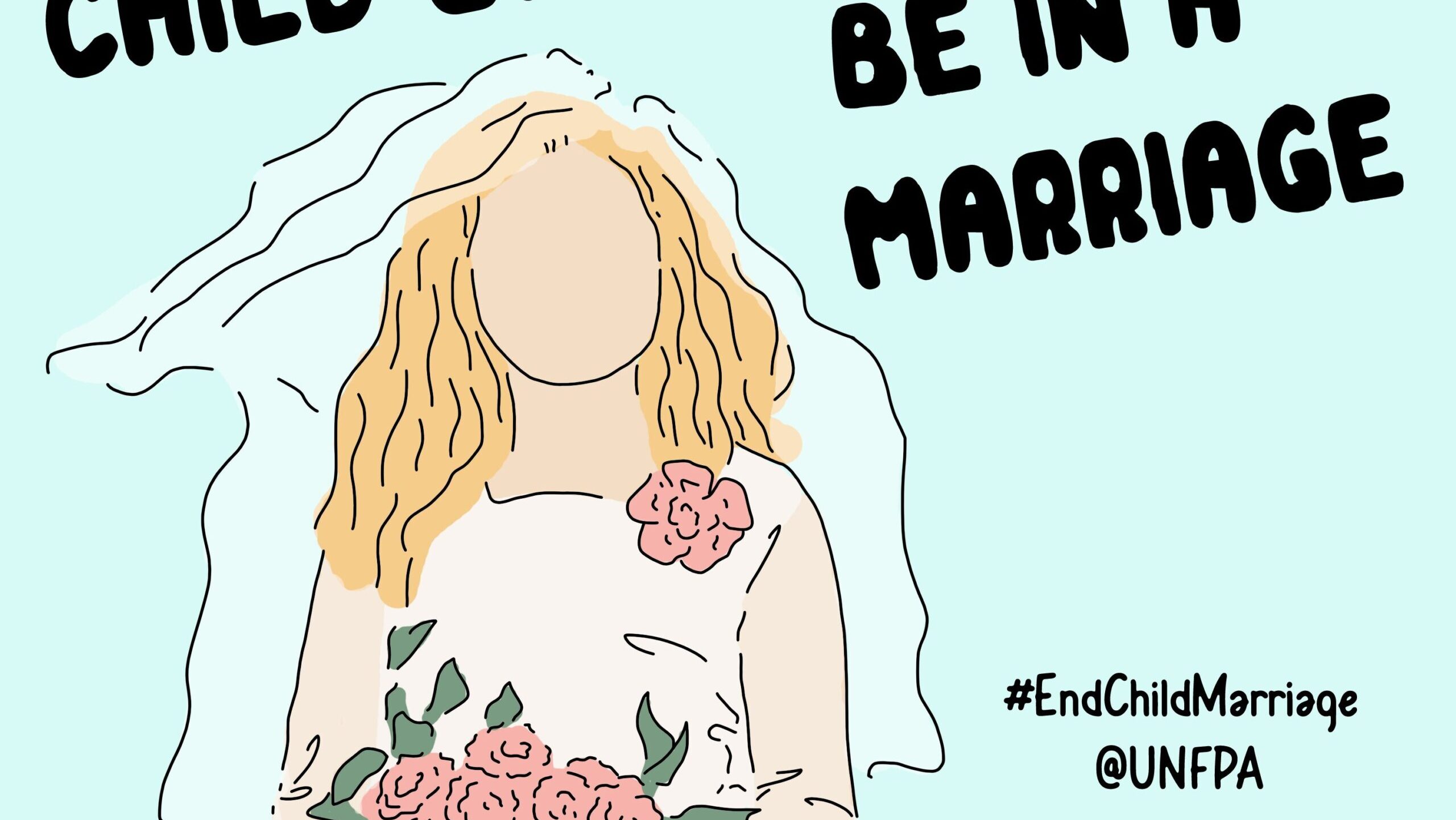
The United Nations sparked controversy on Valentine’s Day after illustrating a post about global child marriage with the image of a blonde girl in a traditional white Western wedding dress—despite data showing the practice is overwhelmingly concentrated in parts of sub-Saharan Africa and South Asia.
On 14 February 2026, the official United Nations account posted a stark claim: “Every 3 seconds, a girl is married somewhere in the world.” The figure is consistent with long-standing data from UNICEF and related agencies. Child marriage remains a devastating reality, cutting short education, endangering health, and entrenching cycles of poverty.
But the image accompanying the message—a sad-looking blonde girl in a traditional white Christian wedding dress, bouquet in hand—quickly became the focus of controversy.
Every 3 seconds, a girl is married somewhere in the world.
— United Nations (@UN) February 14, 2026
Child marriage is a human rights violation that denies girls the chance to reach their full potential.
This #ValentinesDay, join @UNFPA in speaking out against this form of gender-based violence: https://t.co/UyRhZUcH6G pic.twitter.com/tm0PkNDDYU
Critics argue that the illustration does not reflect the demographic reality of where child marriage is most prevalent. According to the most recent consolidated data from UNICEF, Girls Not Brides, and related statistical compilations, the highest rates are concentrated overwhelmingly in sub-Saharan Africa and parts of South Asia.
Niger consistently records the highest prevalence in the world, with roughly three-quarters of women aged 20–24 married before 18. Chad and the Central African Republic follow close behind, with rates typically above 60%, while Mali frequently exceeds 50% and in some datasets approaches 70%.
In South Asia, Bangladesh reports child marriage rates above 50%, with particularly high levels of marriages under 15 in some regions. Several other sub-Saharan African countries—including Guinea, Burkina Faso, and South Sudan—also record prevalence above 50%. Mozambique stands near 48%, while India, despite gradual improvement, has historically recorded rates around 47%—a significant figure given its population size.
By contrast, Western Europe and North America are not among the regions with high prevalence rates.
Within hours, the post prompted widespread reaction on social media.
British activist Tommy Robinson accused the organisation of deliberately avoiding the cultures in which child marriage is most entrenched. Historian and commentator Rafe Heydel-Mankoo described the image as distorting the reality of who is most affected. In Spain, journalist Cristian Campos criticised the use of a Western bride to illustrate a practice overwhelmingly concentrated in African and South Asian countries. Their posts gathered thousands of reactions in a matter of hours.
The backlash reflects a broader debate about how global institutions communicate sensitive issues. When the UN publishes data showing that child marriage is overwhelmingly concentrated in parts of sub-Saharan Africa and South Asia, and then illustrates the problem with a blonde Western bride in a white Christian dress, it feels like an effort to avoid uncomfortable truths.
The controversy is not about denying that abuse can occur anywhere. It is about whether public messaging should reflect statistical reality. When the data clearly show where the crisis is most acute, the choice of illustration becomes more than aesthetic—it shapes how the problem is understood.