Planned John III Sobieski Monument in Vienna
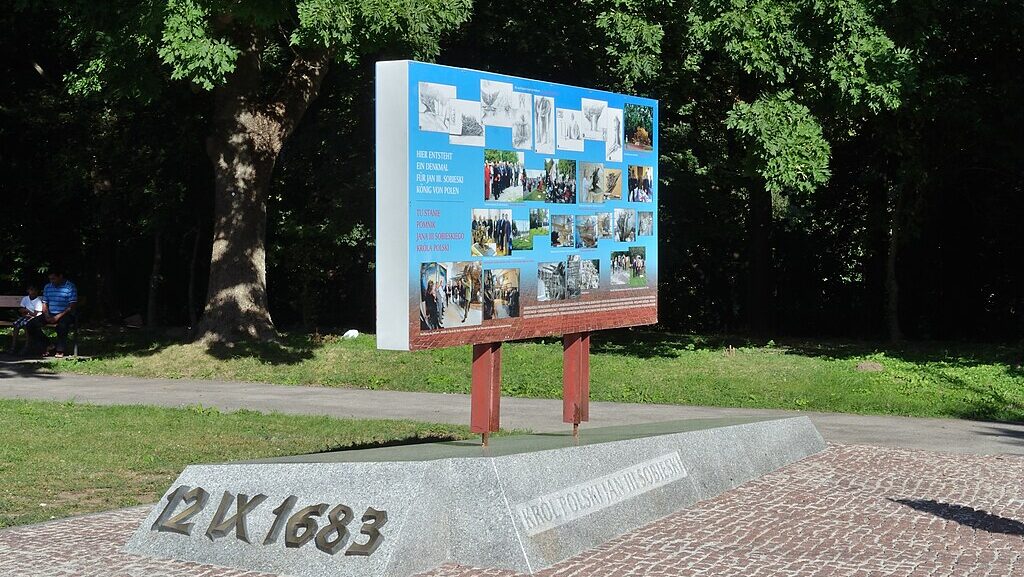
Herzi Pinki, CC BY-SA 4.0, via Wikimedia Commons
A plan to honour the Polish king who saved Vienna from an Ottoman siege has sparked a diplomatic row after the Austrian capital refused to erect the monument, citing fears it could offend the Muslim community.
The long-running dispute centres on a proposed statue of King John III Sobieski, intended for Vienna’s Kahlenberg mountain—the site of his decisive victory over the Ottoman army in 1683. First proposed in 2013 and formally approved in 2018, the project had been stalled for years before being definitively rejected by the city authorities at the end of 2024.
The leftist city council said it did not want to create “a stage that could be instrumentalised for xenophobic agitation as well as Islamophobic or anti-Turkish resentments.”
That reasoning has now provoked a sharp response from Poland.
“The city of Vienna promised us the monument,” Polish ambassador Zenon Kosiniak-Kamysz said, adding that the statue has already been completed and is currently in Poland. The intention, he stressed, remains unchanged: to erect it at its historical location on the Kahlenberg.
Rejecting Vienna’s cultural policy outright, the ambassador pointed to existing memorials in the Austrian capital, including those commemorating Che Guevara and even a Stalin plaque, questioning why a Christian king credited with saving Vienna should be treated differently.
On September 12, 1683, Sobieski led the Christian relief army that broke the Ottoman siege of Vienna—a moment widely regarded as a turning point in Europe’s defence against Islamic expansion. To this day, he is often referred to as the “saviour of Vienna.”
Vienna officials have argued that Sobieski is already commemorated, citing a memorial at Kahlenberg, as well as streets and squares bearing his name. The ambassador dismissed that claim, saying: “That is just a pedestal, the inscription is barely readable.”
“The city of Vienna owes something to Sobieski,” he argued.
The decision to cancel Sobieski is part of a broader pattern among Western European leaders who appear increasingly uncomfortable with openly Christian symbols, while going to great lengths to avoid upsetting Muslim communities.
Opposition parties in Vienna have voiced fierce criticism. The centre-right ÖVP’s Jan Ledochowski described the situation as a “painful farce of the SPÖ–Neos city government.”
The right-wing nationalist FPÖ went further. Dagmar Belakowitsch called the refusal to erect the statue “scandalous,” saying it was based on “flimsy, ideological pretexts.” Leaving a bare pedestal and calling it a monument, she added, was “absolutely unworthy.”