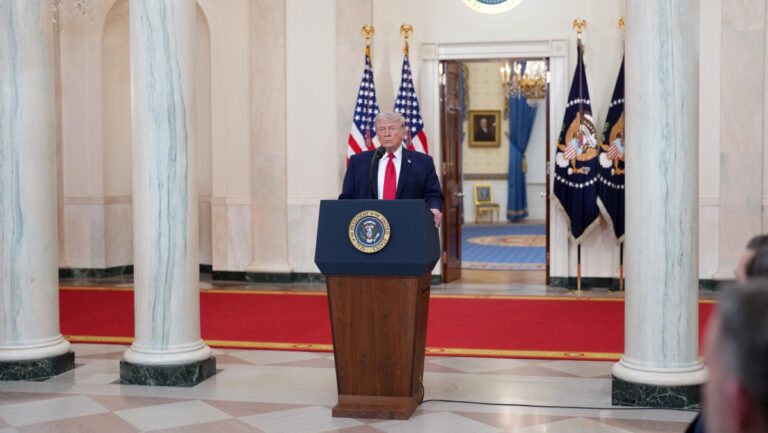
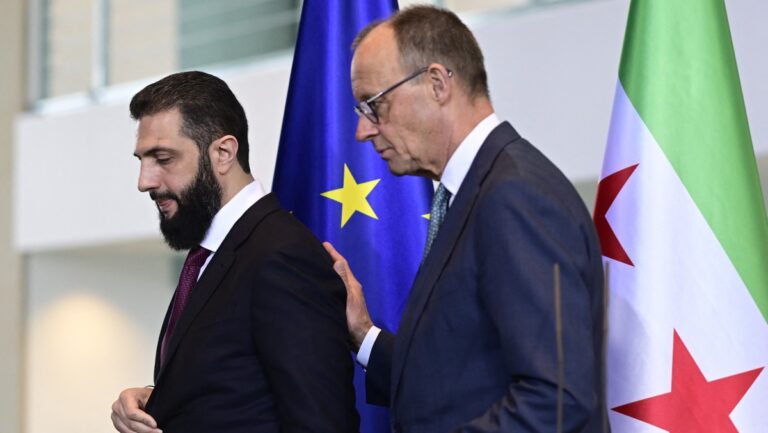
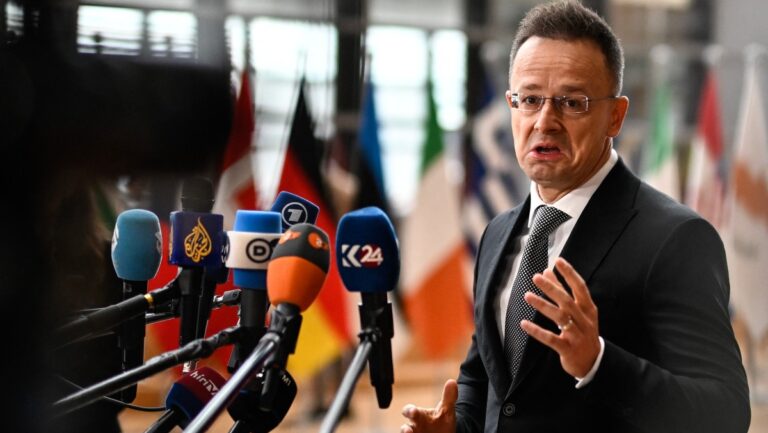
Donald Trump and von der Leyen meet at the World Economic Forum in Davos, on January 21, 2020
JIM WATSON / AFP
Donald Trump and Ursula von der Leyen will go head-to-head in Scotland on Sunday for high-stakes talks aimed at averting a transatlantic trade war, with time fast running out to strike a deal.
Trump, who landed at Prestwick Airport on Friday, confirmed the meeting with the EU Commission president, calling her “a highly respected woman” and saying the outcome was “50–50.” He added, “This could be the biggest deal of them all.”
Unless a breakthrough is reached, the EU faces a dramatic escalation in tariffs from August 1—including a blanket 30% levy on goods entering the U.S. Brussels is scrambling to protect its exports, already hit with 25% tariffs on cars, 50% on steel and aluminium, and a 10% general rate. The EU has prepared retaliatory tariffs worth €93 billion, targeting U.S. products from soybeans to yachts, but most member states would prefer to settle.
In private, the EU has already shown signs of folding. In May, it quietly reclassified U.S. imports as “low risk” under its anti-deforestation law, a key American demand. Brussels also faces pressure to soften digital regulations seen in Washington as an attack on free speech and U.S. tech firms.
Despite its tough talk, the European Commission is now entertaining a deal based on a 15% baseline U.S. tariff—matching Japan’s recent agreement—with carve-outs for critical sectors like aircraft and pharmaceuticals. France is pushing back, insisting any tariff deal must be strictly reciprocal, while Germany and Italy want an agreement done.
Trump, who has already sealed trade pacts with the UK, Japan, and the Philippines, is once again using hardball tactics to force concessions. Von der Leyen’s team insists the EU won’t compromise its regulatory sovereignty, but leaked documents suggest otherwise.
With his five-day Scotland trip doubling as a promotion of Trump-branded golf resorts, the president is mixing business with diplomacy—and enjoying every minute. But the message from Washington is unmistakable: Brussels needs access to the U.S. market far more than the other way around.
Whether von der Leyen bends or digs in, Sunday’s meeting will reveal who’s really in charge of transatlantic trade.