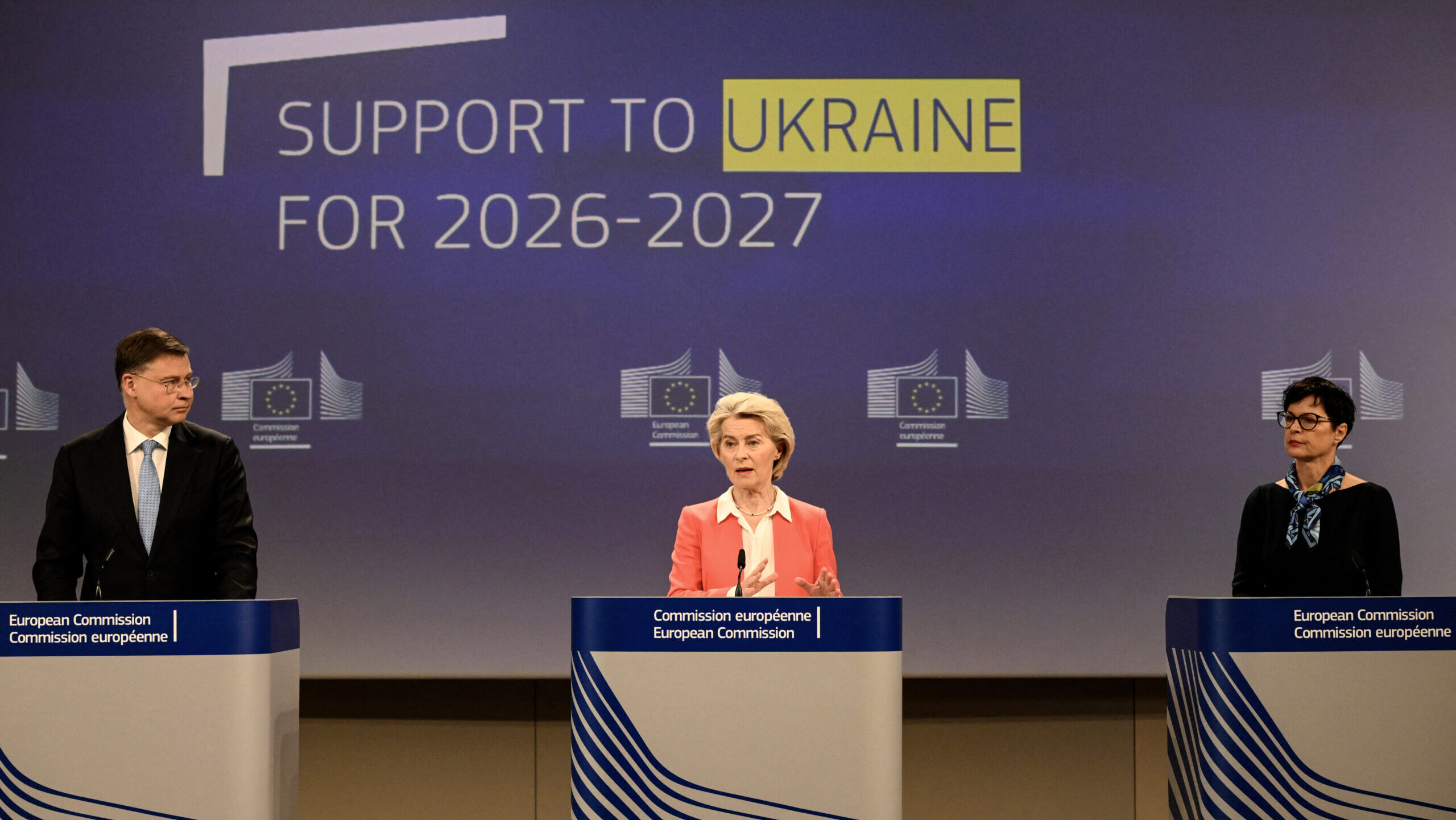
Ursula von der Leyen and EU commissioners unveil a new financial support package for Ukraine in Brussels, January 14, 2026.
Nicolas TUCAT / AFP
The European Commission is set to approve a €90 billion loan for Ukraine this week, following a deal struck at the December EU summit. Of that total, €60 billion will go directly to military spending, with the remaining €30 billion set aside for civilian needs.
What matters most is not the size of the loan, but the strings attached. Brussels will require defence funds to be used either to manufacture weapons in Ukraine or to buy them from European arms producers. Kyiv will be allowed to purchase arms from outside Europe only in exceptional cases, and only if the equipment cannot be supplied by European manufacturers in time.
At the same time, the Commission is considering a €200 million aid package for Greenland, a strategically important Arctic territory with just 55,000 inhabitants. The sum is modest, but the signal is not, coming amid rising tension over open US interest in the island.
In Ukraine’s case, the conditions leave little doubt about what the aid is really for. This is not a reconstruction plan or a long-term humanitarian programme. It is designed to keep the war effort going while strengthening the EU’s own defence industry, folding the conflict into a system that treats war as a normal part of EU policy.
The urgency is clear. The Commission is using Kyiv’s dependence to impose rules that would have been politically unthinkable until recently: common funds must stay within Europe and serve European strategic interests.
To finance the loan, the EU will once again turn to eurobonds, shifting more power to Brussels while further narrowing the freedom of national governments.
Belgium’s refusal to use frozen Russian assets—most of them held by the financial services firm Euroclear—forced this route. The deal has not been unanimous. Hungary, Slovakia, and the Czech Republic have stayed out, exposing political divisions that the pressure of war has barely managed to paper over.
The Greenland package follows a similar pattern. Repeated statements by the U.S. president suggesting that the United States will control the island “one way or another” have set off alarm bells in Europe. The aid would also come just ahead of a key meeting in Washington between U.S., Greenlandic, and Danish representatives, though the loan’s terms remain unclear.
Denmark’s prime minister has called the threats unacceptable. Lacking the military capacity to respond directly, and increasingly unsure of Washington’s automatic protection, Brussels is turning to the tool it knows best: money.
Ukraine and Greenland are not isolated cases. Both reflect a broader EU response to an increasingly unpredictable world. After episodes such as the US intervention in Venezuela, the assumption in Brussels that American power can always be relied upon—even by allies—is steadily eroding.