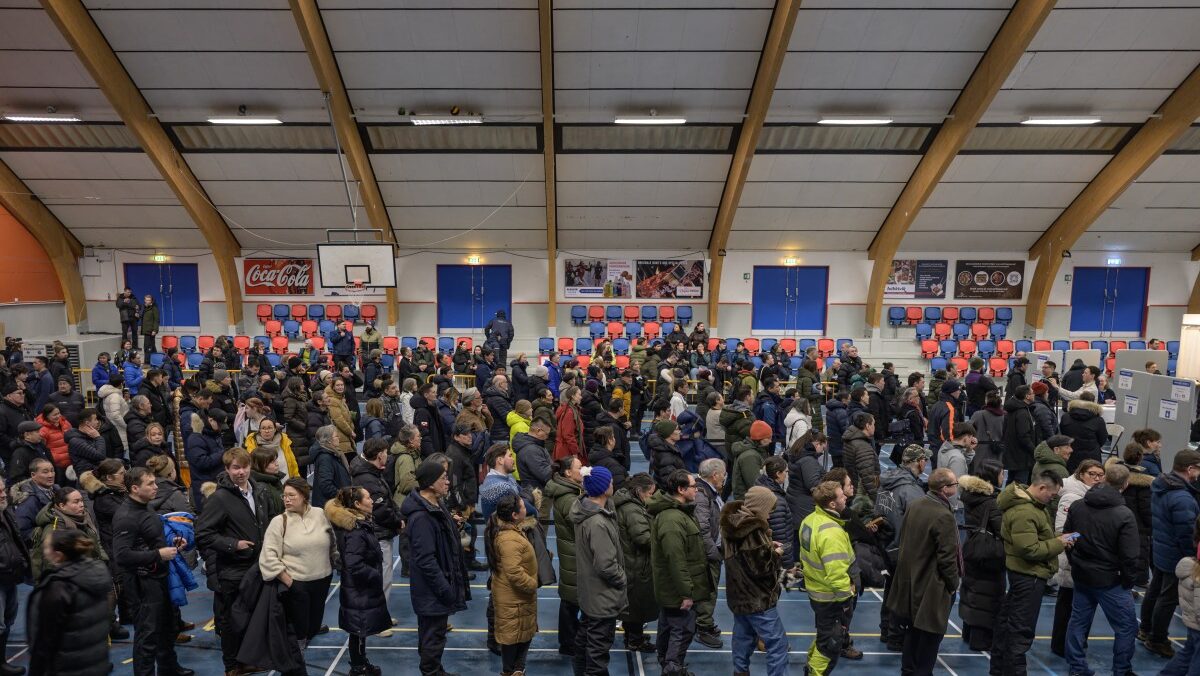
People line up to vote in a polling stations, in Nuuk, Greenland, on March 24, 2026
Florent VERGNES / AFP
Denmark’s Social Democrats have won the election—but with their worst result in more than a century, leaving Prime Minister Mette Frederiksen weakened and facing a difficult path to power.
Her party secured 21.9% of the vote, while the left-leaning bloc won 84 seats in the 179-seat Folketing, ahead of the right-wing bloc on 77. But neither side has a majority, forcing a new round of coalition talks.
The result reflects a government squeezed from both sides. Rising living costs and economic pressure have eroded support among centrist and right-leaning voters, while Frederiksen’s tough migration stance has alienated parts of her left-wing base.
That tension was evident on election night. The anti-immigration Danish People’s Party emerged as the biggest winner, gaining 11 seats and sharply increasing its vote share after campaigning on a pledge to cut migration to zero.
At the same time, Frederiksen’s efforts to combine strict border controls with a traditionally left-wing welfare agenda appear to have satisfied neither camp.
The outcome leaves the centrist Moderates party, led by Foreign Minister Lars Løkke Rasmussen, in a decisive position. With 14 seats, it is likely to determine whether Frederiksen can remain in office—and on what terms.
Coalition negotiations are expected to be complex. The Liberal Party has already signalled reluctance to govern with Frederiksen, while the Moderates have called for compromises, including on her proposed wealth tax.
Frederiksen has said she intends to stay on as prime minister, but acknowledged the challenge ahead. “It will be difficult,” she told supporters on election night.
For now, Denmark faces a familiar outcome: a fragmented parliament, a strengthened protest vote, and a political centre once again holding the balance of power.