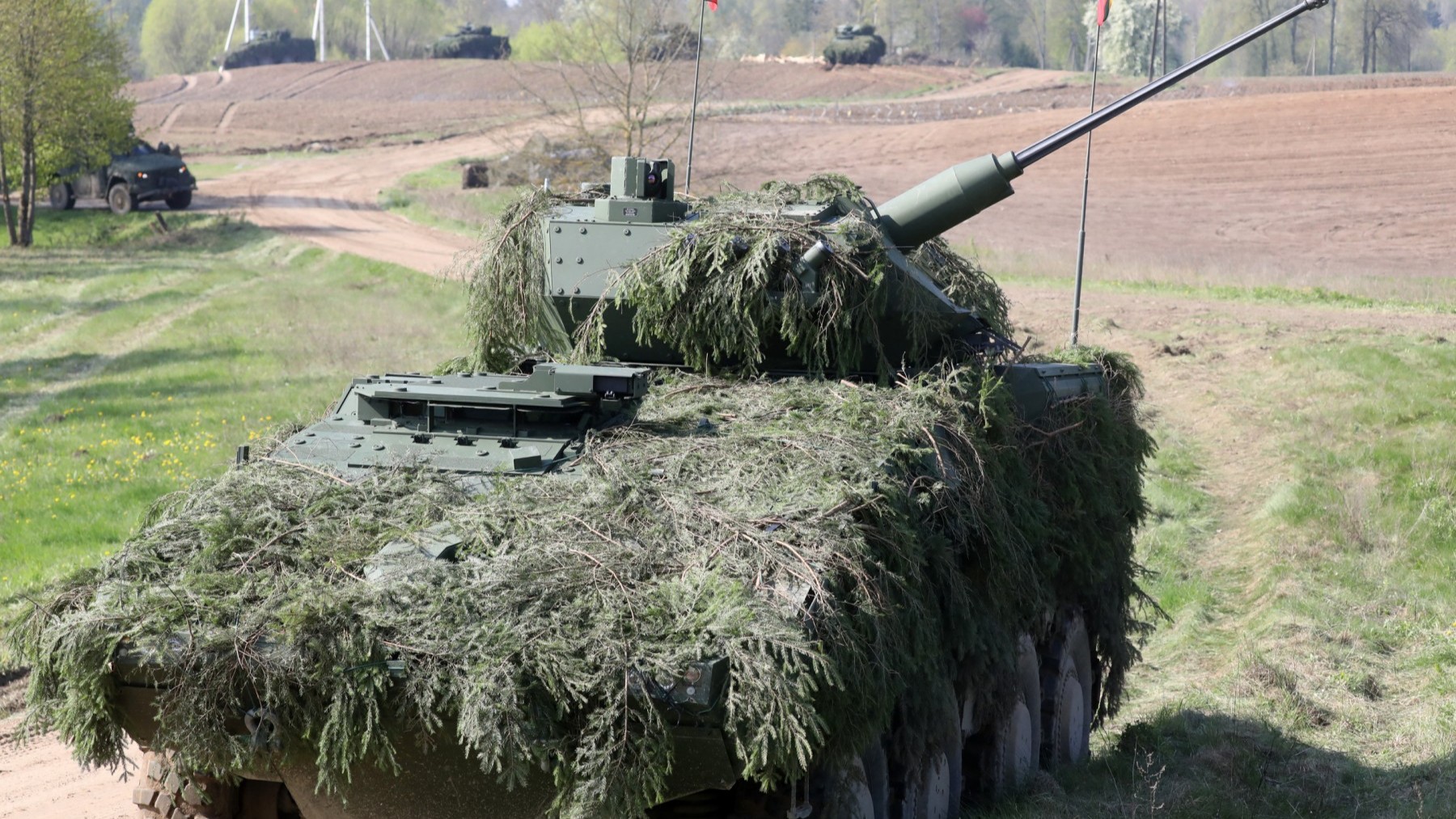
Lithuanian troops take part in the Lithuanian-Polish joint military exercise ‘Brave Griffin 24/II’ on April 26, 2024 near Dirmiskiu village, Alytus district, Lithuania.
Petras Malukas / AFP
Poland has deployed some 40,000 troops to its eastern frontier as Russia and Belarus begin large-scale joint military exercises, intensifying tensions along NATO’s most vulnerable border.
The drills, known as Zapad 2025 (West 2025) will begin in Belarus on Friday, September 12th, and are due to run until September 16th. They will include practising the use of nuclear-capable missiles and repelling an attack, including through airstrikes and sabotage.
They come just two days after nineteen Russian drones crossed into Polish airspace, sparking the most serious confrontation between Moscow and the Western alliance since the war in Ukraine began three-and-a-half years ago.
While the Kremlin denied any deliberate targeting of Poland, Warsaw immediately invoked NATO’s Article 4, triggering emergency talks among allies, and also asked for the convening of an emegency UN Security Council meeting.
Poland subsequently announced the closure of its border with Belarus “until further notice,” extending an earlier temporary measure introduced ahead of the exercises.
Warsaw’s decision to bolster its forces reflects deep concern that Zapad 2025 could be used as cover for aggressive action. Poland has been preparing for the maneuvers for many months. Deputy defence minister Cezary Tomczyk said,
BLOCK QUOTE The Polish Army has conducted exercises in which over 30,000 Polish soldiers, as well as NATO allies, took part in order to adequately respond. Let’s remember that Zapad 2025 is an offensive exercise.
Polish officials believe one aim of the drills is to rehearse an assault on the Suwałki Gap, the narrow stretch of land linking Poland and Lithuania that separates Belarus from Russia’s Kaliningrad exclave.
Long regarded as NATO’s ‘Achilles’ heel’, its seizure would isolate the Baltic states from the rest of the alliance.
Western estimates of Zapad’s size vary. Belarus initially suggested some 13,000 troops would be involved. That number was later cut in half. Lithuania has put the number at about 30,000.
In contrast, Zapad 2021 saw Moscow boast of 200,000 troops, many of whom were later deployed in the invasion of Ukraine.
Despite the smaller scale, Ukrainian President Volodymyr Zelensky has warned the drills could provide “a cover” for a strike against neighbouring countries, while the foreign ministry said they undermine efforts by U.S. President Donald Trump to broker peace.
Belarusian authorities have attempted to downplay the threat, with President Alexander Lukashenko dismissing suggestions of an attack on the Suwałki Gap as “utter nonsense.”
As the exercises begin, NATO forces across Eastern Europe are on high alert, with Germany leading its own major drill, Quadriga 2025, to coincide with Zapad. Lithuanian troops are also carrying out parallel manoeuvres.