
Neocons Are Not Conservatives
Neoconservatism is an ideology that consists of two things: a Scandinavian-style welfare state for domestic policy, and a Pax Americana doctrine for foreign policy.

Neoconservatism is an ideology that consists of two things: a Scandinavian-style welfare state for domestic policy, and a Pax Americana doctrine for foreign policy.
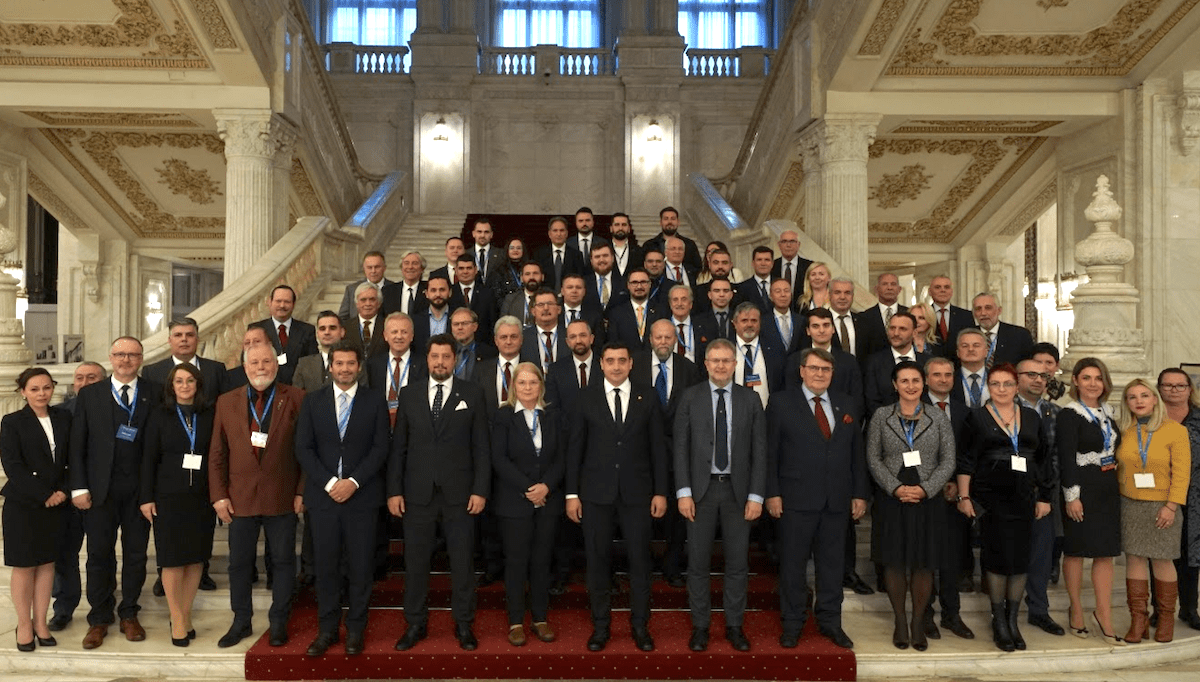
“Our Europe and the way we see the world focuses on freedom—cultural, social, religious—while the Europe of Brussels bureaucrats means only restrictions and totalitarianism.”

Names are important, and the name ‘conservative’ is important if we are not to forget who we are and what we strive for. Conservatives are not merely reactionaries. We affirm something. We affirm our civilisation and we want to conserve it.
Christians, whatever their religious divisions, should work together to undermine and ultimately destroy the liberal and progressivist supremacy that dominates the West, recognising that it marks a settlement incompatible with even a basic Biblical worldview.

In this episode of our ‘Occasional Dialogues’ series, Alvino-Mario Fantini interviews Jason Miller of GETTR about the prospects for conservative media in Europe.

It is time to break the unproductive loop between impatience, single-issue rejection of remarkable candidates, and the political status quo. The NatCon Statement of Principles is a first, major step in that direction.

If nationalism engenders a sense of loyalty and devotion as it did in the case of John Paul II, it might be worth asking, to whom (or what) are those who have no sense of loyalty or devotion to their nation devoted?

The letter’s vision of universality tries to argue for the nation as an important element of a universal moral and ethical vision, but by skipping over the nation entirely when it describes the common good rising from families to the international realm, it reveals its bias against it.

Conservatives have tended to mistake politicians touting ‘individualism’ and ‘economic liberalism’ for champions against ‘wokism.’ Madrid’s Díaz Ayuso is a clear example.

In the arena of the culture war, ideas become political brands, stitched into the terrible body of the news cycle, until they share in that sickly bloodstream. Instead of building civic participation, they get their oxygen from media attention.