

Sharp Rise in Euro-Zone Inflation
European inflation is now at U.S. levels and all euro-zone member states except Malta now have annual inflation rates above 5%.

European inflation is now at U.S. levels and all euro-zone member states except Malta now have annual inflation rates above 5%.

Rather than sinking further into debt to maintain current, high levels of government spending, it is time for Europe’s leaders to fundamentally reconsider their economic and social policies. It is time for them to adopt an entirely new program for economic prosperity.

To highlight the basic nature of crypto currencies, we will focus on the two most popular: Bitcoin and Ethereum. These two cryptos differ much in the same way as gold-standard currency differs from fiat currency.

A fiscal crisis would force U.S. Congress into unchartered territory. Never in modern history has this legislative body been forced to be austere with its resources. Tax cuts do not work anymore, and you cannot cut taxes when your creditors are running away from your debt. There are only two options: spending cuts, or tax hikes.

Now that the Greek Parliament is eager to beef up the nation’s defense, it faces a serious problem: the economy is so weak it can barely keep its population at a standard of living from 20 years ago.

At $1.0943 per euro on March 14th, the dollar stood at its strongest against the European currency since April 2019.

Consider what Europe will look like if Russia wins, or loses, the war in Ukraine. Obtaining reliable information, in this case, is nearly impossible. To navigate these uncertain times, the best guidance may be found in the old-school academic discipline of political economy.

War in the Eurasian breadbasket is causing European countries to have to rethink food security and current agricultural policy for both the immediate and long-term futures.

Any major monetary expansion causes inflation. This past year, a combination of domestic restrictions on economic activity, speculation in the headwind of uncertainty, and the overall nature of energy markets, created inflationary pressure where under normal economic circumstances none would have existed.
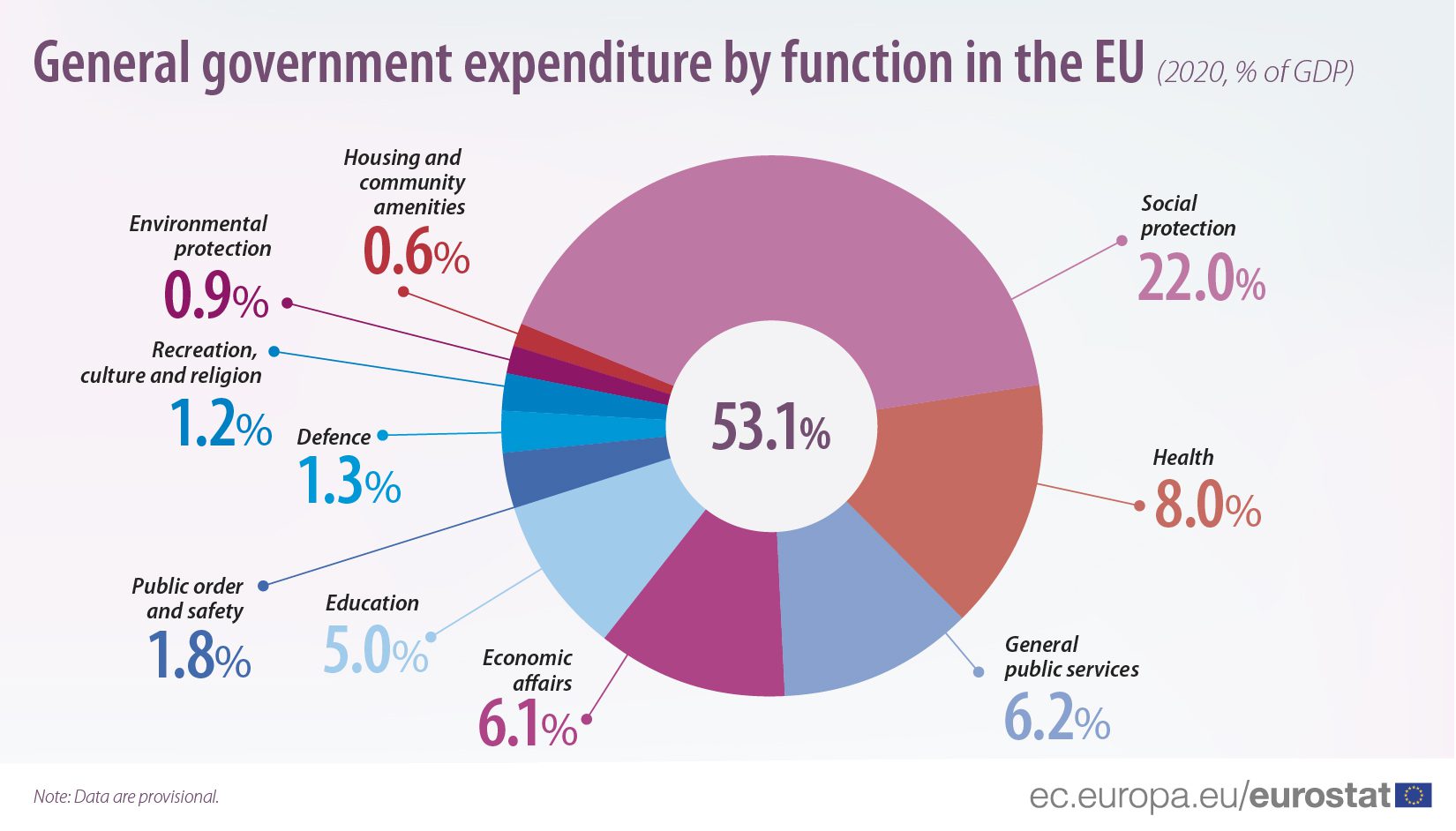
While total government spending increased, total government revenue fell from 2019 to 2020. The decline of €247 billion was equal to 3.8% of 2019 revenue. A total budget deficit of €77 billion in 2019 widened to €921 billion in 2020.