


Issue 34 opens with “Buckle Your Seatbelts,” an editorial that celebrates electoral wins while cautioning about future challenges. Commentaries on EU bureaucracy and on elite opinion set the tone. Features cover Europe’s demographic crisis, Islam’s challenge to intellectual freedom, and an unflinching look at multiculturalism in Britain. Essay topics include Trumpian disruption; Paleoconservatism; the Schuman Plan; and a history of antisemitism. We present a mini-debate on Scruton’s philosophy; interviews explore theology and anti-revolutionary conservatism. A tribute to ballet great Imre Dózsa and Molnar on the work of Marcel De Corte close the issue.
€24.99
609 in stock

In all issues, our mission is to explore the many conservative traditions in Europe and around the world, especially by providing wide-ranging coverage of intellectual and political developments on the European Right.
This issue begins with our editorial statement (“Buckle Your Seatbelts”) celebrating conservative successes at the ballot box, whilst also sounding a note of warning that our greatest challenges still lie ahead. Our Commentary section opens with Anthony Daniels on the tentacular bureaucracy of the European Union, and concludes with Mark Dooley’s examination of the elite’s tyranny of opinion.
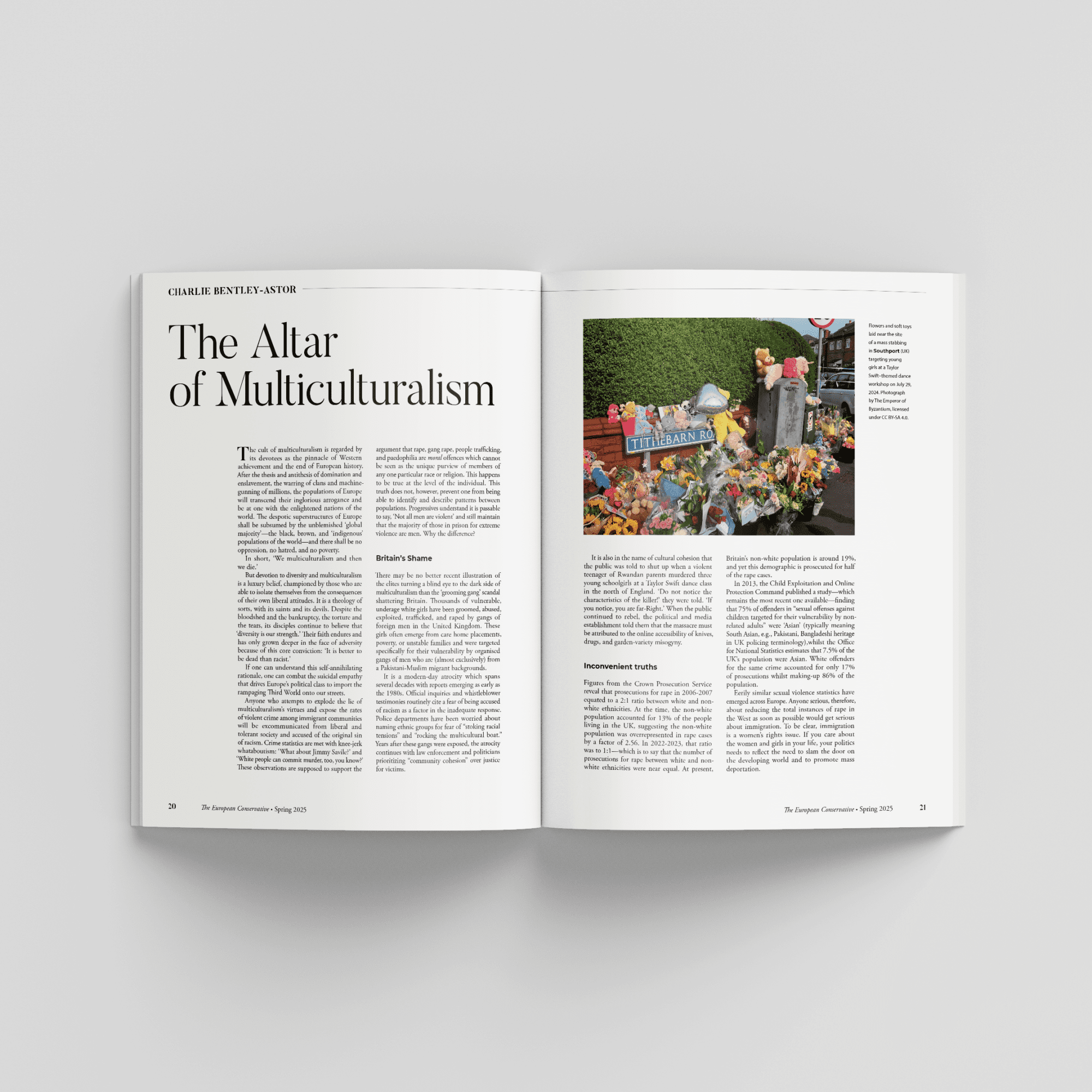
Our Features all address challenges facing Europe and the West more generally, beginning with Charlie Bentley-Astor on the dark side of multiculturalism in Britain. Alejandro Macarrón Larumbe provides a rich, statistical analysis of the demographic crisis that is only now beginning to capture the attention of the political class. And Andrew Tettenborn addresses the challenges Islam poses to the Western tradition of intellectual and discursive freedom.
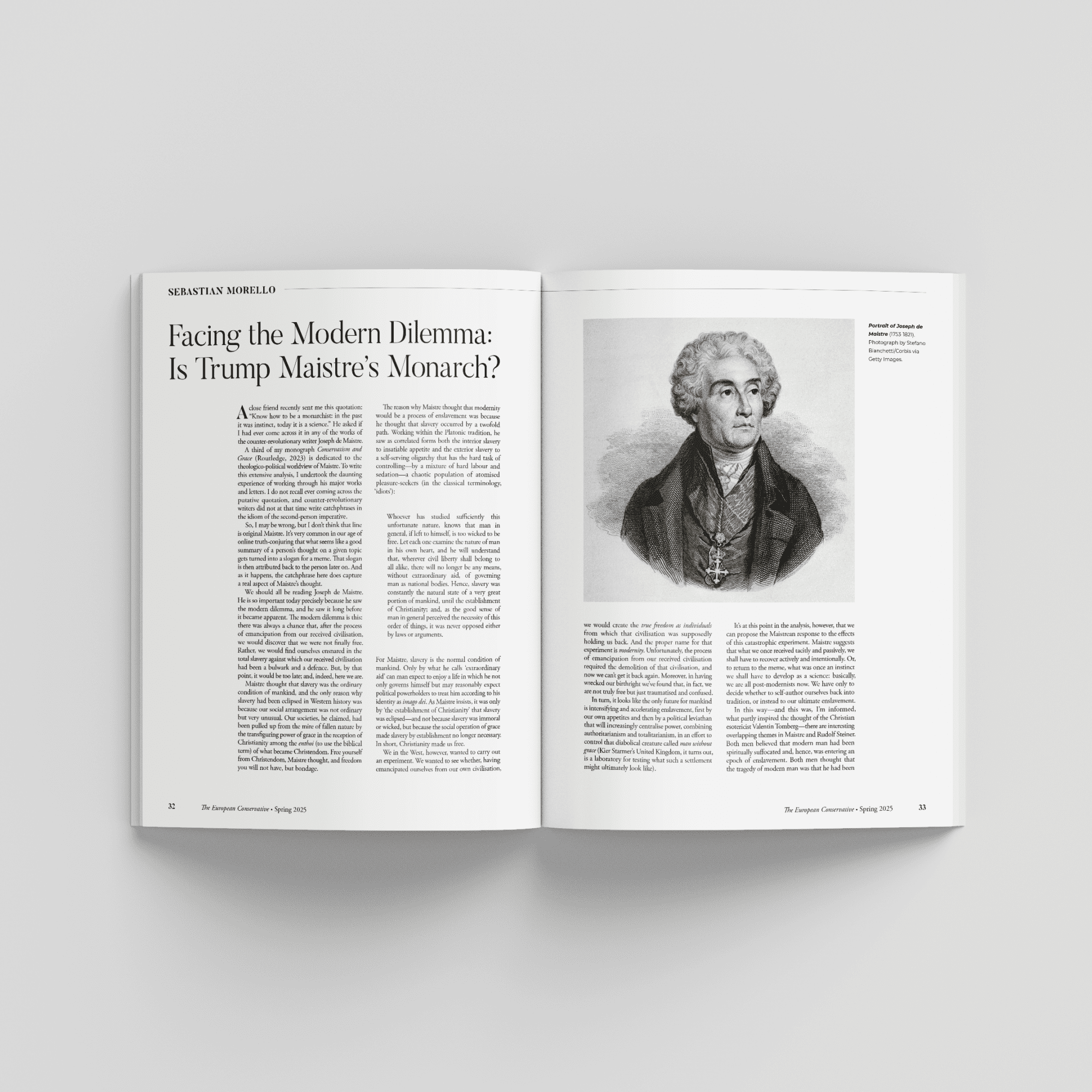
The issue also examines Trumpian Disruption, with essays by Sebastian Morello on Trump and the political philosophy of Joseph de Maistre, Paul du Quenoy’s ground-view “Inauguration Diary,” Henrique Schneider on the potential for a tech-like ‘disruption’ of the U.S. political landscape, and Thorstein Polleit on the post-liberal turn and recent changes in political culture.
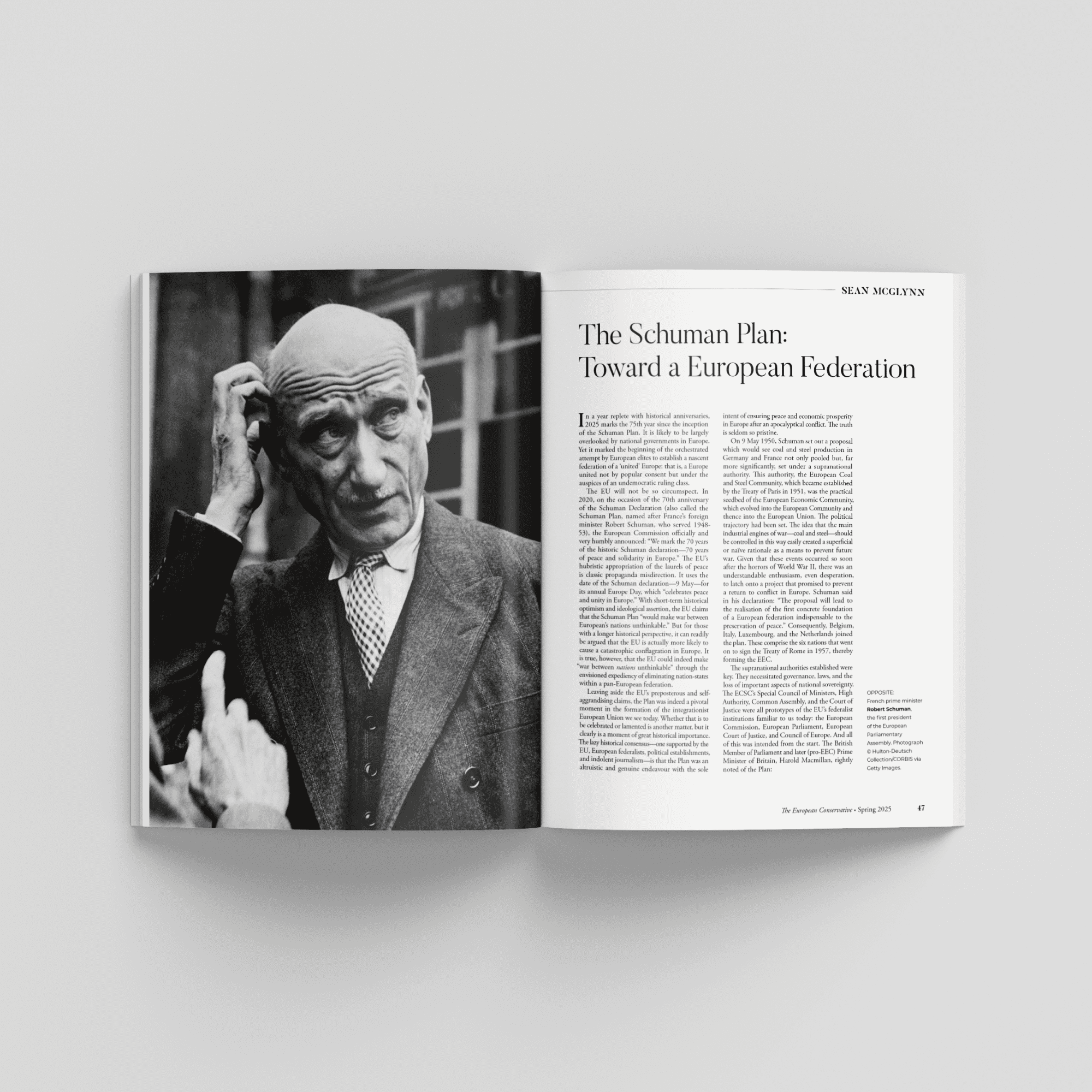
Beyond the U.S. election and its effects, essays include: Harrison Pitt on “The Strange Afterlife of Paleoconservativism,” Sean McGlynn considers the Schuman Plan 75 years on, an excerpt from Christopher Dawson critiques Marxian economics from a Catholic perspective, and Joseph Shaw’s “On the ‘Jewish Spirit’” draws attention to the lamentable history of latent antisemitism.
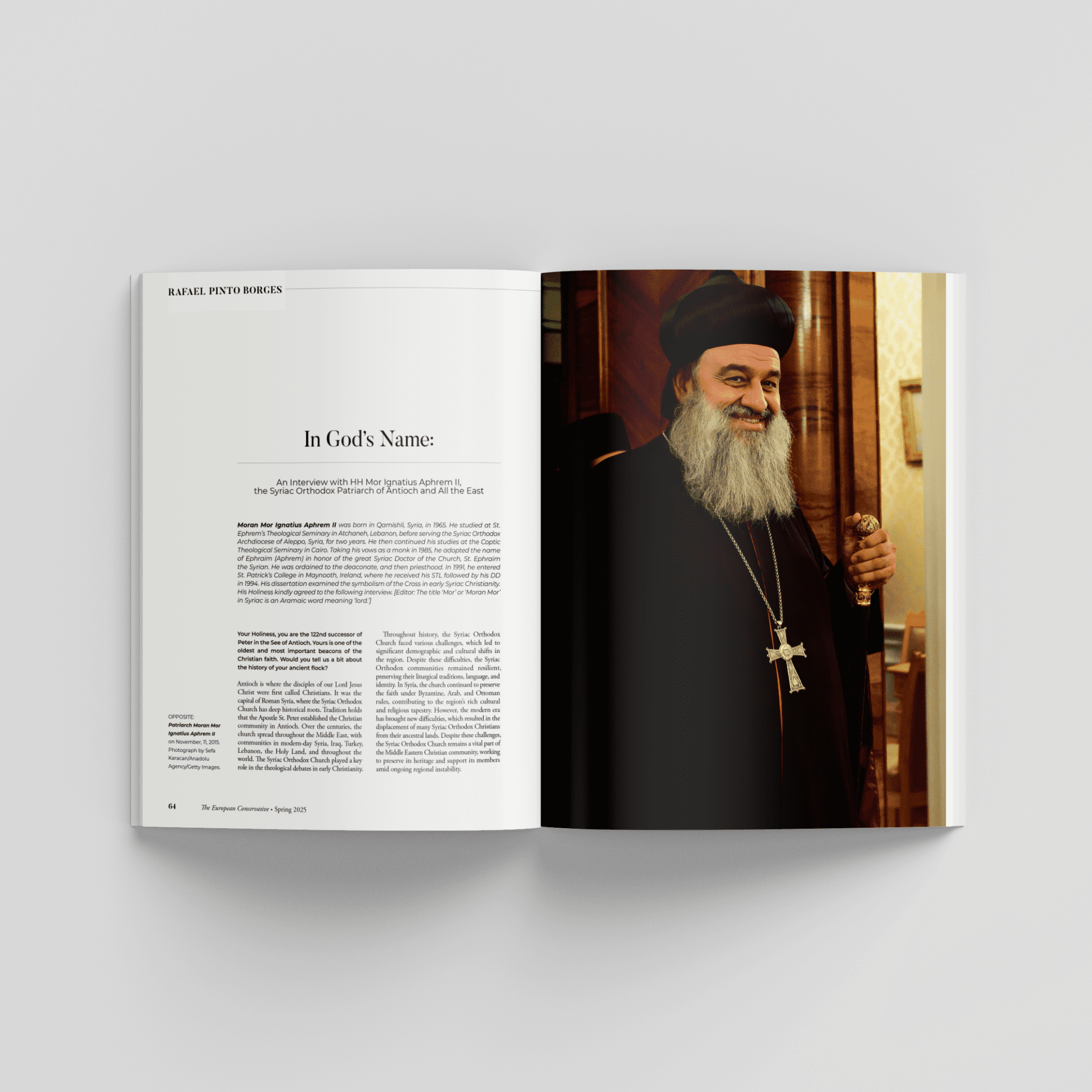
This issue’s two interviews come to conservative topics from the theological and political axes: Rafael Pinto Borges interviews the Syriac Orthodox Patriarch of Antioch and All the East about the plight of Syrian Christians; and our Editor-in-Chief, A.M. Fantini, interviews T. John Jamieson about the fundamental opposition that must exist between conservatives and the idea of revolution.
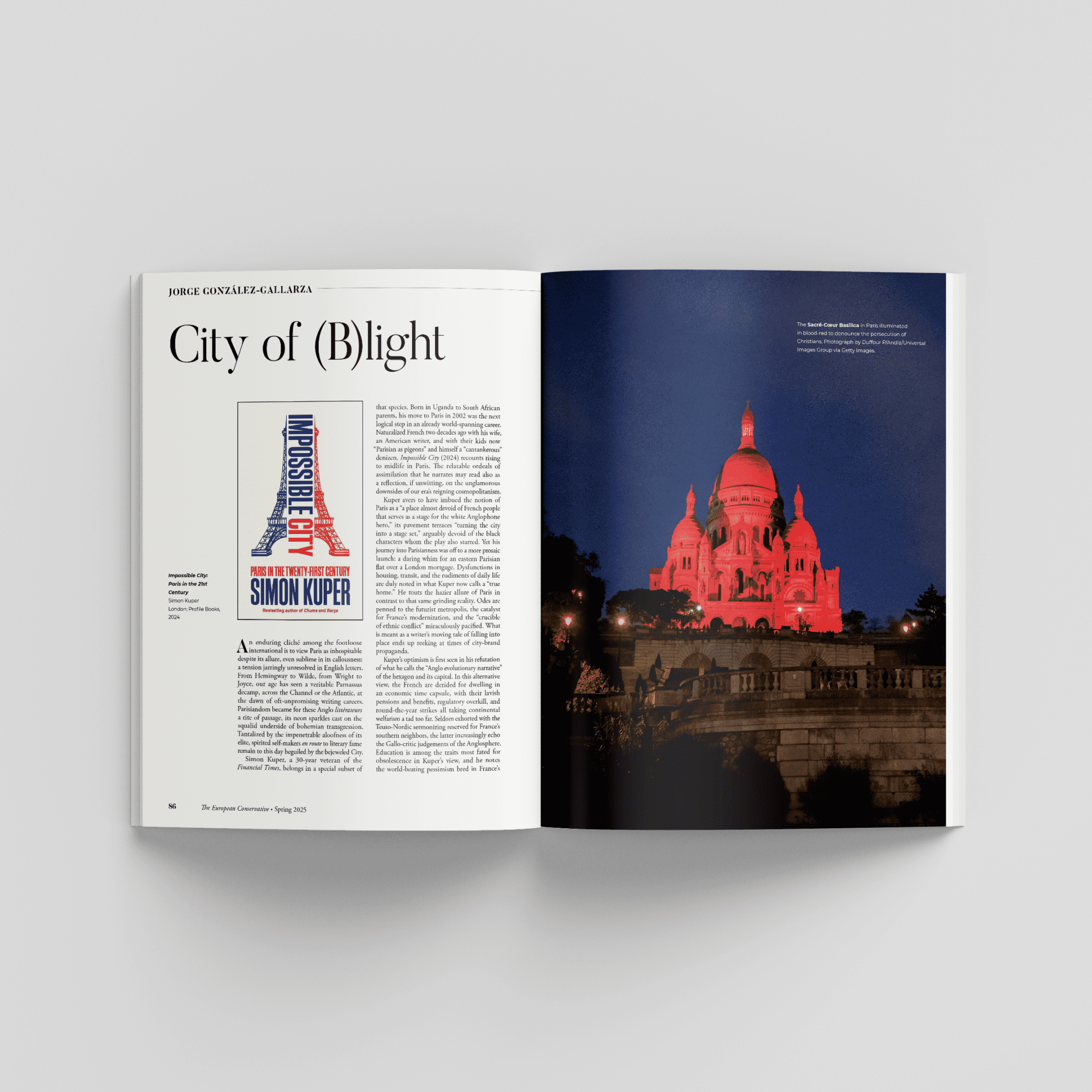
Every issue of The European Conservative features reviews of works that will be of benefit for the intellectually curious reader: The Conservative Bookshelf features a generous selection of summaries and short-form analyses, whilst Jorge González-Gallarza reviews Simon Kuper’s Impossible City: Paris in the 21st Century; Philip D. Bunn reviews a collection, edited by Tyler Chamberlain, on the works of George Grant; Shawn Phillip Cooper reviews James Matthew Wilson’s new critical introduction to the work of John Martin Finlay; and Thomas Banks revisits Waugh’s Put Out More Flags.
In this issue, we also feature a dialogue on Scruton’s Conservatism, beginning with Noël O’Sullivan’s review of Art and Politics in Roger Scruton’s Conservative Philosophy, and concluding with a response written by the author, Ferenc Hörcher, showing once again that respectful dialogue and debate are ever welcome as a way for iron to sharpen iron.
Sebastian Morello reviews Piccini Memoro Rosso wine and David Engels looks at the radicalism and utopian vision of the Ismāʿīlī movement. And no issue of The European Conservative would be complete without tributes to the great and the good, including Annamaria Steiner-Isky on the life of Hungarian ballet master Imre Dózsa (1941-2024) and Thomas Molnar’s 1975 article, excerpted from Itinéraires, on the work of Marcel De Corte (1905-1994).
As is true for every edition, all of the contributions were curated or commissioned by Alvino-Mario Fantini, editor-in-chief. The writers have diverse professional and intellectual backgrounds from politics and philosophy to the arts and popular culture.
€24.99
609 in stock
