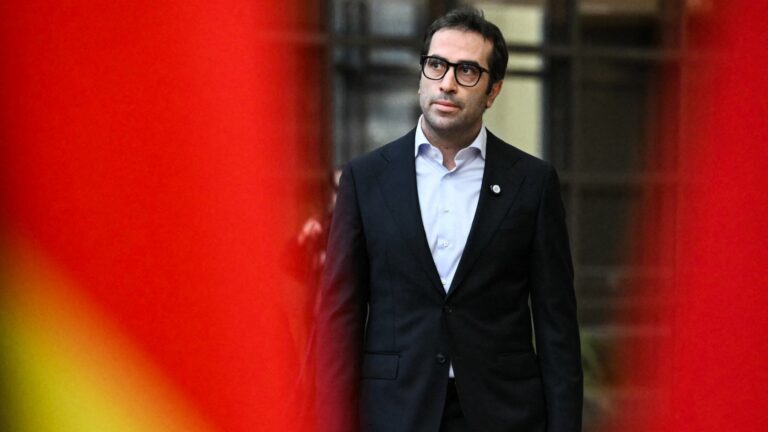
Giorgia Meloni
Andreas SOLARO / AFP
Giorgia Meloni’s visit to Donald Trump in Washington this Thursday, April 17, is critical for Europe. With the European Union constantly at risk of a trade war with the United States, the Italian prime minister hopes to use her special connection with Trump to become a bridge between Brussels and Washington. The challenge is significant, and expectations are high, but the risks are also considerable.
Since the announcement of this visit on April 8, things have not gone smoothly for Meloni. The Italian leader had to witness Trump indirectly ridiculing the leaders seeking to negotiate with him. Furthermore, the U.S. president warned he would deal exclusively with the EU as a whole, further complicating Italy’s ambitions. Aware of the pressure, Meloni humorously acknowledged the uncertainty surrounding this meeting earlier this week, admitting it with laughter.
However, this visit also presents significant opportunities. Meloni, one of the few European leaders who still has a close relationship with Trump, could use this personal connection to soften the U.S. stance on trade tariffs and improve the EU’s overall standing with Washington. Indeed, the European Commission, represented by Ursula von der Leyen, has endorsed the move and emphasized the importance of any mediation Meloni might achieve.
The Italian prime minister will attempt to promote a trade agreement with the United States, advocating zero tariffs on industrial goods aligned with European objectives. Nonetheless, it will not be easy. Meloni’s options are limited, and if the results are small, she may face criticism from Brussels.
Additionally, the visit will test Meloni’s ability to balance Italy’s interests with those of Europe. At home, she must satisfy the more patriotic factions, represented by Matteo Salvini and the more pro-EU ones like Antonio Tajani. Outside Italy, she must show loyalty to the EU—especially to countries like France, which are suspicious of her ties to Trump. However, no other European leader has the kind of chance that Meloni now has.
Although some observers see this meeting as an opportunity for rapprochement between Washington and Brussels on sensitive issues such as their stance towards China, others warn that Trump might demand more than Meloni can offer. Italian exports, particularly vulnerable to potential new U.S. tariffs, add additional pressure to the negotiations.
Therefore, Meloni faces her “moment of truth.” If she can bring concrete results for Europe from Washington, she could solidify her role as an indispensable intermediary across the Atlantic. However, a failure or unpredictable move by Trump could weaken her position both in Rome and Brussels.