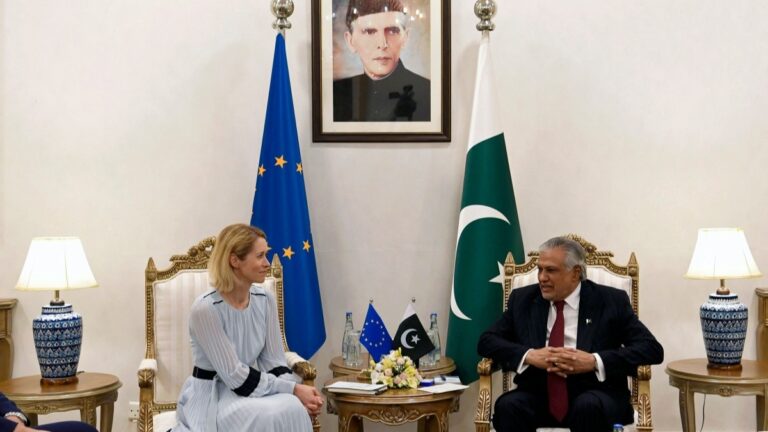
As EU elites become increasingly frustrated overEurope losing its global relevance under their leadership, “the pressure is mounting on pro-peace governments that pursue national interests and refuse to bow to Brussels,” Hungarian Foreign Minister Péter Szijjártó said in a statement on Thursday, the night before the Trump-Putin summit in Alaska, to which the EU was not invited.
According to the FM, the violent anti-government riots in Serbia, the EU’s open support for the Hungarian opposition, as well as recent articles subtly calling for a “revolution” in Slovakia, are all “part of the same script written in Brussels, which wants to eliminate pro-peace, patriotic governments and replace them with puppets of the EU.”
Due to these increasingly obvious attempts of the EU elites to force government changes in Central Europe, Szijjártó held a phone conference with Juraj Blanár and Marko Đurić—his Slovak and Serbian counterparts—on Thursday, with all three agreeing that their countries will have to stand by national sovereignty and peace even more strongly.
“Today, it is clearer than ever that increasingly aggressive attempts at destabilization, regime change, and external intervention are taking place in Central Europe against the patriotic Slovak, Hungarian, and Serbian governments,” Szijjártó said.
“We reaffirmed that we can count on each other’s solidarity in all of this,” he added.
The sovereigntist Hungary and Slovakia are the only two EU governments that have been consistently opposed to the EU’s unlimited military support for Ukraine in the past three years, arguing that isolating Russia will only prolong the suffering of Ukrainians and impoverish Europe.
Instead, they have been calling for the same kind of diplomacy with which President Trump now has a chance to end the bloodshed, while Brussels has successfully maneuvered itself into geopolitical irrelevance.
Serbia, on the other hand, is only an EU candidate country and has been waiting for approval since 2009. Despite being one of the earliest applicants among those currently in the queue, the EU has been blocking its accession process for years, blaming the alleged rule of law violations of the sovereigntist Vučić administration.
Most recently, the months-long series of anti-government protests in Serbia has escalated into violent riots across multiple Serbian cities, resulting in at least 60 people seriously wounded. Vučić described Wednesday’s clashes as “well-organized attacks” by agitators who want to provoke a “civil war” and vowed to restore public order with whatever means necessary.