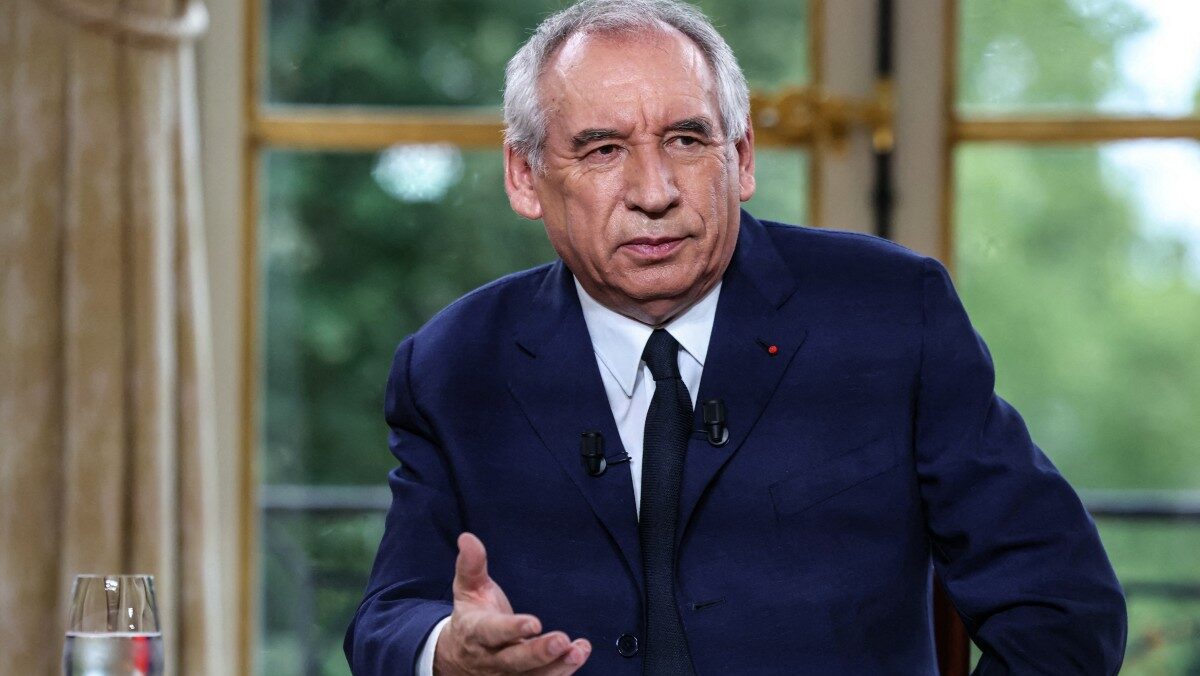
Tension is mounting as the deadline for the vote of confidence organised by French Prime Minister François Bayrou on Monday, September 8th approaches. As the last cabinet meeting before the vote takes place, the head of government is still desperately seeking the necessary level of support.
Since Monday, September 1st, the Prime Minister has been holding a series of consultations and making public statements in an attempt to save his job, as the outcome of the confidence vote he himself called, which will decide whether he remains at the head of the government, remains uncertain. For the moment, he can only count on the support of the presidential camp associated with the centre-right Les Républicains (LR) party—which does not give him the necessary majority.
Even among his declared supporters, doubt reigns. Within the ranks of Les Républicains, Interior Minister Bruno Retailleau has used his authority to call for unanimous support from LR MPs for the government, in the name of ‘responsibility,’ so as not to encourage the chaos into which the country risks being plunged, but there are many dissenting voices. But in a lengthy interview with Le Figaro, former President Nicolas Sarkozy expressed his disagreement with the official LR line, arguing that supporting the government perpetuated “confusion” between the various political forces, preventing his party from fully playing its role as the opposition. In agreement with the RN, Sarkozy defended the idea that only a dissolution would allow the country to emerge from ambiguity and stagnation.
Since their private meeting with the prime minister on September 2nd, Jordan Bardella and Marine Le Pen have no doubt about the course of action to take: they will not vote in favour of confidence, but hope for Bayrou’s fall and the organisation of new legislative elections as soon as possible. In addition to the prospect of obtaining a majority in the new assembly, this configuration would allow Marine Le Pen to make a splash around her own candidacy by publicly challenging the ineligibility penalty she was given in the spring. The secretary-general of the RN group in the National Assembly, Renaud Labaye, explained this strategy to the weekly magazine Le Point in July: “This will be an opportunity to test Marine Le Pen’s ineligibility. The prefecture will issue a decree to invalidate her candidacy, and we will challenge this decree before the Constitutional Council. Given its recent case law in our favour, I would not be surprised if it overturned the sentence.” Within the party, it is considered a gamble, but one that is worth taking.
With the expected coalition of the right-wing opposition—the RN and its allies—and the left-wing opposition—La France Insoumise against François Bayrou—the success or failure of the vote of confidence lies in the hands of the Socialists, who can choose to tip the balance one way or the other. According to the latest news, the left-wing party has decided not to support the government. The party’s first secretary, Olivier Faure, has assured that this decision is now “irrevocable.”
If Bayrou fails to win the confidence of the majority of MPs on Monday, September 8th, he will be forced to submit his resignation to the president of the republic. However, the dissolution of the Assembly will not be automatic and will depend on a presidential decision. Macron may choose to appoint a new prime minister without calling the French people back to the polls.
In this scenario, former European Commissioner Thierry Breton has put forward an unexpected hypothesis: the appointment of a prime minister from the largest parliamentary group in the National Assembly, namely the RN. The manoeuvre is possible, albeit highly unlikely. For the RN’s opponents, it would have one advantage: it would discredit the national right-wing party before the presidential elections by entrusting it with the country in an inextricable political, financial and economic situation.
The Socialists are also not counting on a dissolution, which would certainly be unfavourable to them, and want to press their advantage. Olivier Faure no longer hides his goal: to be appointed prime minister by Emmanuel Macron once Bayrou is out of the picture, at the head of a left-wing government.
On Tuesday, September 2nd, President Macron summoned François Bayrou, Bruno Retailleau, and the two former prime ministers of his majority, Édouard Philippe and Gabriel Attal, to the Élysée Palace to prepare for the next steps. The possible appointment of a left-wing government was discussed. Retailleau said he was fiercely opposed to this, but Macron is not ruling it out. It should be remembered that despite his centrist appearance, he comes from the Left and began his political career as a minister in a socialist government. As the French proverb says, “chase away what is natural, and it will come back at full speed” (chassez le naturel, il revient au galop.)