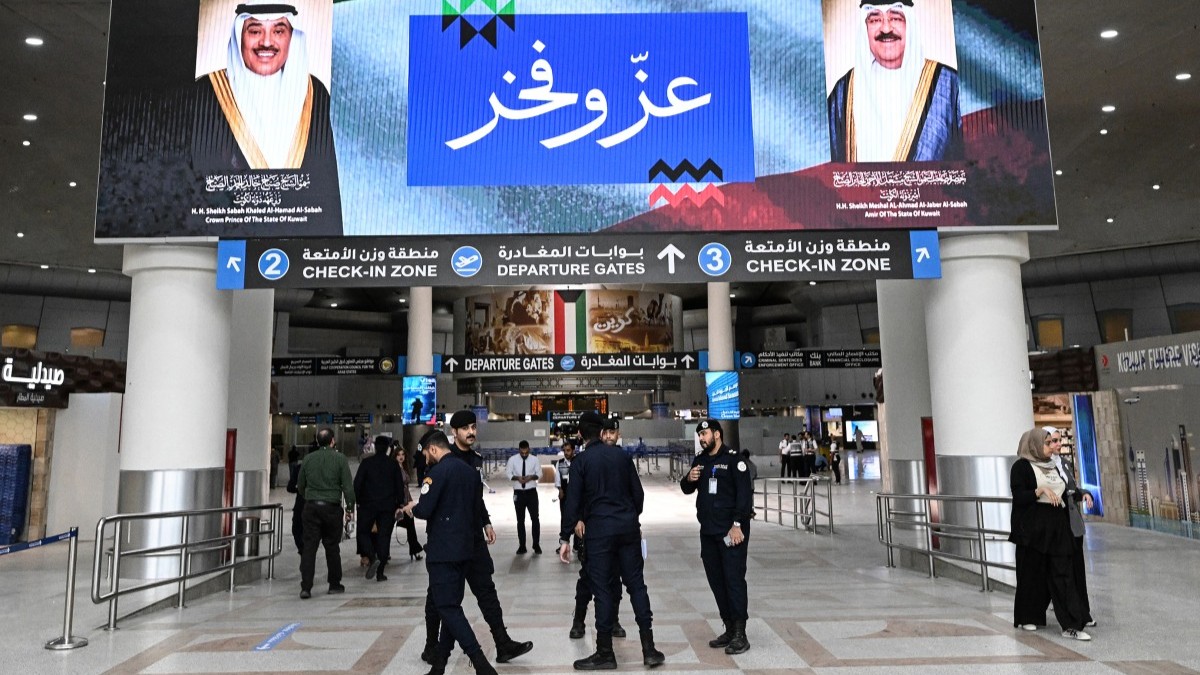
Kuwaiti security officers seen at Kuwait International Airport in Kuwait City on June 1, 2026, as the airport resumes operations following a phased reopening plan.
YASSER AL-ZAYYAT / AFP
Iran and the United States fired on various targets as conflict intensified on Tuesday, June 2nd—alongside ongoing attempts to write an acceptable peace treaty.
U.S. Central Command (CENTCOM) acknowledged its strikes on Qeshm Island in the Strait of Hormuz were “in response to attempted attacks by Iran across the Middle East.”
Tehran’s actions targeted American bases and helicopters in what the Islamic Republic called a “regional country,” meaning either Bahrain or Kuwait: both were spared drone and missile strikes thanks to a combination of domestic and U.S. air defence and poor quality Iranian projectiles.
Kuwait did report that Iranian UAVs hit its international airport, causing both injuries and “significant” building damage. On Wednesday morning, all air traffic was suspended. Kuwait condemned “criminal Iranian aggression,” later acknowledging that one died and 63 were injured in the drone assault on the airport.
Previously, CENTCOM reported disabling an Iran-bound unladen oil tanker as part of its naval blockade of the Strait of Hormuz. One of its aircraft shot a Hellfire missile into the engine room of the vessel, flagged in Botswana. Reportedly, the crew “ignored repeated warnings” prior to the attack.
Despite the overnight conflict, U.S. Secretary of State Marco Rubio made a public appearance before Congress—his first since the war began—telling a senator “The war is over.”