Brussels’ problem isn’t geography, ideology, or even democracy. It’s fatigue. The EU has become the world’s most sophisticated paperwork generator, a system that confuses regulation with resolve and performance indicators with progress.
The European Union loves words the way Rome loved marble. It builds cathedrals of them: directives, communications, zero-effect “own-initiative resolutions,” strategic roadmaps—monuments for emotion rather than movement. Every crisis spawns another five-year plan, thick with benchmarks and comfortably detached from delivery. It’s the old reflex in Brussels/EU and the capitals: when in doubt, set up a committee and spreadsheet it. The comparison with the five-year plans of the old Eastern Bloc is, of course, rhetorical but not entirely unfair. Both measured success by inputs, not outcomes. I can attest to this, having grown up with five-year plans as a teenager in the former GDR. The EU doesn’t command production; it commands PDFs. When progress is counted in “initiatives on track,” inertia starts looking like excellence.
Despite all its eloquence, the European Union has rarely felt smaller. The world races ahead whilst Brussels debates the font size of its PowerPoints. ‘Decline’ has become a literary genre, but decline compared to what? To the age of empire, when Europe ruled the waves of half the globe? Or to the 1990s liberal high after the collapse of the Communist world and the Berlin Wall? Or to the EU enlargement euphoria of 2004, which was the crowning achievement of the lifelong commitment of Otto von Habsburg and his Paneuropa Union? The more relevant comparison is with what the 450 million citizens of the Union’s twenty-seven member states actually want to be. Measured against that, the gap between rhetoric and reality widens into a chasm. Decision-making has multiplied while purpose has evaporated. Each new regulation proves the Union’s legal genius and its political anaemia.
The EU doesn’t need to rule the world; its institutions and procedures simply need to function. A club of 27 sovereign states able to defend themselves, keep the lights on, trade in good faith, and be heard without shouting would already be progress. But strength isn’t only Eurostat’s GDP. It’s also the cultural confidence that once gave Europe its pitch: the moral grammar that linked liberty to responsibility and law to conscience. That grammar was drafted by the Judeo-Christian heritage which Brussels now politely forgets while still living off the moral interest. The natural family, built on the marriage of one man and one woman and their children; respect for human life from conception to natural death; the solidarity between generations that makes grandparents the anchors of transmission rather than the so-called silver economy (Europe’s polite term for pensioners in permanent standby); the public recognition of mothers’ work done in the home and for intergenerational solidarity; and the fact that children are not a budget line of the public service—these are some of the civilisational foundations and non-negotiable values of any enduring society. Without them, economic sovereignty is just an empty shell echoing with slogans about strategic autonomy. The demographic fatigue of the EU member states mirrors its moral fatigue, and Brussels/EU PowerPoint slides do not reproduce. Renovatio Europea is not about nostalgia; it is about confidence and the intimate conviction that the story of the European Union is still worth telling. Selective immigration of highly qualified workers may serve certain sectors well, but it cannot substitute for a continent’s belief in its own continuity. Economic sovereignty without demographic vitality, or without a living awareness of its Judeo-Christian roots, is an impressive yet hollow vessel. In this respect, the EU institutions risk becoming the first adversaries of the very citizens they claim to serve.
For decades, Brussels/EU has prided itself on its “normative power”: the supposed ability to shape the world by exporting values. It worked well enough when the rest of the world was eager to sell to 450 million European consumers and Europe itself was running on cheap Russian gas. Now growth limps, energy prices soar, and the Commission’s latest brainstorm is a “Corporate Contribution for Europe”: in plain terms, a protection fee for global companies. In Sicilian parlance, it’s a pizzo dressed up in moral virtue. Pay to play in the single market but call it solidarity, not extortion. The EU can still legislate the world into compliance, but not into respect. The problem isn’t that it has values; it’s that its institutions mistake norms for power. Procedure has replaced preparedness: every file must be consulted, translated, and impact-assessed until urgency quietly dies of old age.
Blaming “Brussels/EU” is easy sport, but the truth is duller: the EU institutions act within their mandates. The Commission regulates; it does not rule. The Council mediates national interests; the Parliament delivers moral theatre without consequences. The deeper pathology is cultural: a permanent flight from responsibility behind procedures. A grown-up Union would start by asking which institutions it needs, and for what. Above all, it would rediscover the long-lost art of competence. Clarity about who does what would already be revolutionary. Energy networks, defence logistics, border infrastructure: these are European goods that demand shared funding and strict deadlines. Education, culture, civil-statute procedures, and family policy should remain national: that is where identity lives. The old principle of subsidiarity was meant to keep unity and sovereignty in balance. Today it survives mostly as a decorative footnote in Council conclusions.
Europe doesn’t need another “Deal.” What it needs is sobriety. 27 sovereign states working together where their interests align, without trying to clone one another’s politics, would already be a Union worth having. Uniformity was never Europe’s genius; its strength lay in voluntary coordination in learning from one another rather than legislating sameness. Cooperation, not conformity; partnership, not paternalism. Yet cooperation without discipline is merely chaos with better stationery. Real sovereignty means doing your homework, not just vetoing someone else’s. If the EU wants to avoid replacing fossil dependency with “clean dependency” on imported batteries, rare earths, and geopolitically awkward supply chains, it must learn to match ambition with competence. A confident Union would blend national initiative with collective discipline: unity where necessary, diversity where possible.
Europe will recover its credibility the day it rediscovers the virtue of timing. The question isn’t whether to act—Brussels/EU can always act—but who measures. If the Commission holds the stopwatch, member states cry intrusion; if capitals hold it, progress moves at geological speed. The cure is simple: radical transparency. Every EU-funded project should publish live dashboards with costs, delays, milestones, and those responsible—the sort of honesty that scares consultants and delights taxpayers. But transparency also means honesty in narrative: less myth, more daylight. That is why the European Union needs a demystifying culture—independent, multilingual, investigative. A civic version of the old CECA spirit: truth before protocol, substance before spin. Only by replacing self-promotion with scrutiny can institutions rebuild trust faster than any new treaty ever could.
Behind every technocratic debate hides a more human question: why does the European Union exist at all? The answer isn’t just market size or regulatory reach; it’s moral and cultural. Europe’s civic order grew from Christian faith, from conscience and reason, an inheritance that made pluralism possible. Forgetting it doesn’t make the EU more neutral, only more forgettable. Reconnecting with that heritage doesn’t mean baptising directives or publishing them in Latin. It means recovering the virtues that once made European governance distinct: respect for the human person from conception to natural death, subsidiarity, stewardship, and the belief that freedom without purpose degenerates into drift. These aren’t museum pieces; they’re operating software. A European Union that remembers its Judaeo-Christian roots can still renew itself. Cultural confidence, demographic vitality, and civic pride are not nostalgic luxuries but competitive advantages. A continent unsure of its story cannot expect anyone else to buy the sequel.
If the EU is losing weight on the world stage, it is not because democracy is obsolete or values outdated; it is because ambition has outpaced ability. Speeches sound imperial, but supply chains look fragile, and transmission between generations falters. Regulations multiply, and results thin out. When rhetoric outruns reality, decline writes the minutes.
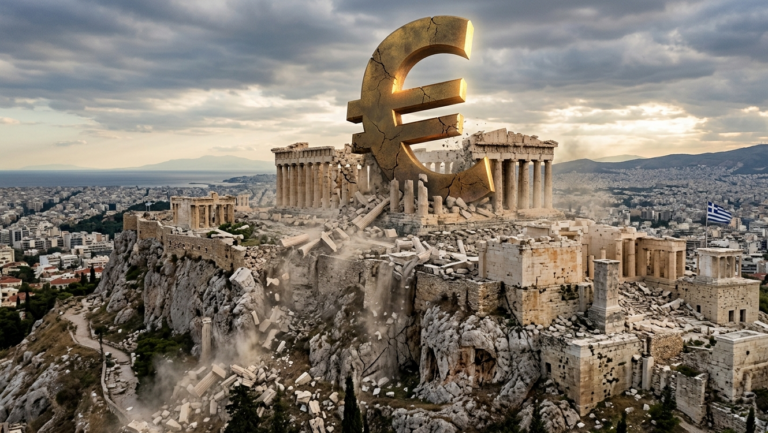
Recovery will not come from new slogans but from plain competence: shorter supply lines, dual-use industries, permits issued in months rather than decades, borders that work, diplomacy that delivers. No crusade required, just the quiet heroism of doing measurable things on time. The European Union isn’t a Greek tragedy with fate written in stone. It is a management case with a closing deadline. The question is no longer whether the European Union is declining. It is whether it still intends to decide in the interest of subsidiarity and its 27 sovereign member states.