Friedrich Merz
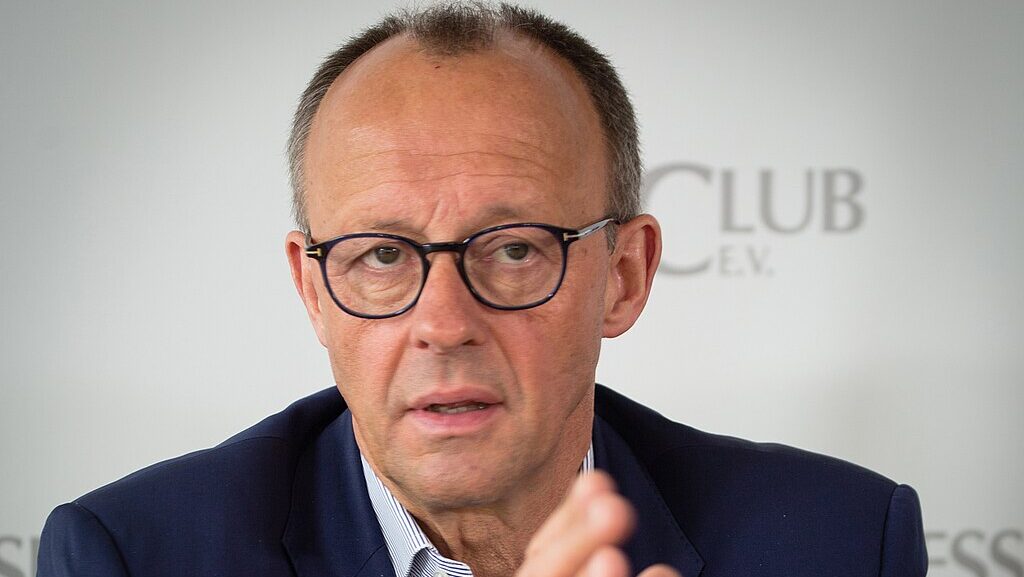
Michael Lucan, CC BY-SA 3.0 DE, via Wikimedia Commons
When Chancellor Friedrich Merz remarked that migration had changed Germany’s Stadtbild, he did not deliver an attack. He stated an observation. Yet in today’s Germany, even the most obvious truths must be whispered. To notice what everyone sees has become an act of political courage.
As someone who came to Germany at seventeen, I find the hysteria surrounding Merz’s words deeply revealing. What he said is not racist; it is common sense. Across German cities, social reality has changed visibly in recent years. To speak about that without euphemism should be the minimum of a mature democracy.
Merz said that anyone with daughters would understand what he meant. Critics called that populist, yet it captured something real. Safety, order, and public trust are not abstractions; they are the atmosphere of everyday life. Parents feel this when this atmosphere shifts, and the refusal of elites to acknowledge it only deepens mistrust.
The reaction to Merz shows a pattern that Germany has seen before. In the Weimar Republic, every conservative voice that appealed to order or civic virtue was accused of being ‘fascist.’ The liberal and left-wing elites believed they were defending democracy, but by treating moderation as extremism, they destroyed the middle ground. When the conservative center is silenced, the true extremists inherit the stage.
The same reflex dominates today. To call for border control or integration policy is to risk moral denunciation. The left once fought censorship by the Church; now it has become a moral clergy of its own, preaching unconditional acceptance while punishing any deviation from the official creed. A society that cannot distinguish between realism and hate speech begins to lose its grip on reality itself.
Merz was right that many share his concerns but remain silent. Germany lives under a “spiral of silence,” as Elisabeth Noelle-Neumann described decades ago. Ordinary people avoid political conversation not because they are hateful, but because they are tired of being accused. This retreat from public speech is corrosive. It leaves politics to the loudest and most radical, while the moderate majority disappears behind self-censorship.
In this climate, conservatism is not an ideology of anger but one of courage. It dares to speak when others prefer to pretend. It insists that compassion and realism are not enemies, that a society must care without lying to itself.
As a migrant, I know that integration in Germany can succeed, but it does not happen automatically. It requires discipline, clear rules, and confidence in the host culture. When the state hesitates to enforce its own norms, it fails both the newcomers and the natives.
The Left’s refusal to distinguish between those who contribute and those who abuse tolerance has weakened public trust. The result is moral exhaustion. Europeans have confused openness with virtue, as if borders and limits were signs of cruelty rather than preconditions of responsibility. A society that cannot say no eventually loses the meaning of yes.
Merz’s emphasis on order in migration policy is therefore not exclusionary; it is protective. It protects the legitimacy of migration itself. If citizens believe their leaders have lost control, they will turn away from the idea of immigration altogether. The Left’s moral absolutism is thus the greatest threat to liberal openness.
Part of the anger that Merz’s remarks have revealed is social rather than ethnic. The people who lecture about tolerance often live far from the consequences of their own policies. Their children attend private schools, their neighborhoods remain peaceful, their contact with ‘diversity’ is theoretical. Meanwhile, working families, commuters, and small business owners experience the daily erosion of security and civility.
This division between those who experience policy and those who only discuss it is at the heart of the crisis of Western democracy. The same pattern is visible in the U.S., France, Britain, Sweden, and the Netherlands. Everywhere, elites treat common experience as ignorance and ordinary citizens as a problem to be managed.
German politics increasingly confuses moral virtue with good governance. To question a policy is to question one’s own humanity. This is not progress; it is paralysis. The late philosopher Hannah Arendt, herself a refugee, warned that when facts become secondary to emotions, totalitarian habits return under democratic slogans.
The danger today is not dictatorship; it is the quiet replacement of political debate with moral theater. The question is no longer whether a policy works, but whether it feels virtuous. And so, politicians compete not in competence but in purity.
Merz, with his plain language, violated this unwritten rule. He reminded the country that reality exists outside television studios and ministerial speeches. That reminder was treated as blasphemy. Yet, without such reminders, public life becomes detached from life itself.
The Weimar Republic collapsed not because its citizens lacked compassion, but because its institutions lacked courage. The democratic center was intimidated into silence by moral crusades on both sides. The moderate conservatives who tried to defend order were dismissed as authoritarian—until the real authoritarians arrived.
History does not repeat itself mechanically, but it echoes. When every concern about migration, security, or cultural identity is met with accusations of hate, the same dynamic begins again. A democracy that punishes normalcy creates the conditions for extremism.
I write this as someone who has benefited from Germany’s openness but who also knows that openness must be defended by realism. Integration requires more than kindness; it needs honesty. The future of Europe depends on leaders who can combine empathy with clarity, who can say what they see without apology.
Friedrich Merz may be imperfect, but his refusal to retreat from his words deserves respect. He has reminded Germany that truth does not become false simply because it offends fashion. If the political class continues to moralize instead of governing, it will find itself replaced not by dreamers, but by radicals.
Democracy survives when people dare to describe reality as it is. To do so is not hatred; it is civic responsibility. The true danger lies not in speaking the truth, but in the fear that prevents it.