Conservative Majority to Edit Chile’s Constitution
Conservatives and right-of-centre parties won 33 of the 51 seats in the election to the Constitutional Council that will decide on the future of the new proposed constitution.

Conservatives and right-of-centre parties won 33 of the 51 seats in the election to the Constitutional Council that will decide on the future of the new proposed constitution.

Moscow demands concessions so that the West’s sanctions do not obstruct the free flow of its own agricultural exports.

Google and other tech Leviathans are playing a wait-and-see approach with the EU’s AI Act, whether or not AI technology will run afoul of EU privacy laws.

No more tax evasion with crypto, as service providers now need licenses to operate and are required to collect and share data on all transactions with the relevant authorities.

The UK and the Netherlands have vowed to create an international “fighter jet coalition” to help Kyiv procure F-16s and other aircraft. France and Belgium have promised to train Ukrainian pilots, however, no aircraft has been pledged so far.

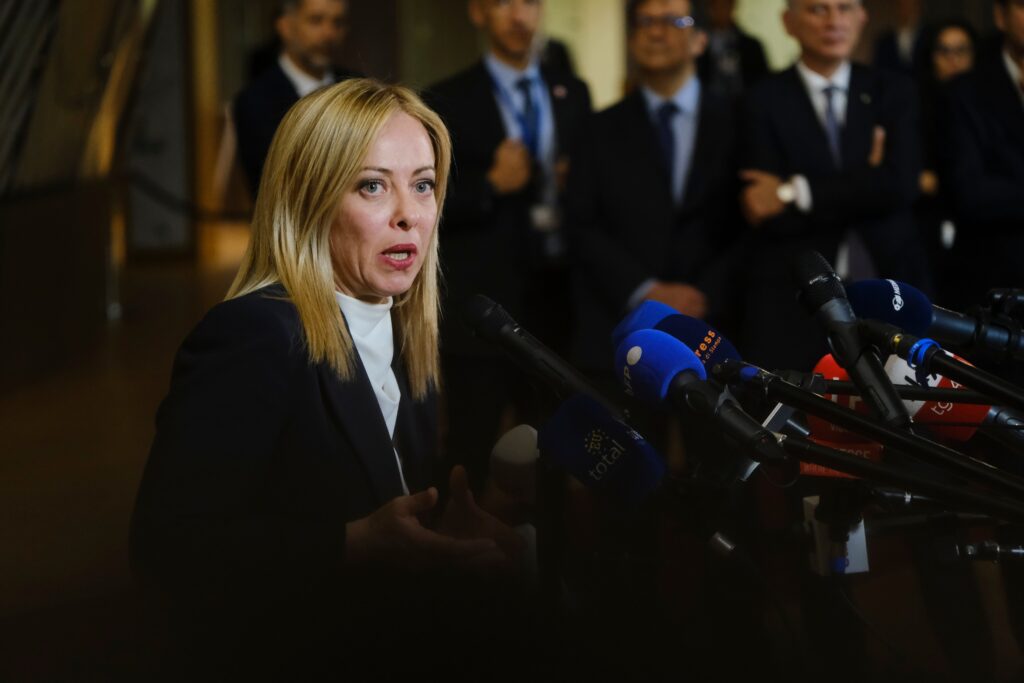
For Meloni, the problem is not only financial but ideological. This observation is shared by Pope Francis, who also denounced “a culture that is unfriendly, if not an enemy, of the family.”

EU funds must be disbursed without political bias, the delegation stressed, but as Minister Navracsics noted, the MEPs themselves were prone to partiality, inevitable since they hadn’t read the document’s contents.

“The president of the republic has issued the decree … as he was obliged to do” by the constitution, the presidency said in a statement on May 17th.

Among those facing trial are students who provided information about the whereabouts of the murdered teacher and an Islamist preacher who allegedly communicated with the terrorist online.

The dates are the default ones and can only be changed by a unanimous decision of the Council.
German Chancellor Olaf Scholz announced the end of the gas levy and the introduction of a gas price cap to the tune of €200 billion in loans as a ‘double whammy.’ The minister of finance defiantly called the decision a “crystal clear reply to Putin.”
The raids against the AfD, Germany’s sole conservative opposition party, come as it has witnessed its popular support skyrocket amid growing discontent over the government’s self-crippling sanctions against Russia.
Church attendance among Dutch Catholics has fallen from 80% in the 1950s to only 3%, leading to increasing numbers of church closures. The diocese of Amsterdam will close more than 80% of its churches within the next 10 years, most of them in rural areas.
Across the sector, farms are warning that rising costs without compensatory market prices are bringing them to ruin, making it difficult to continue farming, and risking food production.
If the election were held this Sunday, AfD would garner 27% of the total vote in the eastern federal states, placing them one percentage point ahead of the CDU.
After formally signing the Ukrainian regions of Luhansk, Donetsk, Zaporizhzhia, and Kherson into the Russian Federation, Putin promised that strikes on Russia’s new territories would be viewed as acts of aggression.
The law will prohibit any activity, deemed to ‘interfere’ with a woman’s decision to have an abortion, from taking place within 100 metres of facilities that offer the procedure.
Despite its ties with Russia, Serbia announced it won’t recognise the results of the referendums held in Russian-occupied parts of Ukraine. Serbia’s own problems with Kosovarian independence, as well as warnings from the EU, play into that decision.
Hungary will be the first European country to launch an official survey amongst its citizens on the European sanctions against Russia. Prime Minister Orbán also continues pleading for peace negotiations to try and put an end to the war in Ukraine.
The national-conservative, anti-globalist FPÖ increased its share of the vote to 18.8% in the Tyrol’s state elections on Sunday, overtaking the leftist SPÖ as the second most popular party.
In this context, it should be noted that Catalan separatist groups have generally been supportive of large-scale African migration into their region.
Irregular migration into the Canary Islands has intensified as of late, with 700 arrivals in a four-day period by way