“Life is hard,” Yahya, a leader in Iran’s Christian house church movement, told David Yeghnazar of Elam Ministries recently. Yahya (not his real name) was sending voice messages due to Iran’s wartime internet blackout, which makes it nearly impossible for Christian leaders like the Iranian-born Yeghnazar outside the country to reach their contacts in Iran. “But we are continuing. And the Lord is showing his glory.”
Despite having no church buildings, Iran’s evangelical population is the fastest growing in the world—some have called it a full-scale underground Christian revival. There are now over one million Christians in Iran. Mosques are closing down, with some saying that the “Jesus revolution” in Iran is partly to blame; Reza Pahlavi, the erstwhile crown prince of Iran and son of the former Shah, noted in 2024 that, “Iran has probably right now the fastest-growing faith in Christianity than any other faith that the country has had. We have hundreds of underground churches.”
The regime views this revival as an enormous threat to their repressive and theocratic Islamist vision for the ancient nation. It is illegal for Muslims to convert and for Christians to evangelize to them. Pastors—including Yahya—have suffered harassment, imprisonment, and torture for their faith. Since February 28, they are also enduring wartime conditions, and many fear that a regime crackdown is coming.
The first Persian worshippers of Christ may have predated Pentecost—some scholars believe that the magi who followed the star to Bethlehem in search of “the King of the Jews” were Zoroastrian priests. The Acts of the Apostles records that on Pentecost, Parthians, Medes, and Elamites heard the Apostle Peter preach the gospel in their own language, and church tradition says that Matthew, Jude, Simon the Zealot, Bartholomew, and Thomas reached the region on their missionary journeys.
Christianity has been a continuous presence in what is now Iran for nearly 2,000 years, predating Islam by centuries. In addition to ancient Christian communities (Armenians, Assyrians, and Chaldean Catholics), Protestant missionaries arrived in Iran in the 1800s, and their commitment to literacy and medical aid gained them the affection of many. Under the rule of Mohammed Reza Shah, Christian evangelistic work was permitted. That ended after the 1979 Islamic Revolution.
Although Christianity is technically protected under Article 23 of the Iranian constitution, the mullahs evicted most missionaries and forbade evangelism. “Christians in Iran are heavily and systemically repressed, as the authorities seek to root out what they see as a threat from the West to undermine their Islamic rule,” states Open Doors. “Converts are most in the firing line. House churches are commonly raided, often followed by arrests, interrogations, pressure to inform on other believers and long-term imprisonment. This is typically under charges of breaching ‘national security’. The conditions in prison are dire and bail sums can be extortionately high, financially paralysing families.”
After the 2025 Twelve Day War, Iran’s Parliament passed the “Law on Intensification of Punishment for Espionage and Cooperation with the Zionist Regime and Hostile States Against National Security and Interests.” The regime accuses converts of “Zionist Christianity,” and crackdowns have intensified; arrests of Christians doubled in 2025. After the 2025 ceasefire, 54 Christians in 21 cities were arrested on charges of “espionage,” and state media has “suggested links between Evangelical Christians and foreign intelligence services, a narrative that paints an entire faith community as a security threat.”
Since the current war began, getting in touch with Christians inside Iran has been nearly impossible (I have had several scheduled conversations cancelled because of the internet blackout). Both internet and satellite TV channels have been blocked in order to prevent communication inside the country; after massacring tens of thousands of protestors in January, the regime does not want Iranians to be able to organize or launch an internal revolt as they struggle to survive. Dissidents must be kept in isolation.
Mansour Borji, director of the UK-based Iranian religious freedom advocacy organization Article 18, told Christianity Today that he has received just a few messages from inside Iran; most were hopeful that the conflict signaled “an end [to] the tyranny,” and some expressed fears that a war that does not end the regime will result in more violent repression. Despite these dangers, many Iranian Christians are taking the opportunity presented by perilous times to share the hope of the gospel.
David Yeghnazar reported in Christianity Today that Yahya had reached several remote villages to share the gospel and distribute Persian New Testaments; five converted to Christianity. It is against the law to sell or own Persian Bibles; Iran’s Bible Society has been banned for decades. During the Twelve Day War, some Christians “opened their homes to those fleeing major cities” and “walked the streets to pray even as bombs fell.” After the January crackdown, Christians “went into hospitals to pray with the wounded” and “visited grieving neighbors.”
“Through gaps in the internet blackout, I hear that many house churches are still meeting despite government checkpoints increasing the risk of being searched and arrested,” Yeghnazar reported. “Recently, a team member told me about a group of 9 Christians who continued to meet amid the chaos and violence. Friends and family members noticed the peace the Christians had and wanted to know more. They then joined the group, which has grown to 21[.]” Iranian Christians are also working hard to care for their neighbors with food packages and other supplies.
In wartime conditions with new dangers looming on the horizon, the church in Iran carries on its work. When Yeghnazar asked one couple why they were willing to suffer for the gospel, they told him: “Because we have tasted and we have seen.” Yahya was even more succinct. “The church in Iran,” he said, “is alive.”

Iran’s Underground Church in Wartime
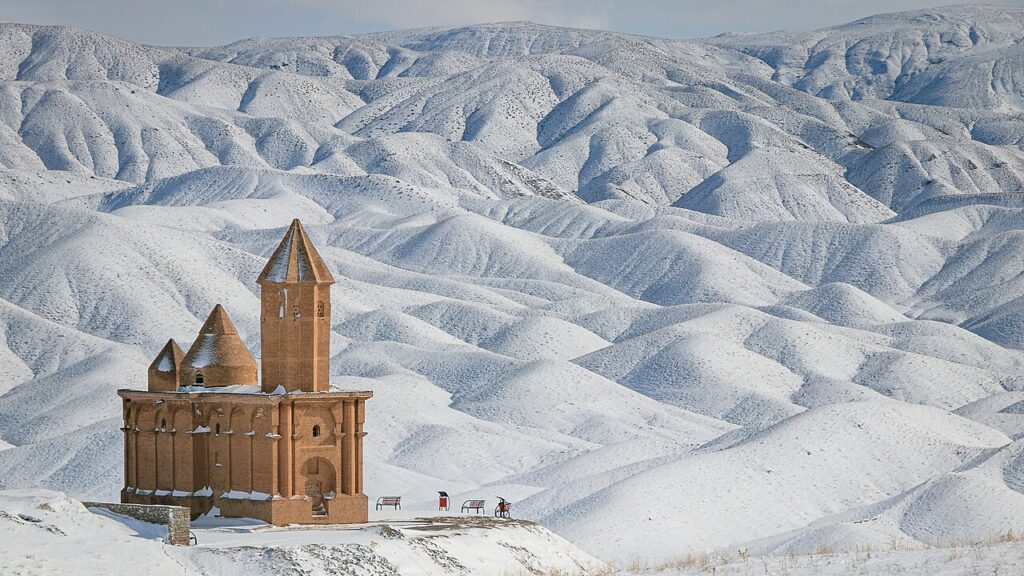
Saint John Church of Sohrol, a 5th or 6th century Armenian Catholic church in Sohrol, Iran.
Farzin Izaddoust dar, CC BY-SA 4.0, via Wikimedia Commons
You may also like
The Religion of World War Two
Moral vanity is the sin into which we can all too easily fall when our ethical model becomes one of fleeing evil, not imitating goodness.
The Horrors of Cuba’s Prisons
The president denies Cuba has political prisoners—yet an increasing number of dissidents are being jailed under brutal conditions.
Europe’s Conservative Catholics Won’t Put Up With Trump’s Attacks on the Pope
In the clash of wills between the White House and the Vatican, it is already clear that the vast majority of Catholics will rather side with their pope than with the president of the United States.
“Life is hard,” Yahya, a leader in Iran’s Christian house church movement, told David Yeghnazar of Elam Ministries recently. Yahya (not his real name) was sending voice messages due to Iran’s wartime internet blackout, which makes it nearly impossible for Christian leaders like the Iranian-born Yeghnazar outside the country to reach their contacts in Iran. “But we are continuing. And the Lord is showing his glory.”
Despite having no church buildings, Iran’s evangelical population is the fastest growing in the world—some have called it a full-scale underground Christian revival. There are now over one million Christians in Iran. Mosques are closing down, with some saying that the “Jesus revolution” in Iran is partly to blame; Reza Pahlavi, the erstwhile crown prince of Iran and son of the former Shah, noted in 2024 that, “Iran has probably right now the fastest-growing faith in Christianity than any other faith that the country has had. We have hundreds of underground churches.”
The regime views this revival as an enormous threat to their repressive and theocratic Islamist vision for the ancient nation. It is illegal for Muslims to convert and for Christians to evangelize to them. Pastors—including Yahya—have suffered harassment, imprisonment, and torture for their faith. Since February 28, they are also enduring wartime conditions, and many fear that a regime crackdown is coming.
The first Persian worshippers of Christ may have predated Pentecost—some scholars believe that the magi who followed the star to Bethlehem in search of “the King of the Jews” were Zoroastrian priests. The Acts of the Apostles records that on Pentecost, Parthians, Medes, and Elamites heard the Apostle Peter preach the gospel in their own language, and church tradition says that Matthew, Jude, Simon the Zealot, Bartholomew, and Thomas reached the region on their missionary journeys.
Christianity has been a continuous presence in what is now Iran for nearly 2,000 years, predating Islam by centuries. In addition to ancient Christian communities (Armenians, Assyrians, and Chaldean Catholics), Protestant missionaries arrived in Iran in the 1800s, and their commitment to literacy and medical aid gained them the affection of many. Under the rule of Mohammed Reza Shah, Christian evangelistic work was permitted. That ended after the 1979 Islamic Revolution.
Although Christianity is technically protected under Article 23 of the Iranian constitution, the mullahs evicted most missionaries and forbade evangelism. “Christians in Iran are heavily and systemically repressed, as the authorities seek to root out what they see as a threat from the West to undermine their Islamic rule,” states Open Doors. “Converts are most in the firing line. House churches are commonly raided, often followed by arrests, interrogations, pressure to inform on other believers and long-term imprisonment. This is typically under charges of breaching ‘national security’. The conditions in prison are dire and bail sums can be extortionately high, financially paralysing families.”
After the 2025 Twelve Day War, Iran’s Parliament passed the “Law on Intensification of Punishment for Espionage and Cooperation with the Zionist Regime and Hostile States Against National Security and Interests.” The regime accuses converts of “Zionist Christianity,” and crackdowns have intensified; arrests of Christians doubled in 2025. After the 2025 ceasefire, 54 Christians in 21 cities were arrested on charges of “espionage,” and state media has “suggested links between Evangelical Christians and foreign intelligence services, a narrative that paints an entire faith community as a security threat.”
Since the current war began, getting in touch with Christians inside Iran has been nearly impossible (I have had several scheduled conversations cancelled because of the internet blackout). Both internet and satellite TV channels have been blocked in order to prevent communication inside the country; after massacring tens of thousands of protestors in January, the regime does not want Iranians to be able to organize or launch an internal revolt as they struggle to survive. Dissidents must be kept in isolation.
Mansour Borji, director of the UK-based Iranian religious freedom advocacy organization Article 18, told Christianity Today that he has received just a few messages from inside Iran; most were hopeful that the conflict signaled “an end [to] the tyranny,” and some expressed fears that a war that does not end the regime will result in more violent repression. Despite these dangers, many Iranian Christians are taking the opportunity presented by perilous times to share the hope of the gospel.
David Yeghnazar reported in Christianity Today that Yahya had reached several remote villages to share the gospel and distribute Persian New Testaments; five converted to Christianity. It is against the law to sell or own Persian Bibles; Iran’s Bible Society has been banned for decades. During the Twelve Day War, some Christians “opened their homes to those fleeing major cities” and “walked the streets to pray even as bombs fell.” After the January crackdown, Christians “went into hospitals to pray with the wounded” and “visited grieving neighbors.”
“Through gaps in the internet blackout, I hear that many house churches are still meeting despite government checkpoints increasing the risk of being searched and arrested,” Yeghnazar reported. “Recently, a team member told me about a group of 9 Christians who continued to meet amid the chaos and violence. Friends and family members noticed the peace the Christians had and wanted to know more. They then joined the group, which has grown to 21[.]” Iranian Christians are also working hard to care for their neighbors with food packages and other supplies.
In wartime conditions with new dangers looming on the horizon, the church in Iran carries on its work. When Yeghnazar asked one couple why they were willing to suffer for the gospel, they told him: “Because we have tasted and we have seen.” Yahya was even more succinct. “The church in Iran,” he said, “is alive.”
Our community starts with you
READ NEXT
What If Reform Wins?—A Political Scare Story
Le Canon Français: Banqueting, the New Face of the Far Right
What I Saw on O’Connell Street