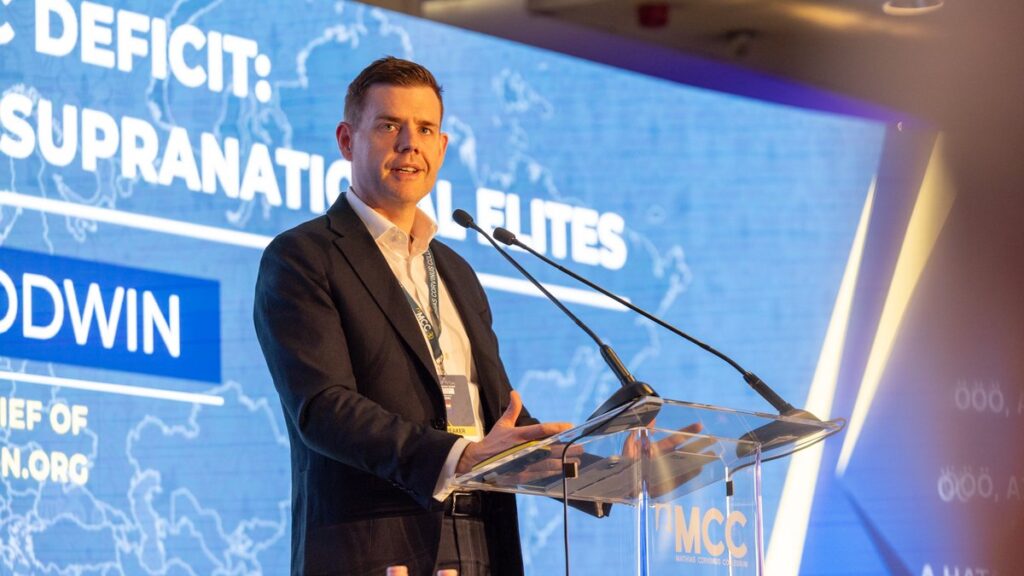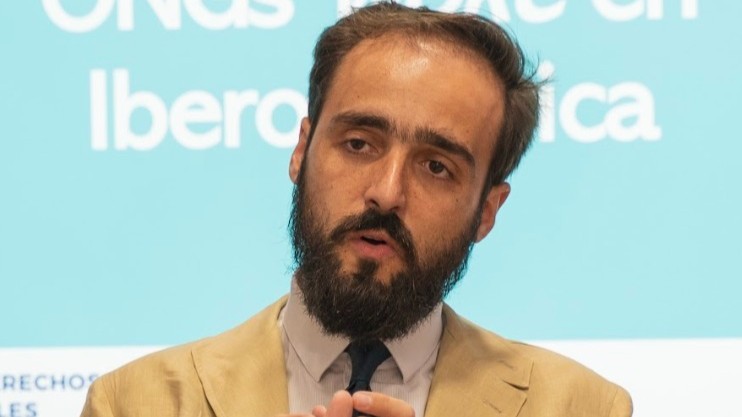
Jorge González-Gallarza
Photo: Courtesy of Jorge González-Gallarza
Over the past decade, while millions of Europeans endured inflation, economic stagnation, migration pressure, and cuts in essential services, the European Union has allocated nearly one billion euros to fund ideological organizations in Latin America. Under the pretext of promoting “civil society,” Brussels has channeled funds to NGOs that push ultrafeminist, indigenist, transactivist, and racialist agendas—often in open interference against democratically elected governments.
This is not about development cooperation, humanitarian aid, or beneficial trade agreements. It is ideological waste with no return, turning the European taxpayer into the unwilling sponsor of the most radical progressive agenda across the Atlantic. Jorge González-Gallarza is the senior coordinator for Latin American affairs at the Madrid Office for the Iberosphere at the Center for Fundamental Rights, which has just published a damning report titled The Pink Tide of EU AID: How Brussels Funds Woke Latin American NGOs Posing as ‘Civil Society’. The document provides precise data showing how a clientelist network of ideological NGOs has been consolidated through public European funding to spread its cultural, media, and political influence in Latin America.
It results from over a year’s work, tracing and verifying data. It all began around last year’s European elections. Coincidentally, it overlapped with the dismantling of USAID under the Trump administration, which prompted many NGOs to look for new sources of funding… and they found them in Brussels. That set off alarm bells: NGOs that once lived off Washington were now knocking on the doors of the European Commission. And we’re not talking about neutral entities, but activist groups promoting deeply progressive ideologies under the pretext of strengthening civil society.
Exactly. The report identifies nearly €1 billion in EU subsidies to NGOs in Latin America over the past 10 years, a significant share of which went to woke organizations: radical feminism, indigenism, transactivism, racialism, and more. Many of these NGOs wouldn’t survive without European money. What has been created—at the taxpayer’s expense—is an artificial activist ecosystem.
These NGOs legitimize political agendas that radical leaders later adopt. They have influenced electoral campaigns, bolstered authoritarian leftist movements, and in many cases undermined democratically elected governments. Concepts like “heteronormativity” or “structural transphobia,” entirely alien to Ibero-American culture, have been introduced with EU funding. There are even institutional ties between Latin American NGOs and European leftist forces like the São Paulo Forum or the Puebla Group.
It’s virtually nonexistent. Yes, the European Commission has a financial transparency portal, but the data is limited. We know how much is given, to which NGO, and for what project, but there is no control over implementation or results. There are no public audits, no rigorous monitoring, and often, the EU logo doesn’t even appear on the activities it funds.
Of course. One is the ‘Horizonte de Libertades’ project in Uruguay, which cost over one million euros and included conferences by activists like Angela Davis, who openly called for “dismantling capitalism” to end racism. Another case is that of media NGOs in Paraguay or Peru, which, under the guise of fighting disinformation, publish reports that stigmatize conservative journalists with photos and labels like “facho”—a derogatory shorthand for fascist. It’s the export of European-style censorship.
Absolutely. In many cases, these NGOs act as tools of political pressure. A clear example is Paraguay, where NGOs were funded to campaign against the government for opposing ideologized sex education. They even financed a campaign against a bill that sought transparency from NGOs receiving foreign funds—a total paradox.
Yes, there are encouraging signs. After the LIFE scandal and other investigations, sectors within the European Parliament—including European People’s Party members—call for audits, limits, and greater transparency. The European Court of Auditors has already flagged the lack of oversight. Politically, we’re also seeing changes: the new Commissioner for International Partnerships has a far less radical approach than her Finnish predecessor. The upcoming budget cycle could be a chance to stop this drift.