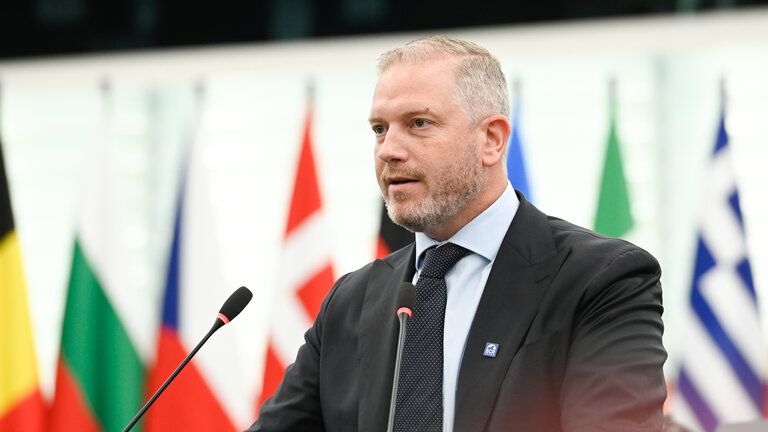
ECR MEP Diego Solier
Photo: Courtesy of Diego Solier
“If the European Union starts to consider democratically elected governments illegitimate simply because they do not share the dominant political line in Brussels, then the problem is no longer Viktor Orbán.”
The European Union is experiencing a crisis of identity and effectiveness. Migratory tensions, the loss of industrial competitiveness, energy dependency, and regulatory hypertrophy threaten its position on the international stage. Faced with rising powers—China through state muscle and the United States thanks to private innovation—Brussels seems trapped in a spiral of slogans, committees, and good intentions that do not translate into tangible results.
Diego Solier, a Spanish MEP from the European Conservatives and Reformists Group (ECR) and member of the ITRE Committee (Industry, Research and Energy), combines his previous career in cybersecurity with a critical outlook on the EU’s course. We spoke with him in his Brussels office about his vision for a more competitive and more sovereign Europe.
It was frustrating. Everything felt staged, overly polished, almost rehearsed. You could tell there was a predetermined script and no one deviated from it. Most of the local representatives we spoke to, especially those from the Socialist Party, insisted that everything was fine—no migration problem, smooth integration, even that migrant youths were thriving in local football teams. But then you speak to more independent voices, and they show you a very different reality.
As I wasn’t a full committee member, my participation was limited. But I worked with colleagues to ensure some of my questions were raised anyway. One of the key issues I wanted to bring up was the Search and Rescue (SAR) zone that obliges Spain to rescue shipwrecks just miles off the African coast. This delimitation dates back to the 1970s, but geopolitics has changed. Why are we still bearing this burden? If we redefine that zone, we could drastically reduce arrivals to the Canary Islands. That question was posed by another MEP on my behalf, and it immediately caused discomfort—it was shut down quickly.
Absolutely. There is no coherent approach between the central government, the regional authorities, and local administrations. Everyone blames someone else. Meanwhile, citizens see how social services are being diverted to deal with unaccompanied migrant minors while other essential services are underfunded. The message from the Canary Islands was clear: “It’s our responsibility, but we don’t have the resources.”
We stand for a common European policy. It’s unacceptable for Italy to have one approach, Hungary another, and Spain to operate an open-door policy. Without homogeneity, illegal migration will always flow toward the weakest point. People see it clearly: when you ask Europeans about their concerns, migration and security are always at the top. And that’s not just my opinion—data backs it.
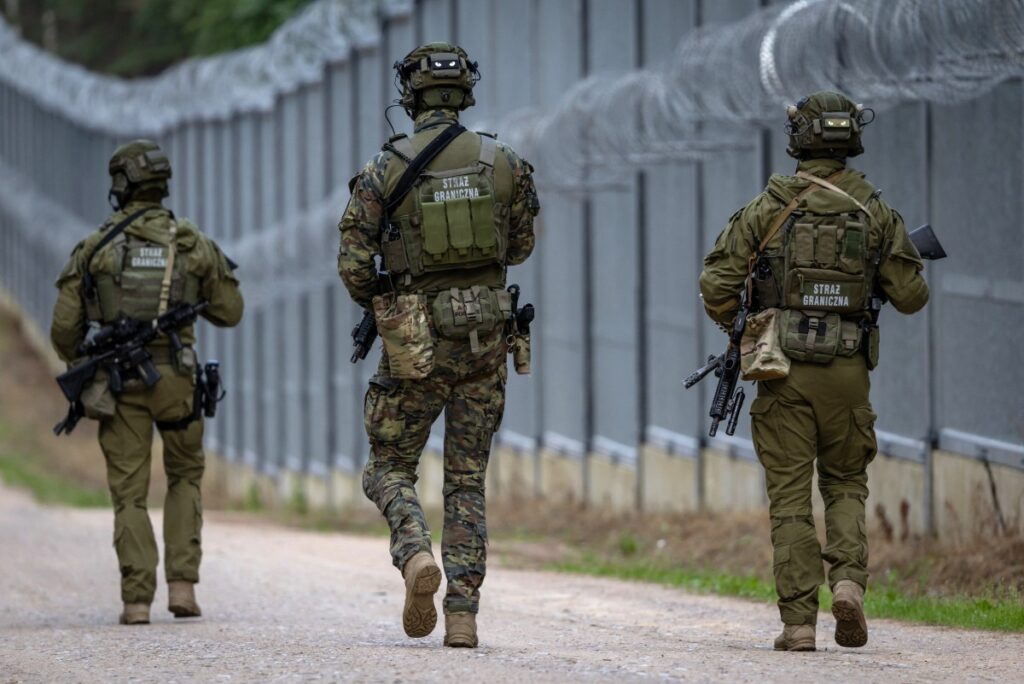
Common sense. Secure external borders, effective deportations, deals with third countries, and legal, regulated labor migration with clear conditions. We do need workers in agriculture and construction, but not mafias. Bring the people we need, with contracts, social security, and a return date. That’s how it has always worked. But now an ideological agenda is getting people killed in the Mediterranean. No one should be dying at sea because of irresponsible policies.
Yes, and it saddens me. In committee meetings, we discuss cybersecurity, defense, and tech, and in all areas we’re trailing behind the U.S. and China. What have we done over the past decade? We’ve piled regulations onto our industries. SMEs need entire departments just to comply with EU bureaucracy. That prevents innovation. Then we’re surprised when a report tells us there’s a technological gap?
Liberalisation. Fewer taxes, less red tape, real fiscal incentives. If a company invests in strategic tech, reward them. But don’t ask them to invest more while suffocating them with bureaucracy. We’re not going to close the gap with empty speeches about decarbonisation and digitalisation without real funding and action plans.
Europe—especially Spain—has a massive opportunity in the data center sector. Geographically, we’re ideally located between Europe and the U.S. We could become leaders if we encourage investment, starting with abandoning the anti-nuclear dogma. Data centers need stable, affordable energy, and that’s not achievable with just solar panels. We should reopen nuclear plants or adapt those pending closure. France understands this. For ideological reasons, we are still tied to decisions with no technical basis.
We could make real progress, but again, bureaucracy is killing us. I’m the ECR coordinator for aerospace issues, and companies in the sector always complain about the same thing: too much regulation, too many barriers. We have the talent and the industry, but we’re making it harder to move forward.
Culturally, we’re closer to the U.S., and that’s the model we should focus on. But credit where it’s due: China has learned to copy and improve. The worrying thing is, while they’re securing energy deals to power future industries, we’re still adding more rules. Take Huawei, for instance: they’ve just been awarded a contract to host judicial data in Spain. Do we realise the risk? This is about sovereignty. And no, it’s not paranoia—it’s common sense.
A self-sufficient Europe—but not a supranational government. We want cooperation, not submission. Each country must retain sovereignty, but we can’t compete with China or the U.S. alone. We must act together on key issues—migration, defense, trade. But without imposing a one-size-fits-all model that erases our identities.