François-Xavier Gicquel
courtesy of François-Xavier Gicquel
François-Xavier Gicquel is the director of operations for SOS Chrétiens d’Orient, an NGO founded in 2013 that currently operates in eight countries (Iraq, Syria, Lebanon, Jordan, Pakistan, Ethiopia, and Armenia) and whose mission is to help Christian communities continue to live in their homeland.
I served as head of mission in Iraq from 2014 to 2017, a dark period for the country, particularly marked by the occupation of a large part of its territory by the Islamic State organization. Since then, the country has struggled to rebuild, but we can still observe some interesting developments.
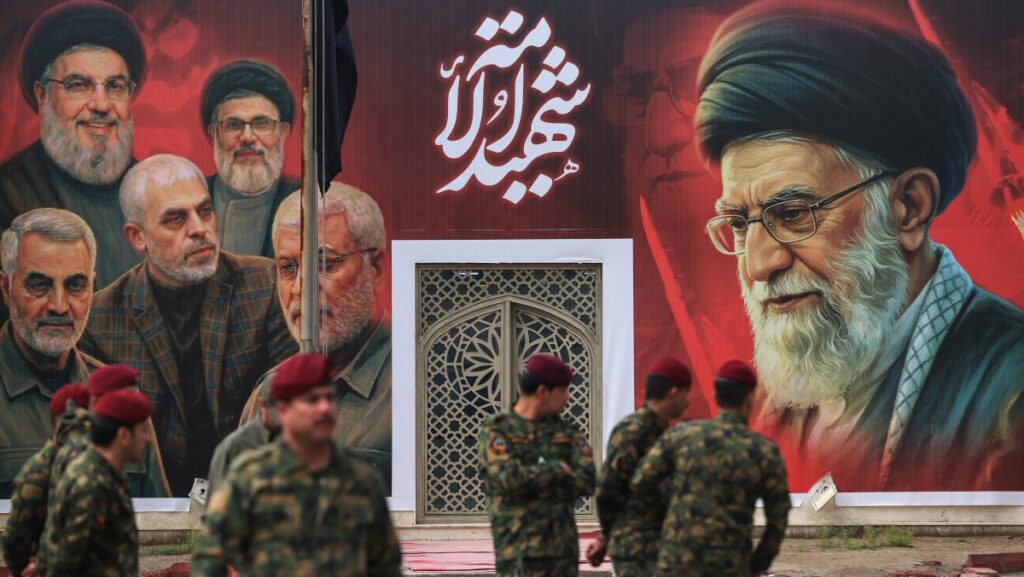
On the security front, in the south, the government is trying—somewhat shakily—to regain control over militias that hold significant parts of the territory. These groups, having helped in the fight against the Islamic State, are powerful, well-armed, and supported by Iran in many cases. Pockets of Islamic State presence still exist but are sporadic. In Iraqi Kurdistan, political instability and the declining influence of the dominant party, the KDP, have led to increasingly frequent clashes between clans.
Politically, elections were recently held in the south, and the situation remains unchanged. This signals both a form of stability and, at the same time, the worrying absence of much-needed change. Economically, tensions remain high between Baghdad and Erbil, which directly impacts daily life for residents of Iraqi Kurdistan, especially civil servants who are no longer receiving their salaries. In the south, however, authorities are attempting to move away from oil dependency, and with the help of foreign powers—especially Turkey—are investing heavily in economic development, notably in agriculture and energy.
Initially, Bashar al-Assad managed to hold out alone against opponents funded by numerous foreign nations—including Gulf states and Western countries—but he remained very weak on the ground and was even losing territory in major cities and in several regions. Iranian and Russian intervention became indispensable for him to reconquer territory and regain stability. However, the embargo worsened the country’s economic crisis, and popular discontent grew, particularly within the army, which was underpaid and poorly equipped. But what especially changed the situation was the weakening of Iran—due to the fronts opened by Israel in Palestine, Lebanon, and even inside Iran itself—and the weakening of Russia caused by the war in Ukraine. These cumulative factors enabled the rebels, who had been waiting patiently in the Idlib pocket, to launch a large-scale offensive supported by Turkey toward Aleppo, and then, almost unexpectedly even for themselves, southwards toward Homs and Damascus.
Since then, the leader of the main HTS group, known as al-Jolani, and later Ahmed al-Sharaa, has taken power, passed a constitutional law, and now officially presents himself as Syria’s transitional president. One of his top priorities is to form a justice committee to judge all crimes committed under the former regime. What he finds far more difficult, however, is judging crimes committed under his own rule. Indeed, as early as January, atrocities were committed against Alawite populations on the Syrian coast—over one thousand killed—followed in the spring by large-scale abuses against the Druze. Since then, isolated Christians have been regularly targeted in what is officially described as isolated criminality, yet attacks are recorded almost daily. This is without mentioning the terrorist attack against a church in the heart of Damascus, which killed nearly forty people. Today, the key questions are whether these armed groups—formerly allies of al-Sharaa—are acting under his control or beyond it; whether they intend, as they had committed, to identify and judge the perpetrators; and how this new leadership will manage to control all the jihadist factions in the future.
Meanwhile, on the international stage, states driven by their own interests are lifting sanctions on the one hand and recognizing al-Sharaa as president on the other, with some—like the French president—publicly offering embraces at the UN to a former jihadist. The major risks are the continuation or even worsening of persecution, or a complete collapse of control by al-Sharaa leading to another revolution or even a civil war. Only the future will tell—and unfortunately, it is currently being written by the great powers, which are guided primarily by economic interests.
In Gaza, the supposedly permanent ceasefire plan was established nearly two months ago. Since then, some elements have progressed while others have not, leaving us in a state of deep uncertainty. The day after the agreement, Hamas respected the negotiated deadlines for returning living hostages but still struggles to return the bodies of the deceased. Israel accuses Hamas of stalling; Hamas cites the immense destruction in Gaza, making searches extremely difficult. Full disarmament of the Islamist movement was also on the table, which is absolutely unacceptable to Hamas.
Another key issue is the deployment of a peacekeeping force. Although several countries initially offered to participate, nothing concrete has materialized, as no state wants to find itself stuck in a conflict that risks protracting. Indonesia is a striking example: once offering 20,000 soldiers, it now speaks of only 1,200—and even then, only if total pacification were achieved, which is far from the case as clashes continue, with both sides blaming one another. We remain in a theoretically positive dynamic, but everything could collapse overnight; the situation is extremely fragile.
As for the Christian population, their situation closely mirrors that of Palestinians in general. One must distinguish between Christians in Gaza—affected indiscriminately by the conflict, now living amidst ruins, and facing overwhelming uncertainty about their future unless they have already emigrated—and Christians in the West Bank, where pressure grows daily. New checkpoints are being established by the Israeli army deep within Palestinian territory, and attacks by settlers—encouraged by the most radical elements of the Netanyahu government—are increasingly common. Daily life is extremely difficult, and the future is deeply uncertain.
There are two strong forces pushing some Christians to emigrate. The first is fear of the future—for themselves and especially for their children. After years of conflict and economic crises, it is difficult for them to envision a future. The second factor is that in some communities, such as in Syria or Iraq, a majority of Christians have already left. For those who remain, staying faithful is complex when most of their family now lives in the West.
Yet, as you point out, many Christians continue fighting to remain on their land. First, out of deep fidelity to Christ and to the duties He entrusted to all Christians: to bear witness and to be the living stones of His Church. They are often the only visible expression of Christian charity in societies that do not know it. Secondly, these people are not guests on these lands. They are the original inhabitants—those who built these civilizations and those who are their rightful heirs. They cling to the land their ancestors built, where their forefathers are buried, where their children were born, where their churches still stand, and where centuries of prayer and fidelity still resonate.
SOS Chrétiens d’Orient was founded in 2013, inspired by long-established organizations supporting Eastern Churches, which have done exceptional work for decades or even centuries. But our organization was also created to offer a new perspective. We realized that for Middle Eastern Christians to truly comprehend the support they receive from their Western brothers, that support must be embodied. It cannot simply be a series of bank transfers; it must be a living testimony of filial attachment to the communities that transmitted the true faith to us.
For this reason, SOS Chrétiens d’Orient was built on sending numerous volunteers and establishing field missions at the very heart of the communities we support—both to show them that their Western brothers have not forgotten them, and to share their joys and sorrows in a tangible way. It also allows us to return home and bear witness to what Middle Eastern Christians live daily, what they hope for, and the message they want to convey to us. Through our work, we are clearly categorized as an NGO, but we consider ourselves much more: an organization of charity, of course, but also a voice for the suffering and the hopes of Middle Eastern Christians.
In Nagorno-Karabakh—a land that has been Armenian for 5,000 years, as evidenced by its centuries-old churches and khachkars—the situation is tragic. In 2020, the terrible forty-four-day war decimated part of the Armenian youth and ended in defeat, with a large part of the territory annexed by Azerbaijan. In the following years, the enclave was completely cut off from the rest of the world in 2022 before being entirely taken over by Azerbaijani forces in 2023, pushing nearly 120,000 people into exile toward Armenia. Today, these people have been dispersed across the country to prevent any strong political challenge to the prime minister, who chose to abandon them to the invaders. One can only wonder whether they will ever be able to imagine a future beyond their trauma.
As for the conquered territory, numerous reports already document the destruction of cultural and religious heritage. And we must not forget the total blockade regarding prisoners: since Azerbaijan’s takeover, soldiers, civil servants, and even the leaders of Nagorno-Karabakh remain detained—either without trial or after sham trials entirely contrary to international law. It also appears that the authorities in Yerevan have made no real effort to defend these Armenians’ rights and seem ready to sacrifice everything for a quick peace with Baku. SOS Chrétiens d’Orient is therefore extremely worried about the direction events may take—especially if Azerbaijan manages to carry out its plans, namely the annexation of the entire Syunik region in southern Armenia to connect with its western exclave of Nakhchivan.
We are not looking to be heroes. We are professional humanitarians, working according to strict procedures, in cooperation with our partners and service providers, in order to operate under the best possible conditions. Nevertheless, it is extremely important for SOS Chrétiens d’Orient to be present alongside the populations affected by these conflicts—where needs are most urgent and most essential. This is why we have always managed to reach all the communities most exposed to violence, deprivation, and persecution, acting with both prudence and conviction.
First, Western societies must understand that geopolitics cannot be approached purely through economic interests. Defending values and heritage is far more important in the long term than securing a few commercial contracts. Today we see old nations—old empires—from Turkey to China to Russia, all of which truly understand this. They each have a 20-, 30-, 40- or even 50-year strategy. We, on the other hand, are incapable of such long-term vision.
For what states fail to do, civil society often steps in. It is therefore extremely important that Western governments—especially France, since it is my country—support these organizations and reinforce their work in complex regions, rather than pouring billions of euros into parts of the world with which we have very little historical connection. Finally, people in our countries must understand why they are who they are today, and where their civilization comes from in terms of spiritual heritage. That is why we ask them not only to support us financially, but also to join us physically—and to pray for our mission.
To support the work of SOS Chrétiens d’Orient, please go to their secure donation website.