Viktor Orbán and Ursula von der Leyen (collage)
Francois Walschaerts / AFP & Pete Linforth from Pixabay, edited by europeanconservative.com
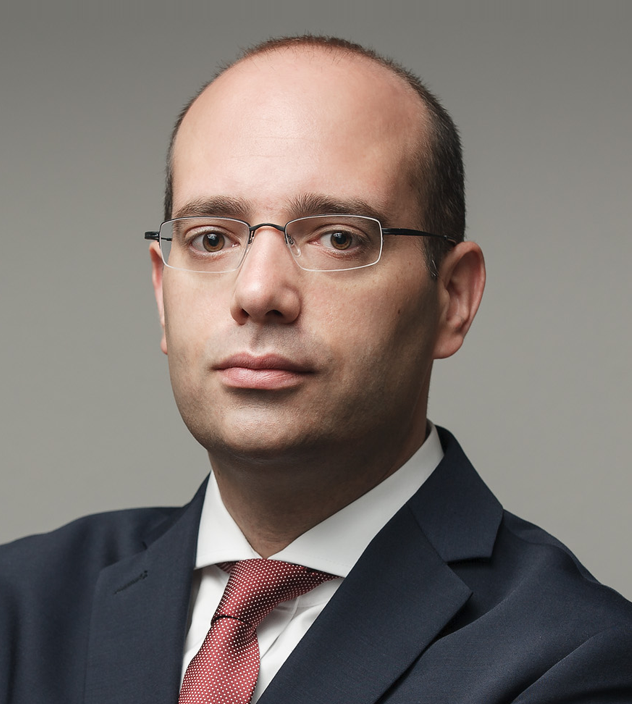
Ágoston Sámuel Mráz is the founder and CEO of the conservative Nézőpont Institute think tank in Budapest. We recently talked to him on the sidelines of the MCC Feszt in Esztergom about the upcoming Hungarian elections and what it means for Europe.
Well, it depends on what your expectations are. Those who believe that the Tisza Party is leading by 15–18% might indeed be in for a surprise. At the Nézőpont Institute, we published in late June—and we’ve seen no change since—figures showing the race at 44:39 in favour of Fidesz, a 5-point lead. That’s a comfortable margin, but not enough for Fidesz to rest easy. Back in June 2024, Tisza’s support was 10 points less. I think we’re heading into a tight race over the next eight months, but as the ruling party, Fidesz starts the fight with a few steps ahead.
There are multiple reasons. Since 2022, Hungary has had some tough years—high inflation, a war in a neighbouring country, and a lack of economic momentum, mostly due to external factors. These have left their mark on the public mood, and people are looking for someone to blame. The government has long insisted it’s doing everything it can to handle the situation. The opposition—now led by the Tisza Party—is trying to convince Hungarians that the government is entirely to blame, and that if Viktor Orbán isn’t the prime minister, everything will be fixed overnight. But let me say this: even if Fidesz were to lose, it wouldn’t be a total defeat. They’d be a very strong opposition.
So yes, the bad public mood is one factor. The other is that Tisza, as a political startup, carried out a new strategy. Previously, the opposition tried everything—different variants of alliances—to defeat Fidesz, but they suffered a total defeat in 2022. It was clear that no new variant would grow out of that old opposition. Sooner or later, a new political force would emerge—and in early 2024, it exploded onto the scene.
In hindsight, you won’t find many analysts saying that this would happen—but many of us suspected it would happen eventually. Even Orbán himself predicted it. Back in 2009, in his speech in Kötcse he said there was a realistic chance that Fidesz would dominate the next 15–20 years. He had foreseen better than anyone that this was going to be only a temporary period—if a new political force emerged in tough economic times and replaced the old opposition parties, that force would become a serious rival to Fidesz.
Nowhere. Tisza has no values, no programme, and nothing to say about Hungary’s future. It’s currently a protest movement built around a single person. Even we, analysts, struggle to name any serious figures within the party. It’s all dominated by Péter Magyar. So right now, it’s a one-man protest movement without values, vision, or policy.
Its biggest challenge is to convince voters that it could actually govern. Right now, if people want to cast an anti-government vote, they might turn to Tisza. But if they want a different kind of governance, Tisza struggles to offer a clear alternative. It has promises, sure, but no clear vision, policy priorities, or positions on issues like society or Europe.
Absolutely. Péter Magyar gave a speech in Székesfehérvár around the same time as Tusványos. It was full of rhetorical flourishes, but for us analysts, a few points stood out. He said that the only correct way to secure EU funds is to obey European law and strengthen loyalty to our European allies. If you listen to the full 1-hour-20-minute speech, you’ll hear those exact terms.
That means aligning with the EU majority—the ‘coalition of the willing’ that supports prolonging the war in Ukraine with money, weapons, and intelligence instead of pushing for peace talks. Magyar is aligning with them. That’s a real and significant difference between Fidesz and Tisza.
It’s in Fidesz’s interest to talk about these differences, while Péter Magyar wants all attention focused only on Orbán. But in a democracy, we shouldn’t just vote based on personalities—we need to understand the policies behind them. And on Ukraine, family policy, and the future relationship with Brussels, there are real, sharp differences.
Yes, those are issues where there is another clear difference. If Tisza were to win, the most likely scenario is that they’d backtrack on many of their promises, pledge loyalty to the current EU leadership, and act accordingly. This isn’t mere speculation. Péter Magyar himself has said that [Polish Prime Minister] Donald Tusk is his political role model. Just look at Poland. What’s happening there would happen here.
In Poland, the power transition included undemocratic elements. They’ve dismantled the rule of law so severely that it’s unclear if many judges are even legally sitting. The constitutional court was sidelined, denied funding, accused of plotting a coup. If Magyar sees Tusk as his model, that’s where we’re headed.
Orbán’s Tusványos speech was crucial in this context. He offered a different vision for getting EU funds. Magyar talks about loyalty to the alliance. Orbán says Hungary should use its veto power in the upcoming EU budget negotiations to demand our rightful funding. So it’s not only Péter Magyar’s Donald Tusk-style playbook, but also Viktor Orbán’s tough negotiation strategy that promises Hungary will secure the EU funds.
Hungary talks about vetoes a lot, but it’s part of the toolkit for small countries to assert their interests. That’s why EU treaties give member states the right to veto in certain cases. If the EU had been designed around majority rule from the start, Hungary might never have joined—it wouldn’t have had the means to protect national interests.
There are different types of vetoes: there is the public threat of a veto, there is the floating of a veto during closed-door negotiations, and there is the actual exercising of a veto. Hungary rarely actually vetoes. Even regarding Ukraine’s EU accession and the start of negotiations, Viktor Orbán simply said: decide without me, I do not support it. That wasn’t a veto.
So when people talk about Orbán’s vetoes, they overlook that it’s just a negotiation tool. Other countries use it too. The Danes developed a method decades ago in which their government receives a negotiation mandate from their national parliament—this is called the “dual game” theory. In Brussels negotiations, they refer to their national parliament as a constraint, so they can’t compromise on just anything; back home, they use European pressure as a justification to enforce their interests. So every smart nation, as a member of the European Union, uses the veto enshrined in the treaties—not necessarily to actually veto, but as a negotiation tactic.
Because Hungary is currently the only member in the European Council—the prime ministers’ forum—which openly demands reform: an EU of nation-states rather than a federal superstate. Big countries like France, Germany, and now Poland want a federal Europe. Then there’s a third group whose votes can be ‘bough’” with incentives like EU funds or legal exceptions.
If Orbán were replaced by Tisza, Hungary would shift into that camp. Brussels would become duller, more uniform, and less reflective of what most Europeans actually think. Orbán’s significance isn’t just in representing 2% of the EU population—it’s that the Brussels elite knows many Europeans silently or openly agree with him. That’s why they take him seriously.