Sohrab Ahmari
Javier Villamor
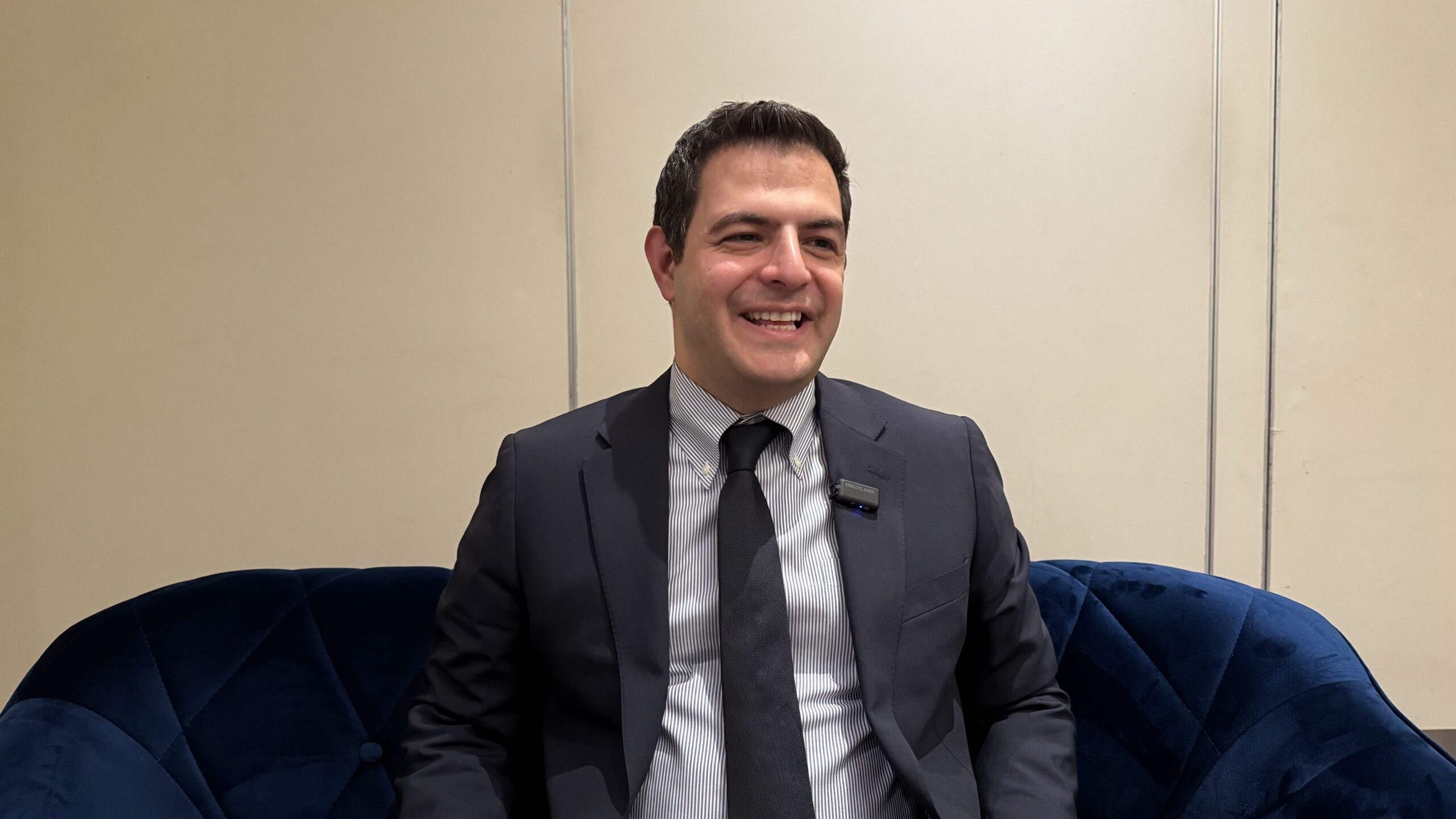
Sohrab Ahmari, editor of UnHerd U.S. and one of the most influential conservative essayists in the Anglo-American debate today, spoke to europeanconservative.com during the Budapest Global Dialogue, addressing a vital question for the West: Which values can sustain its future at a time of cultural fragmentation, demographic crisis, and transatlantic tensions?
In The Triumph of the Normal, Ahmari argues that, despite decades of cultural engineering and social experimentation, there is a “deep normality” that reappears time and again: religion, family, domestic life, meaningful work, and political belonging.
In contrast to what he sees as the excesses of recent decades—from the sexual revolution to certain forms of gender ideology—he maintains that the social majority simply aspires to a stable life.
In this conversation, the American thinker reflects on the so-called Trump effect, the cultural gap between the United States and Europe, the migration issue, and the responsibility of political elites in the rise of certain political options.
I am finishing a book titled The Triumph of the Normal. In it, I explain that the word “normal” is not ancient, like “justice” or “virtue.” It is a 19th-century term, born in the age of statistics, modern medicine, and scientific positivism.
The idea was to replace the old Western conception—inherited from the classical world and taken up by Christianity—according to which “is” and “ought” were united. In that tradition, stating that a house is on fire and stating that one should not commit arson are, fundamentally, objective statements about reality and the human good.
With modernity, that unity is broken. “Normal” sought to provide a moral framework without resorting to metaphysics or to Aristotle; it was enough to observe statistical patterns of human behavior to determine what is good for the human being.
However, when ordinary people speak of “a normal life,” they are intuitively recovering older moral categories: being able to practice a religion, form a family, live in community, participate in civic life, and carry out meaningful work.
The book is optimistic. I argue that, in the end, normal wins. Even attempts to subvert it end up reaffirming it.
Consider the recent attempt to normalize ‘polyamory’ in certain progressive circles in the United States. If one truly wanted to break with the norm, unstructured hedonism would suffice. But no—rules, agreements, domestic calendars are constructed. … They cannot detach themselves from the logic of family life.
The same occurs in the religious sphere. Even in contexts where religion was deliberately eradicated, political language ended up acquiring quasi-sacred traits. The religious impulse is difficult to extinguish.
Today we see signs of reaction: young people seeking more stable relationships, a certain religious ‘quiet revival’ in the United States, and a renewed interest in marriage. Cultural excesses have left many people dissatisfied.
Cultural developments in the Western core tend to take time to spread to other regions. In the United States, the peak of ‘woke’ culture was around 2022. In some European countries, that moment is happening now. This creates a lag.
In interviews I conducted last year with Vice President JD Vance, he spoke of a “civilizational concern” in Washington regarding Europe’s future. These are not caricatures but a real concern: Europe is the cultural matrix of the United States. Both Christianity and the Enlightenment originate there.
When certain European neighborhoods appear disconnected from that cultural tradition, legitimate questions arise. It is not a racial issue but a cultural one.
Europe will only be able to manage its relationship with Muslim communities more effectively if it honestly acknowledges its own Christian identity. That is a much stronger foundation than any purely administrative definition.
Europe is marked by the cross and the Gospel, even when it tries to deny it. The current problem is asymmetry: on the one hand, communities with a clear civilizational identity; on the other, a Europe that sometimes presents itself as merely a set of technical rules and economic procedures.
If Europe clearly stated who it is, the dialogue would be more honest. Without an affirmed identity, negotiation becomes unequal.
Since 2016, I have been warning mainstream parties: if they do not address the legitimate anxieties of their populations—regarding immigration, identity, or social cohesion—increasingly hard versions of the right will emerge.
Immigration cannot be maintained indefinitely without clear limits. I myself am an immigrant. I came to the West because I wanted the West, not a society without a common project, a multicultural bazaar. Many legal immigrants who wish to integrate ask themselves the same question.
The state has the right to enforce the law throughout its territory. If elites limit themselves to building cordons sanitaires without addressing the root causes of discontent, they are incubating something worse. If life becomes difficult enough for the majority, those barriers may break.
Preserving the possibility of a normal life: religious freedom, strong marriage and family, civic participation, and dignified work.
It is not a revolutionary proposal. It is, precisely, the defense of what for centuries allowed the stability and continuity of Western civilization.