The September 12 debate on Labour MP Kim Leadbeater’s “Terminally Ill Adults (End of Life)” assisted suicide bill in the UK House of Lords lasted nearly seven hours. Tory peer and historian Lord Andrew Roberts gave a speech in support of assisted suicide that constituted, as MP Danny Kruger observed, an “explicit repudiation of Christian teaching in favour of the eugenicist ethics of pagan Rome”; former prime minister Theresa May gave a short, powerful speech in opposition to the bill.
Over 90 peers spoke throughout the day; nearly two-thirds expressed opposition to the assisted suicide bill. The bill has lost support at each stage in the House of Commons, passing by a reduced and narrow majority of 23 votes on June 20. The second day of debate in the House of Lords is set for September 19, and many have already indicated their intent to speak. One of them is Lord Baron David Frost, a former diplomat, civil servant, and minister of state.
On August 13, Frost noted on X that the bill “was passed by a majority much lower than the government’s notional one, and lower after debate than before it. This is absolutely a case where the House of Lords is entitled to have its say. It need not be intimidated.” The bill, he wrote, was not in the Labour manifesto, is not government legislation, and is a fundamental matter of conscience. Supporters of the bill are currently attempting to cow the House of Lords into rubber-stamping the revolutionary legislation.
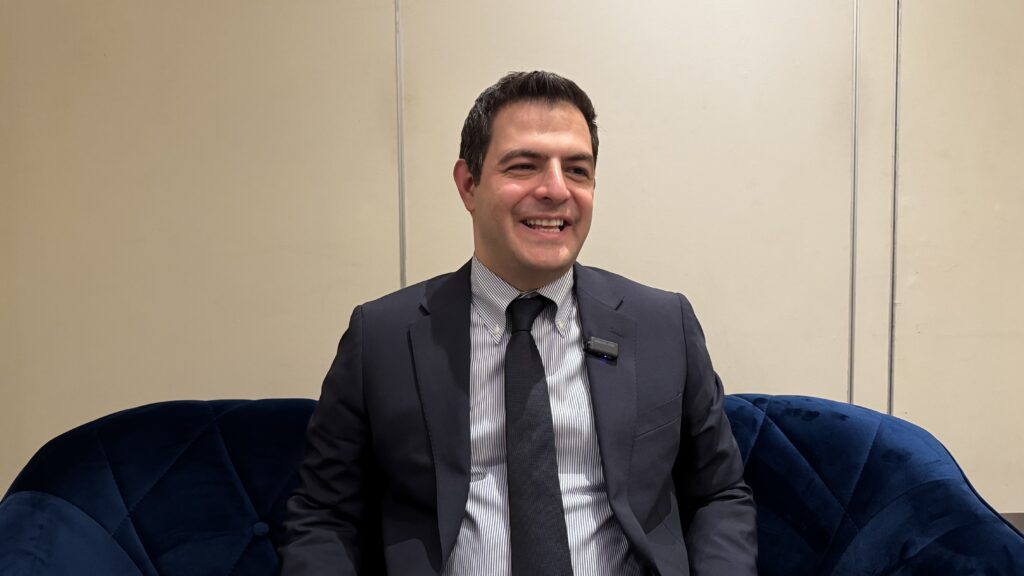
“I have been consistently opposed to this,” Frost told me in an interview. “I actually became Catholic at Easter after a long journey, so it’s kind of a logical commitment. But I would have been opposed to it in any case. Everything I’ve seen of the way the bill’s been handled over the last six months reinforces in me that even if you are willing to take a pragmatic view of the issues, which I don’t, it has been driven through the parliamentary process quite unconscionably.”
Most notably, disability rights activists have been almost entirely ignored throughout the discussion; after the bill passed second reading, people in wheelchairs wept openly outside Westminster. “It’s clear that the proponents wanted to exclude spokesmen for people with disabilities entirely, and certainly there hasn’t been a big voice for people with disabilities in the process,” Frost said.
“I think the real question, the real question of principle, is going to come when the Lord has got to decide whether it is actually willing to stop this bill—whether there’s a majority for that, or whether we’re just having a debate about improving safeguards,” he told me. “They’re limited, but there are precedents for the Lords refusing a private member’s bill; refusing to give it further time, and on one or two occasions even voting it out.”
“The precedents definitely exist. Personally, I hope that’s what will happen. I think it’s a seriously defective bill. I find it hard to see how we’re going to get more guardrails into it, given the way things are. I think it would be better to vote it down.”
Frost says that many peers oppose the bill, and others not opposed to assisted suicide in principle “are disturbed by the handling so far, by the lack of safeguards.” He noted that Labour is also divided on this bill—several prominent government ministers voted against it in the Commons, including Health Secretary Wes Streeting.
“There’s a wider issue at the moment, which is Labour’s efforts to so-called ‘reform’ the House of Lords; take out the hereditary peers,” Frost said. “So the whole status of the Lords is being debated at the moment in ways it hasn’t been for 25, 30 years.”
Any exercise by the Lords of traditional theoretical powers, which it doesn’t use very often, plays into that debate. What are the real powers of the House of Lords? This plays into the wider debate, probably in unpredictable ways. It’s one reason why some in the Lords might be reluctant to start stamping their feet about stuff like this, because you never know where it might take you.
The Times called on the House of Lords to reject the bill in an editorial on September 12, stating, “The Lords would be more than justified in concluding that this bill, which is both sloppily designed and blundering through the most sensitive terrain of life and death, is irredeemable.” The ‘Times View’ went on to note that under Leadbeater’s bill, one could see a scenario in which someone with learning disabilities was offered assisted suicide.
Frost suspects that the government might be relieved if the bill fails. “The government really has a set of practical problems about how it’s going to deliver this in any sensible, meaningful, non-dangerous way,” he said. “It has a resource question at a time when resources are very constrained. I don’t think the government will be that unhappy if the bill were to go away even if they might say so; it kind of relieves them of a set of problems and they can go back to rhetoric without actually doing anything.”
Some advocates of assisted suicide have been open about the trajectory legal assisted suicide would initiate. As Matthew Parris, a columnist and former Tory MP, noted in the Times last year in a column titled “We can’t afford a taboo on assisted dying”: “The argument against [euthanasia] is that pressure will grow on the terminally ill to hasten their own deaths—and that’s not a bad thing.” In an earlier column in the Spectator, he put it more bluntly: “Soon we will accept that useless lives must end.”
“Somebody like Matthew Parris is kind of honest about the driving forces behind a lot of the thinking on this,” Frost told me. “A lot of people are not honest, even with themselves, about what’s driving it. We live in a very secular, very utilitarian society in the way it makes its calculations. Where do you stop? Once the government has gotten disconnected from Judeo-Christian morality, why can’t they do anything? Where does this utilitarian argument stop? The only protection you as an individual have for all sorts of things that you may want to do in your life rests on Judeo-Christian morality.”
Once you start to get away from that, your autonomy can be constrained in all kinds of ways, and you have no point of reference to defend it, because the standard has already been swept away by “difficult cases.” This is about the way we run our societies. What makes us think that we are so wise that we can suddenly chuck out 1,600 years of civilizational history and replace it? Do we think we are that clever?
What stops them from coming for Matthew Parris when he’s 75 even if he’s perfectly capable of running five miles a day? Once the guardrail [of the sanctity of life] is gone, there’s no principle to refer to anymore.
Dame Esther Rantzen, the most prominent advocate of assisted suicide, accused those objecting to the Leadbeater bill earlier this year of harboring “undeclared religious beliefs.” But Frost is certainly open about his, and he is not the only one.
“I think in the last couple of years people have been more willing to acknowledge their religious beliefs in public,” Frost said. “I’m not quite sure why. I think maybe it is a bit of the revival of Christianity and the gradual prominence of Muslim MPs that made people think, Well, why shouldn’t I say what I really think as well? Twenty years ago, Labour MPs who said they were Christian would’ve ended their careers, unless they were very lucky. Now you can get cabinet ministers saying it. I think there is more room to say it.”
“I say in a hundred years, if Christians are known as a strange group of people who don’t kill their children and don’t kill the elderly, we will have done a great thing,” theologian Stanley Hauerwas wrote in 2012. It didn’t take that long. In June, the United Kingdom decriminalized abortion until birth; Lord David Alton called it “the day Britain forfeited its claim to be civilized,” and Lord Daniel Moylan mourned that “killing babies” should not be considered healthcare. Now, the House of Lords will deliberate on the future of the vulnerable in the once-Christian United Kingdom.
For people with disabilities and other vulnerable people, the declared religious conviction of men like Lord David Frost that the sanctity of life is fundamental to our civilization may be one of the few remaining bulwarks ensuring their safety.