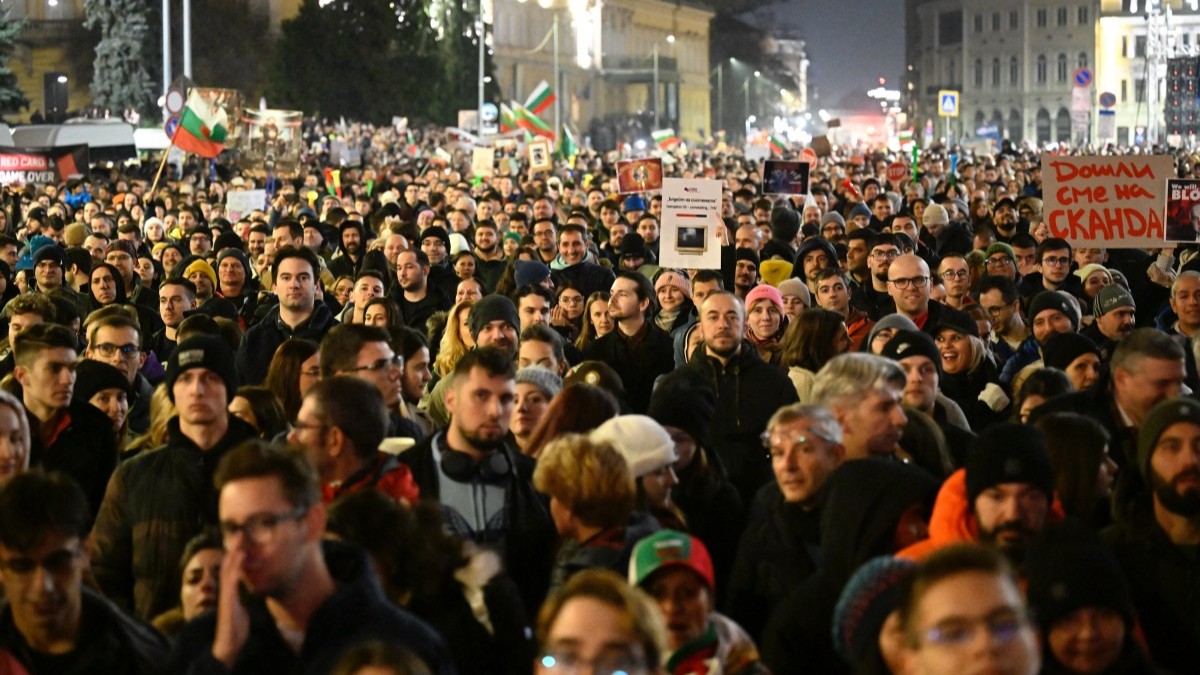
Anti-government protesters in Sofia, Bulgaria on December 10, 2025
Dimitar Kyosemarliev /AFP
The government of Bulgaria resigned on Thursday, December 12th—with Prime Minister Rosen Zhelyazkov announcing the decision prior to a confidence vote scheduled in the country’s parliament.
Previously, thousands of Bulgarians rallied on Wednesday evening against the country’s minority government, accusing it of failing to tackle endemic corruption.
The protests in the capital, Sofia, and in dozens of other towns and cities across the Black Sea nation are the latest in a series of rolling demonstrations and come as Bulgaria prepares to adopt the euro on January 1st.
Bulgaria’s parliament will hold a vote of no-confidence on Thursday, December 11th, against the government of Prime Minister Rosen Zhelyazkov, the sixth such vote since he took office on January 15th this year.
Last week, the government withdrew its 2026 budget plan–the first drafted in euros–due to the mass protests. Opposition parties and other organisations said they were demonstrating against proposed increases in social security contributions and taxes on dividends intended to finance higher state spending.
Despite the government’s retreat over the budget plan, the protests have continued unabated in a country that has held seven national elections in the past four years–most recently in October 2024.