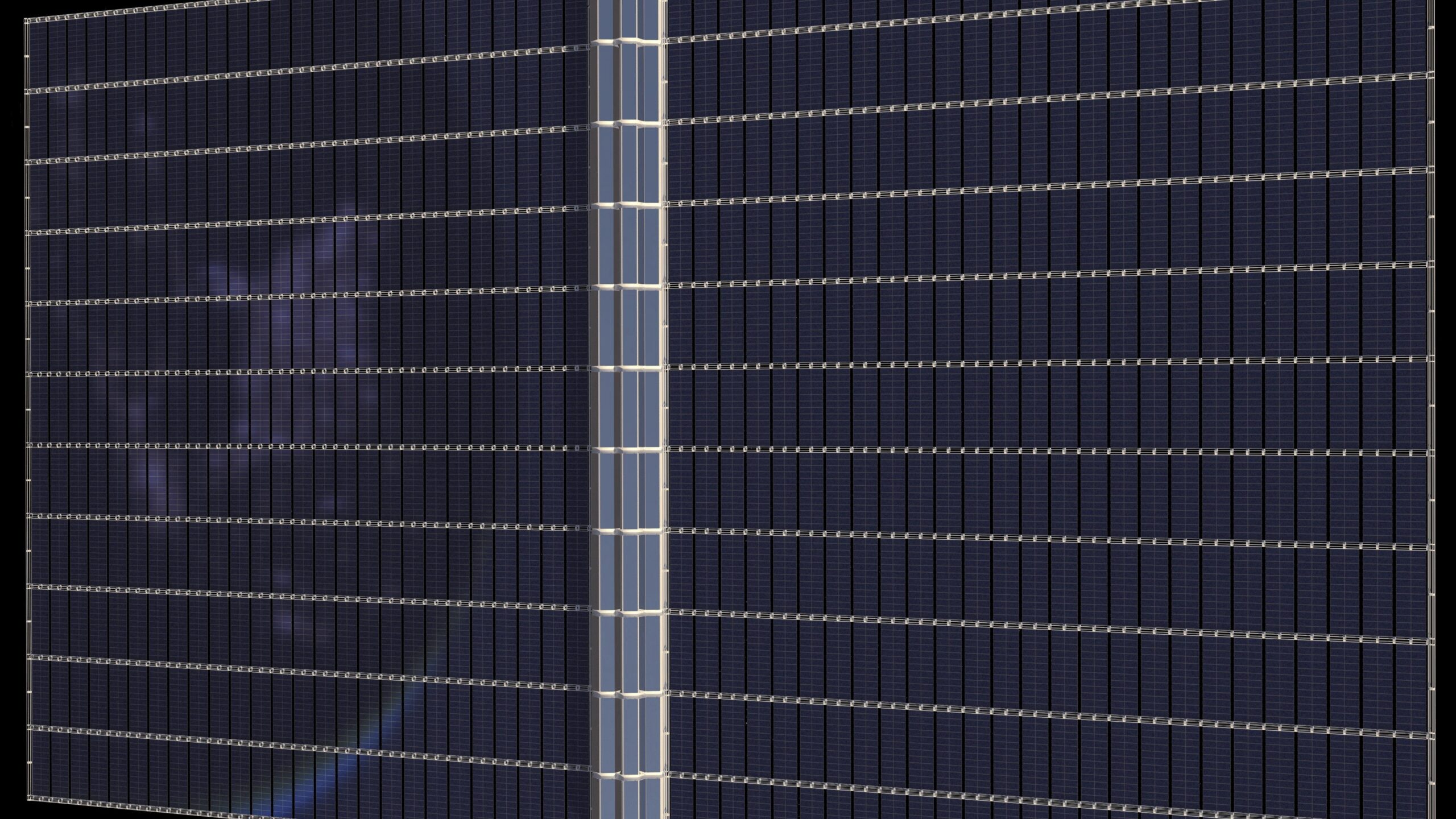
A space data centre
By Wikideas1 – Own work, CC0, https://commons.wikimedia.org/w/index.php?curid=164253135
Beijing is winning the competition to produce orbital data centers (ODCs), with a laggardly European Union likely to end up renting such facilities from China.
A new report, published on Wednesday, August 5th, claims that China has the right combination of national policy, municipal initiatives, and support from state-owned enterprises. Unlike the European Union, claims the European Space Policy Institute (ESPI):
While European actors continue to weigh the development of orbital data centers… Chinese institutions and companies are already moving towards implementation.
Three-Body Constellation, launched by ADA Space in 2025, marked the first operational example of space-based computing; and Beijing has not slowed down since.
The report’s key criticism of Europe is a comparative one, namely that it continues to focus on research and small-scale technology demonstrations. With the current emphasis, Brussels-based commitments to the necessary changes could be at least a decade away.
This sluggish activity compares unfavourably with just one Chinese start-up, ADAspace which—working with research institution Zhejiang Lab and outperforming its domestic competitors—deployed its first 12 satellites in May 2025. These devices are intended to form the first part of a proposed 2,800-strong network, all with ODC-hosting capacity.
While the report sets out a series of policy proposals, it concludes with a warning:
As China continues to expand its activities for ODCs at this pace, European actors should heed close attention or risk relinquishing space compute capabilities to the United States and China.
In contrast to the floundering EU, Beijing appears to be warmly embracing its innovative domestic IT and Artificial Intelligence sectors. Busy fine-tuning its regulatory mindsetThe Brussels-based leadership, compares poorly to Chinese premier Xi Jinping, who seems willing both to fund technological development and discuss the underlying big ideas.