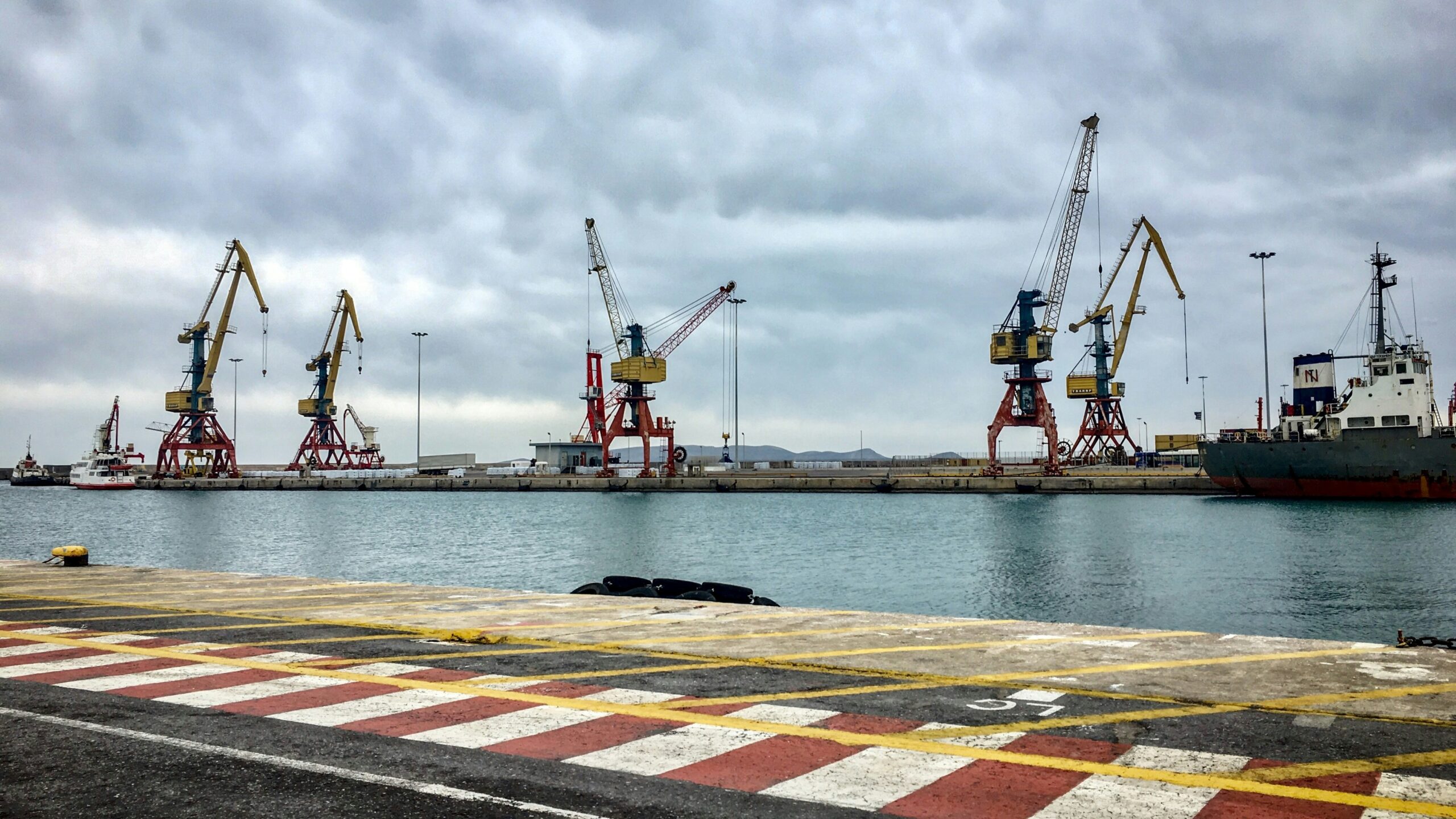
Image for illustration purposes only
Photo by Jiannis Tsiliakis on Unsplash
From Mexico to Chile, China now has a key stake in more than twice as many ports across the region than was previously acknowledged, according to a U.S. think tank. Research by the Center for Strategic and International Studies also pinpoints “the most risky port in the Western Hemisphere” as Kingston, Jamaica.
The study, shared prior to publication with the Financial Times, scored each port using a system of potential threat metrics, from the volume of strategic trade passing through them to their proximity to U.S. military and naval facilities. Chinese ownership—often barely noticed because of individual acquisitions, backed by each port company having a sound commercial motive—has soon added up to a powerful part of the supply chain where control could be used to create future disruption.
Professor Evan Ellis of the U.S. Army War College declared that the People’s Liberation Army (PLA) Navy “looks at this and sees a strategic advantage”:
There’s a broader strategy here. A strong and powerful Chinese state wants food and energy security. From a PLA perspective, if we do have to fight a war against the U.S., we want access to these ports.
This growth of commercial influence in Caribbean and Latin American waters coincides with China’s attempts to increase its naval hard power closer to home.