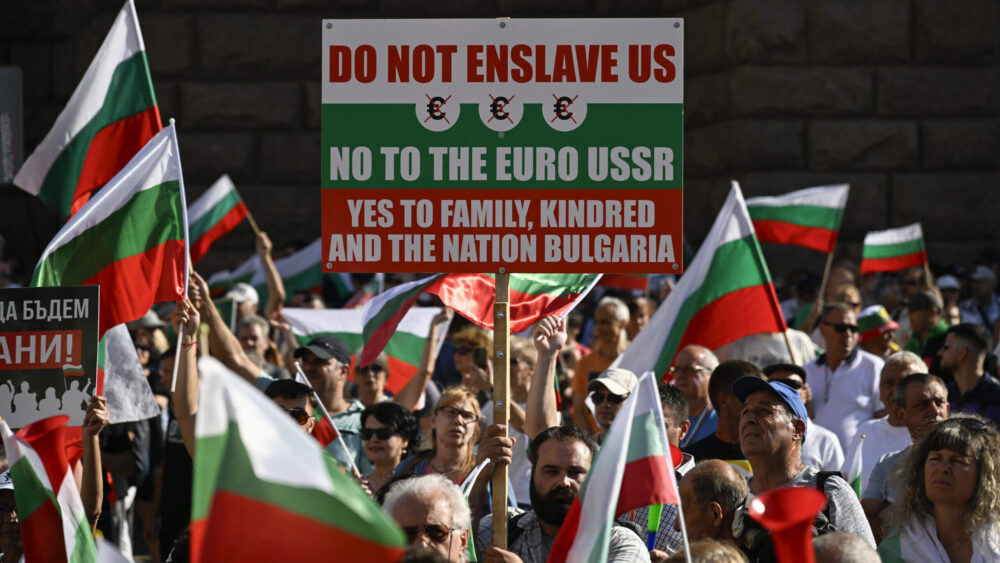
An anti-euro protest in Sofia
Nikolay DOYCHINOV / AFP
EU ministers gave the final green light on Tuesday, July 8th, for Bulgaria to adopt the euro on January 1, 2026, making it the single currency area’s 21st member.
Bulgaria’s switch from the lev to the euro comes nearly 19 years after the country of 6.4 million people joined the European Union.
“We did it!” Bulgarian prime minister Rossen Jeliazkov said.
“We thank all institutions, partners, and everyone whose efforts made this landmark moment possible. The government remains committed to a smooth and effective transition to the euro in the interest of all citizens,” Jeliazkov said on X.
“Joining the euro area is much more than just about replacing lev with euro. It is about building a brighter and more prosperous future for Bulgaria and its citizens at the heart of Europe,” EU economy chief Valdis Dombrovskis said after the approval.
“The euro will bring new opportunities, investments, jobs and growth,” he said.
The European Commission last month said the EU’s poorest country had fulfilled the strict conditions to adopt the euro, while the European Central Bank (ECB) also gave a positive opinion.
But recent polls show Bulgarian society remains divided on the euro, with experts attributing the scepticism largely to fears of rising prices and declining purchasing power.
Since June, protesters have gathered in Sofia to call for the country to keep the Bulgarian lev.