Not only are Europeans beginning to have enough of Ukrainian refugees: as we recently reported, Ukraine itself is increasingly less welcome in the European Union, let alone in NATO.
In Poland, one of Kyiv’s biggest supporters, the proportion of people who would like to see Ukrainians in the said organisations has dramatically decreased; in fact, for the first time since the outbreak of the war, supporters have probably fallen into a minority.
This is according to a new study cited by the independent online publication Notes from Poland, which revealed that only just over a third of Poles remain unconditional supporters of Kyiv in these aspirations.
Specifically:
- only 35 percent agreed that Poland should support Ukraine in its EU accession,
- and only 37 percent that Warsaw should help with their NATO entry.
The proportion opposing these was significantly higher: in both cases, 42 percent of respondents said they did not agree with their country supporting Ukraine on these issues.
Of course there were other questions that gave a somewhat more nuanced picture. For example, on whether “Poland should support Ukraine on international forums”, a narrow majority, 52 percent, agreed, while 29 percent did not.
What was also telling in the survey was that Poles appear to have realised the economic implications as well: only 35 percent said that Poland should “continue to provide economic support to Ukraine”, while 44 percent opposed it.
The independent portal noted that these figures represent a very serious change, since the same agency measured support for the above questions shortly after the outbreak of the war in 2022: three years ago, 85 percent still supported Ukraine’s EU accession and 75 percent its NATO accession, with opponents at a minimal level (8 and 14 percent).
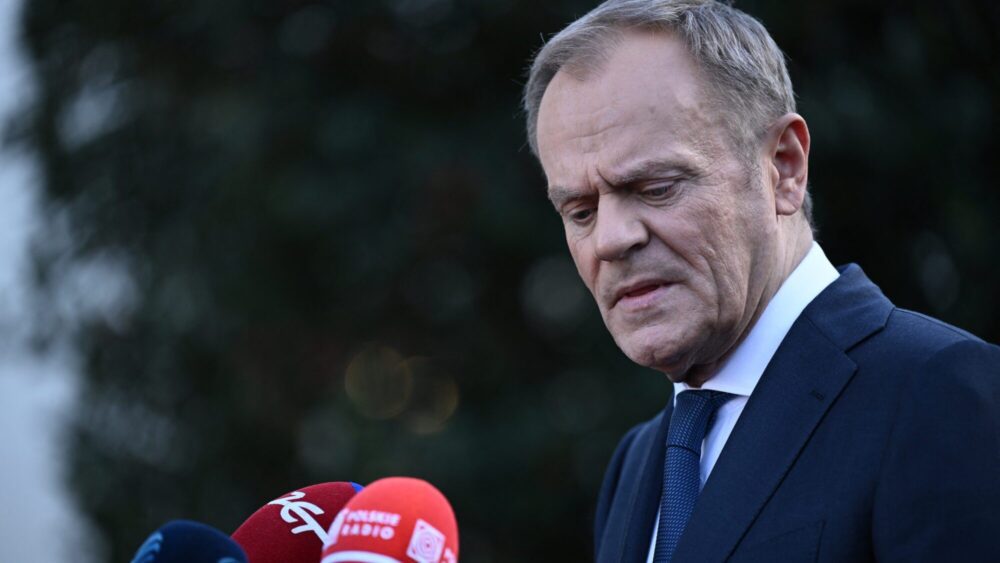
It also emerges, however, that while governmental support from the then right-wing government led by Mateusz Morawiecki was matched by public support, now when Donald Tusk called on the EU to urgently begin accession negotiations with Ukraine, the majority of Poles do not want it.
It is therefore no surprise that the winner of the presidential election was Karol Nawrocki, who opposed Ukraine’s membership.
The portal also provides other interesting data: Poland was Ukraine’s strongest supporter on the refugee issue as well; according to a July 2022 study, 77 percent of Poles, more than three-quarters, personally helped Ukrainian refugees, spending a total of €2 billion from their own pockets on them.
Compared to that, according to the survey a significant proportion of Poles have now had enough of it: 46 percent believe that military aid to Ukraine should be reduced or completely stopped, and even when added to the 35 percent who want to maintain the current level and the 5 percent who advocate increasing it, it is clear that the majority has shifted on this issue.
It also emerges from the answers that, although it is eroding, the only argument in favour of supporting Kyiv is that some Poles believe they are protecting their own backyard: nearly 45 percent of respondents think this improves Poland’s own security, while 37 percent say it does not.
And of course there is the question of a possible peace mission: rejection of Polish participation is overwhelming here (15 percent support it, 64 percent reject it).
And what is also extremely important: the scenario for ending the war. 62 percent of respondents believe that Ukraine should continue peace negotiations with Russia even without a ceasefire (only 15 percent oppose this), and a slight majority (35 percent) now believe that Kyiv should accept the loss of certain territories in order to end the war, compared to those who say it should not (34 percent).
At the same time, fewer people fear a possible Russian invasion of Poland than those who believe it will definitely happen, and they have less confidence that Donald Trump will protect them than they did in a survey conducted during the Biden era; nevertheless, support for increasing defence spending remains high.