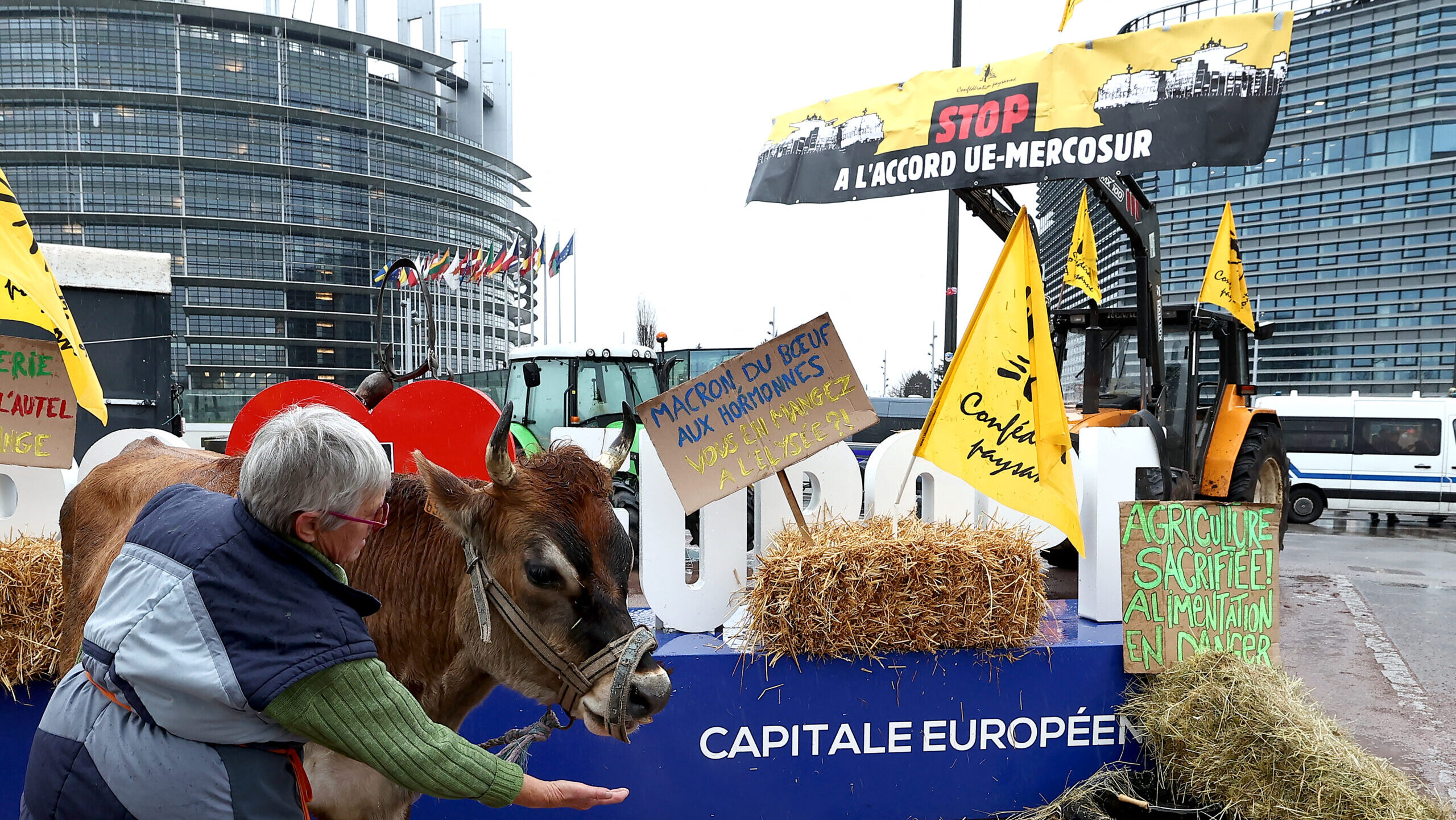
French farmers protest against the Mercosur deal
FREDERICK FLORIN / AFP
The French National Assembly has voted unanimously to oppose the controversial Mercosur Deal between the European Union and the South American trading bloc. The resolution, proposed by the far-left La France Insoumise, passed with 245 votes to 0, sending a clear message to President Emmanuel Macron. While not legally binding, the move signals strong parliamentary concern over the agreement, which could be officially signed on December 19th.
During debates, Matthias Tavel, rapporteur for the text, criticized President Macron for reversing his previous stance, saying, “Less than a year ago, Emmanuel Macron called this agreement unacceptable, a bad text. And now, here he is declaring that it’s all a step in the right direction. Yet, not a single line of the agreement has been changed.”
Socialist MP Mélanie Thomin warned that signing the deal would reintroduce banned products into European food, including growth hormones, antibiotics, and pesticides.
Rassemblement National MP Julien Limongi described Mercosur as a “stab in the back” for French agriculture, while Union of the Right for the Republic (UDR) MP Vincent Trébuchet called it a national betrayal, claiming France had become “a bargaining chip in the global marketplace.”
Earlier in November, more than 100 Members of the European Parliament also pushed to delay the Mercosur agreement. They plan to ask the Court of Justice of the European Union to review whether the deal complies with EU treaties. Their concerns include the new “rebalancing mechanism,” the division of trade and partnership sections, and whether the agreement respects EU rules on environmental and health protections. Signatories come from multiple political groups and countries critical of the deal, including France, Belgium, Poland, and Ireland.