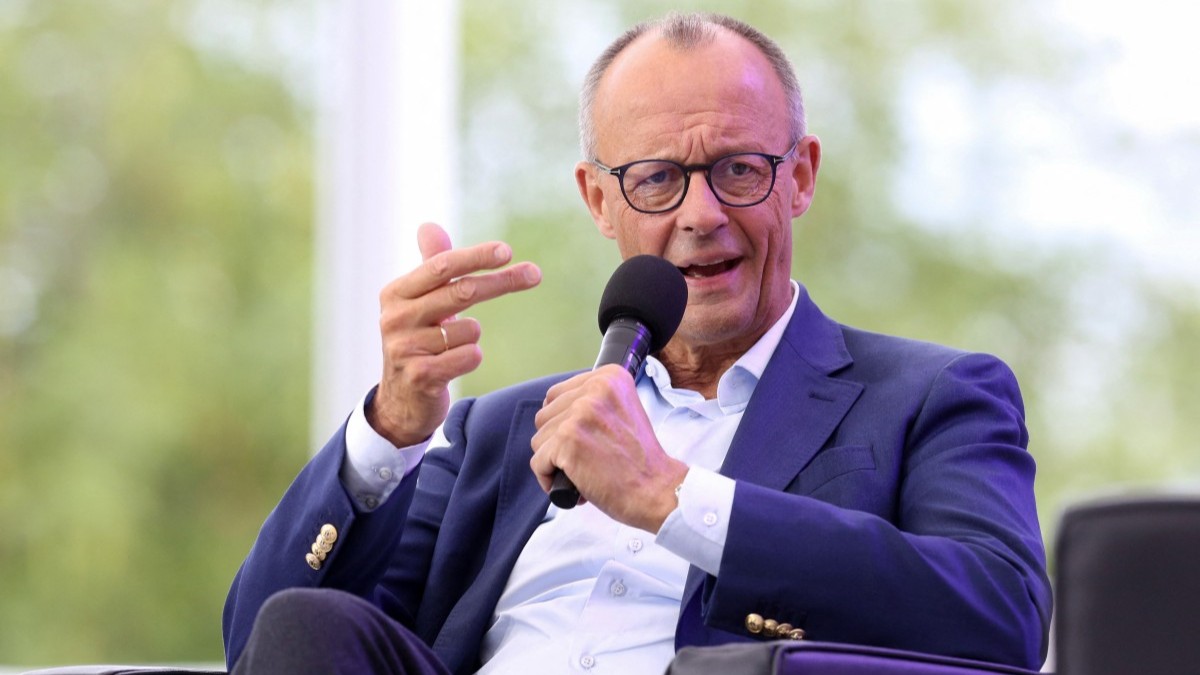
German Chancellor Friedrich Merz speaks on stage during a discussion as part of the annual Open Day event at the Chancellery in Berlin, on August 24, 2025.
Adam Berry / AFP
Despite big promises from the ruling government, Germany’s economy faces mounting pressure as bankruptcies and unemployment reach their highest levels in a decade.
According to the Federal Statistical Office, district courts recorded 4,007 bankruptcies in July, a 19.2% increase from the same month last year—the highest July figure in ten years.
Unemployment continues to climb, with the Initiative Neue Soziale Marktwirtschaft reporting 125,000 layoffs since July 1st.
The total number of unemployed now stands at 2.98 million, up 170,000 compared to last year.
The Federal Employment Agency predicts the three-million mark will be surpassed in August, marking the most unemployed Germans in a decade.
Economic output is also declining. Industrial production fell 1.9% in June, hitting its lowest level since the coronavirus pandemic.
Chancellor Friedrich Merz promised a summer turnaround after taking office, deploying nearly €1 trillion in financial support and pledging reduced bureaucracy and tax relief.
However, CEOs express growing concern over the lack of meaningful reforms.
Belén Garijo, CEO of Merck, warned that Europe risks losing industrial leadership without proactive measures.
Wolfgang Große Entrup of the German Chemical Industry Association (VCI) urged swift action: “Use the second 100 days for real reforms.Cut the paperwork madness by 25 percent. Now. The country continues to falter. The world isn’t waiting for us.”
In many sectors—including among CDU supporters—Merz is becoming a major disappointment.
Public concern is rising, with a Forsa survey showing 62% of Germans fear further economic decline.
Meanwhile, the Alternative for Germany (AfD) gains support, presenting itself as a potential solution to the country’s deepening economic crisis.