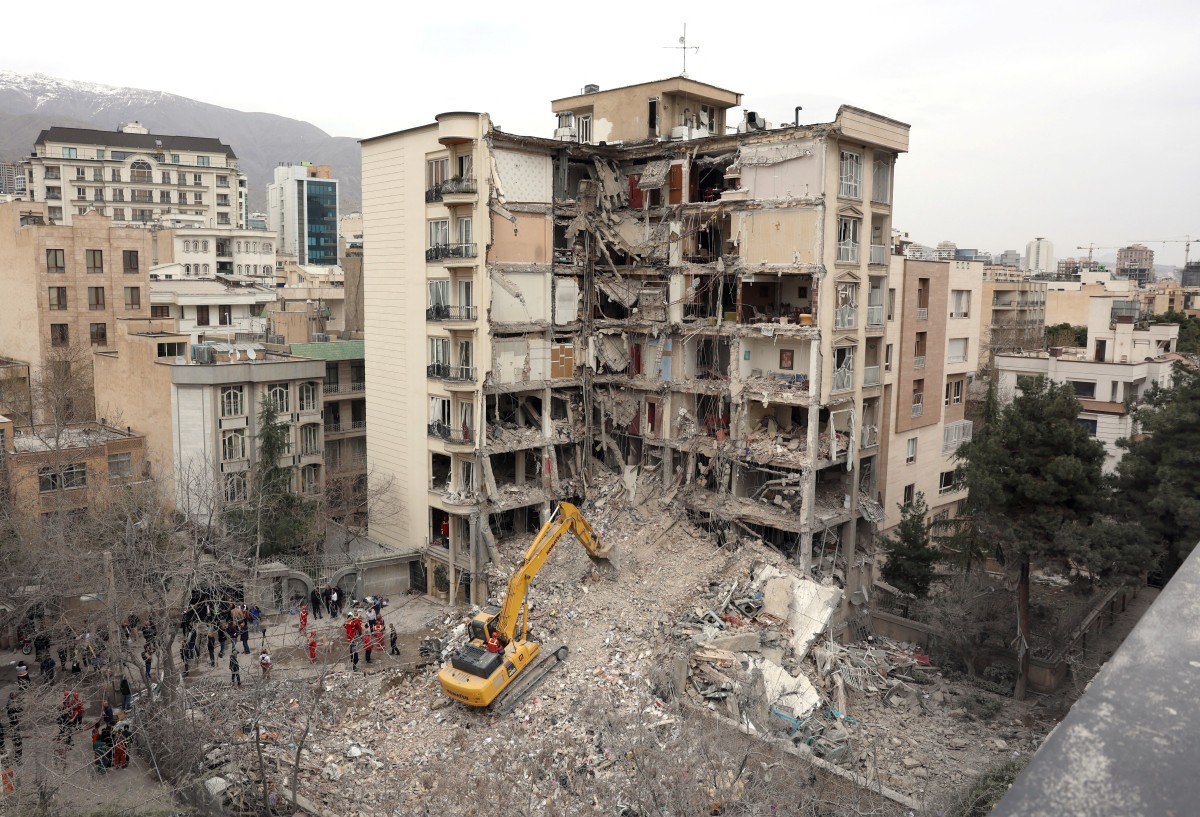
An excavator clears rubble from destroyed residential buildings in northern Tehran on March 23, 2026.
AFP (under reporting restrictions)
U.S. president Donald Trump said he had postponed a planned strike on Iran’s power grid by five days, citing what he described as “very good and productive” discussions on a possible resolution to the conflict. The move followed his earlier ultimatum demanding that Tehran reopen the Strait of Hormuz or face attacks on key energy infrastructure.
Iran, however, denied that any direct negotiations had taken place. According to Mohammad Baqer Qalibaf, Speaker of the Iranian Parliament said:
No negotiations have been held with the U.S., and fakenews is used to manipulate the financial and oil markets.
Meanwhile, a senior Iranian Foreign Ministry official indicated that “we received points from the U.S. through mediators and they are being reviewed,” suggesting indirect communication may be ongoing.
Iran responded to earlier U.S. threats with attacks targeting Israel and various Gulf states, and warned it could expand strikes against energy infrastructure or deploy sea mines across the “entire Persian Gulf.”
Israeli prime minister Benjamin Netanyahu said he had spoken with Trump and signaled both continued military action and openness to a potential deal. “There is a chance” to leverage recent battlefield gains into an agreement that achieves the war’s objectives, he claimed. At the same time, Netanyahu stressed:
We continue to strike, both in Iran and in Lebanon. There’s more to come. We will protect our vital interests in any situation.