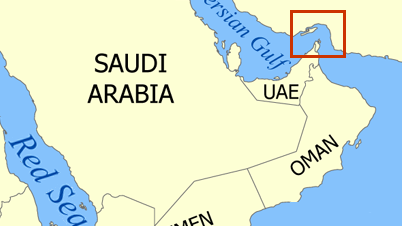
By w:en:Kleptosquirrel (talk | contribs) – Cropped and labeled version of File:Arabian_Sea_map.png – Own work, CC BY-SA 3.0, https://commons.wikimedia.org/w/index.php?curid=17987147
The United States has put forward a 15-point plan aimed at ending the ongoing conflict with Iran, as fighting continues. According to U.S. media reports, the proposal was conveyed to Tehran via Pakistan and includes demands to dismantle key elements of Iran’s nuclear program, halt uranium enrichment and ballistic missile production, and reopen the Strait of Hormuz. In exchange, sanctions relief has been discussed.
Reports by Axios suggest that U.S. officials and regional mediators are exploring the possibility of high-level peace talks as early as Thursday.
Iranian officials have publicly rejected the idea of talks. A military spokesperson mocked U.S. efforts, saying Washington was negotiating with itself and insisting that no agreement would be reached. Tehran has previously pointed to a lack of trust in U.S. diplomacy.
“As we have always said…no one like us will make a deal with you. Not now. Not ever.” Ebrahim Zolfaqari, said on Iranian state TV.
At the same time, the Pentagon is preparing to deploy around 3,000 additional troops from the 82nd Airborne Division to the Middle East, adding to the roughly 50,000 U.S. personnel already in the region.
Meanwhile, Iranian officials informed the International Maritime Organization (IMO) in a letter on Tuesday that vessels considered “non-hostile” would be allowed to transit the Strait of Hormuz. Crude oil prices began to plummet after the news broke.
The conflict, which began after U.S. and Israeli strikes on Iranian nuclear and military targets in late February, has disrupted global energy markets. Iran has launched drone and missile attacks on Israel, U.S. bases, and regional targets, while also restricting access through the Strait of Hormuz, a key route for about one-fifth of global oil shipments.