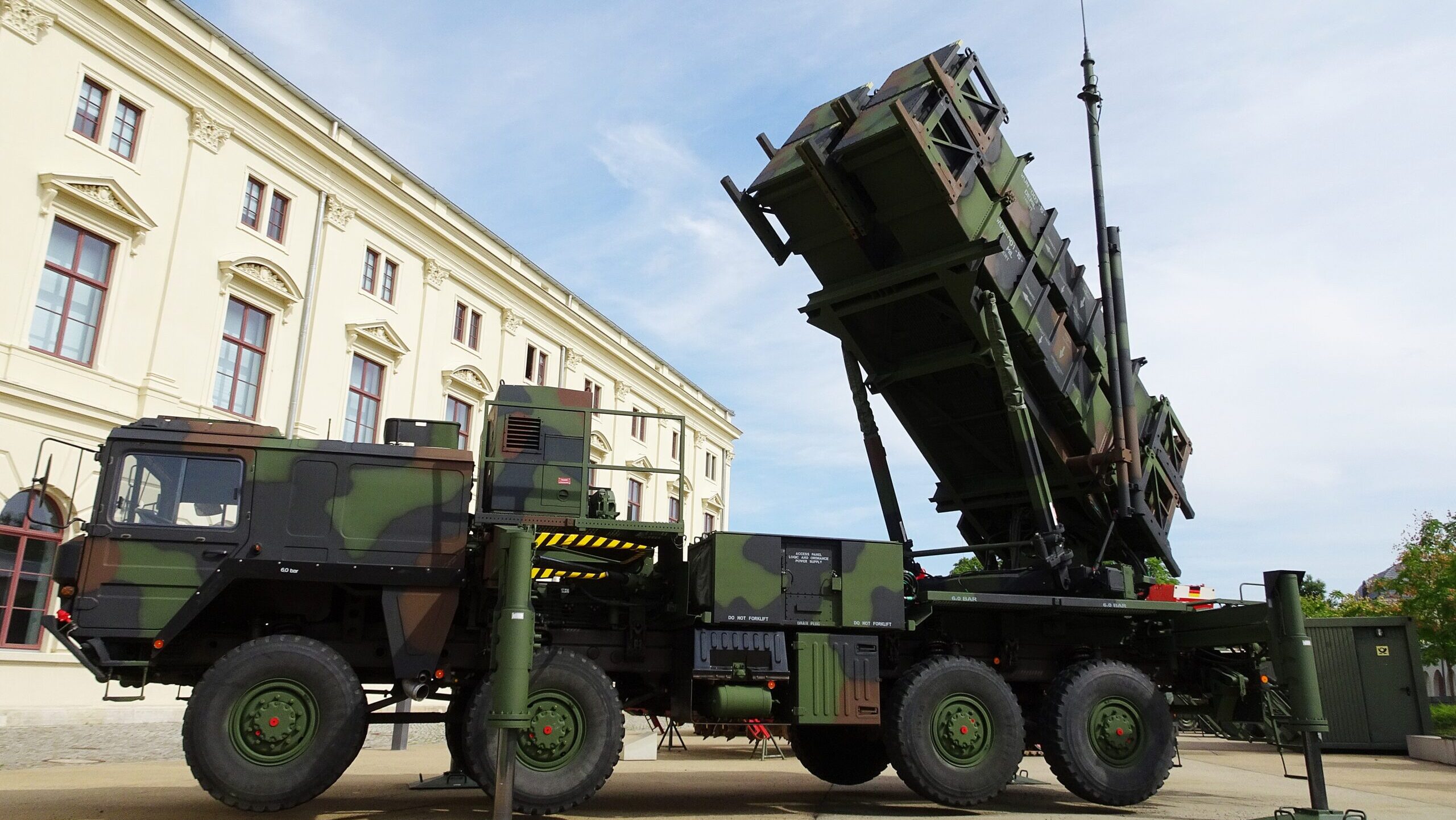
Set to be replaced by Ukraine? Part of a Patriot missile system.
Neuwieser from Germany, CC BY-SA 2.0, via Wikimedia Commons
A Kyiv arms manufacturer has announced its shift to assembling a missile defence system built around European parts.
The approach could draw up to 20 firms—including Eurosam, Leonardo, SAAB, and Thales—into partnerships with Kyiv’s Fire Point. If successful, it would boost Ukrainian missile defence at a fraction of current costs, especially compared to the pricey industry leader, the Patriot system.
Aside from drone production, Fire Point has plied part of its trade by repurposing Soviet-era designs. CEO Iryna Terekh described how her company’s main missile, the FP7, was based on the old S300 and S400 interceptors, but through open-source architecture, a new Fire Point weapon retained just 20% in common with its Red Army predecessors.
Combining supply-chain flexibility with European partnerships, the company hopes to bring the cost of one of its missiles down below €1 million (a fraction of the cost of a Patriot). According to Terekh:
We’re trying to squeeze a program that usually takes 20 or 30 years into a matter of a couple of years.
Starting with 10 prototypes, Fire Point is also attempting to build its own engine for its FP5 cruise missile, known as the Flamingo. Previous iterations, which have been used in the war with Russia, used second-hand jet engines, acquired by what Terekh recalled as “digging through the cemetery of the engines … like in a thrift store.”
Away from drones, the key to Fire Point’s success as an arms producer is successful missile interception by the end of the year, which will serve as proof-of-concept and is more likely with the involvement of Western and Central European partners.
In part, the new business opportunities are a response to the ‘will-he, won’t he’ approach of the Merz and Trump administrations to equipping Ukraine with missile defence systems. Separately, Trump made the unwieldy promise to allow Ukraine a temporary licence to produce Patriots of its own.
The updated FP7, the Flamingo missile engine, and the multiple prospective joint ventures are being presented as capable of changing the course of the war, rather than merely prolonging it. What they do represent is the growing shift to Ukraine becoming a low-cost arms production hub.