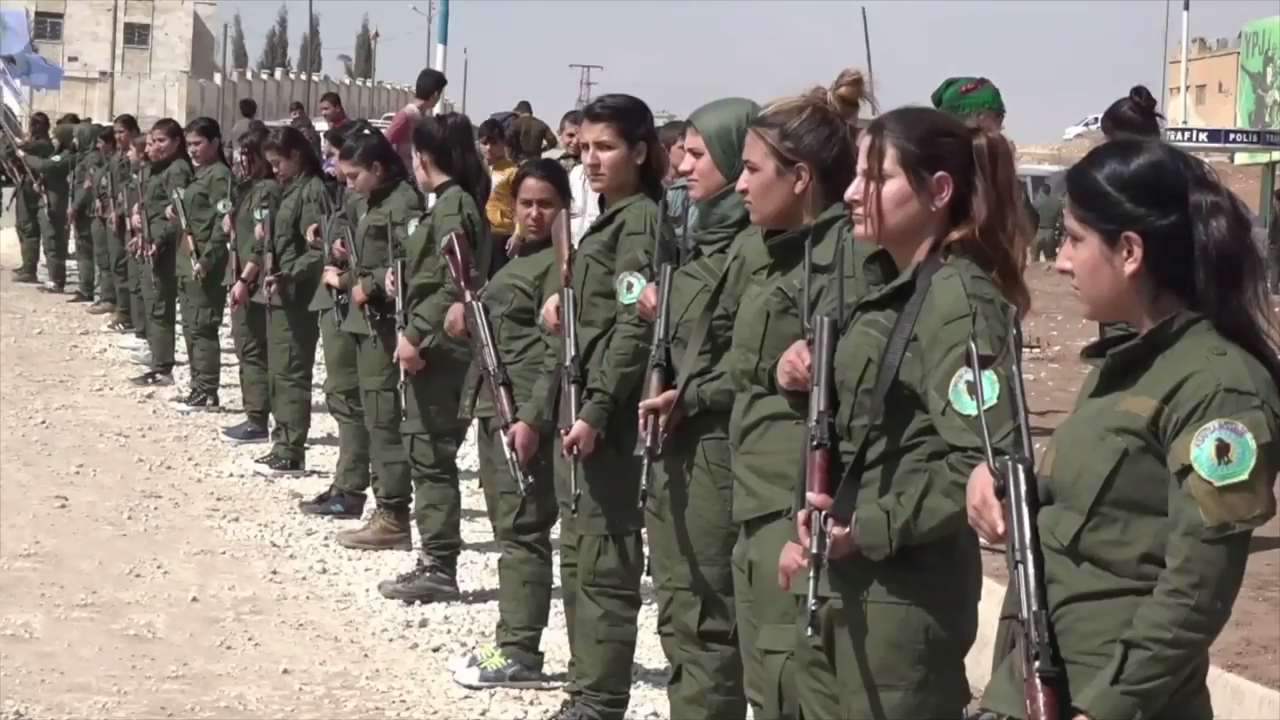
Members of the Rojava police force (Asayish) in the city of Kobanî in northern Syria.
Voting took place on Sunday, May 24th in Kurdish-majority areas of northeastern Syria to elect representatives to the country’s new transitional parliament. The ballot marks another step in efforts to reintegrate the semi-autonomous Kurdish-controlled region into the Syrian state after years of civil war and fragmentation.
The recent referendum was preceded by a deal reached earlier this year by the Kurdish authorities and Damascus on integrating the areas into the central authorities.
The vote covered parts of Hasakeh province and the Kurdish-majority city of Kobani, also known as Ain al-Arab. Under the transitional framework, Syria’s interim president Ahmed al-Sharaa will appoint 70 members to the 210-seat parliament, while the remaining representatives are being selected through local committee voting processes organised by the state-appointed electoral commission.
Several Kurdish political parties criticised the process, arguing that it lacks democratic legitimacy and does not properly represent Syria’s Kurdish population. Kurdish groups also objected to the fact that only four parliamentary seats were allocated specifically to Kurdish representatives, despite their community numbering around two million people, mostly concentrated in the northeast.
The parliamentary process follows a January agreement under which Kurdish civilian and military institutions would gradually integrate into the Syrian state structure. However, tensions remain high in several regions, including the Druze-majority province of Sweida, where local leaders continue to demand greater autonomy and accuse Damascus of centralising power. Analysts say the transition process will be a major test for Syria’s fragile post-war political order and its ability to reconcile competing ethnic and regional interests.