

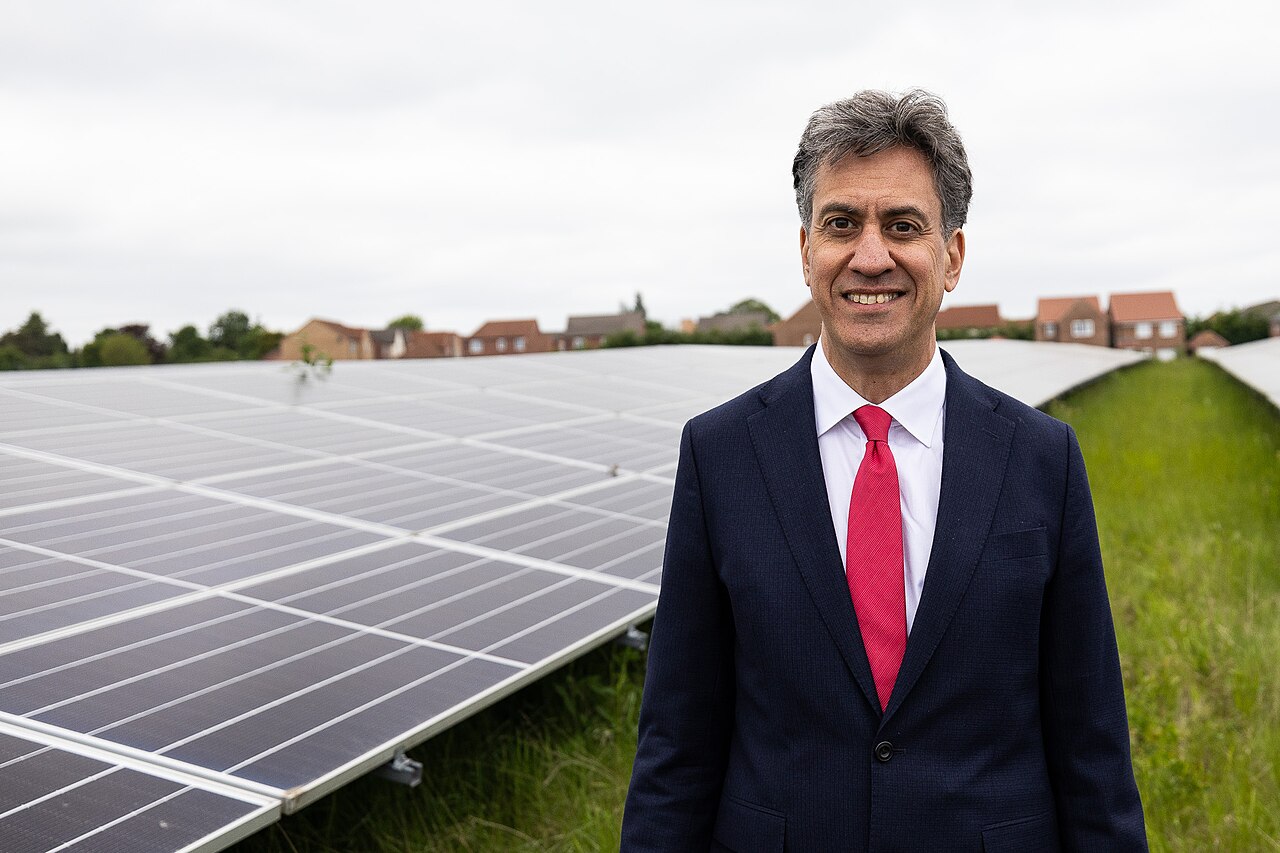
United Kingdom Secretary of State for Energy Security and Net Zero Ed Miliband.
A new report by the Institute of Economic Affairs (IEA) suggests that the true cost of achieving Net Zero in the United Kingdom could far exceed official projections, potentially reaching £9 trillion (€10.4 trillion) by 2050. This figure is significantly higher than recent estimates from the National Energy System Operator (NESO), which put the cost at £7.6 trillion (€8.8 trillion).
The IEA argues that NESO calculations omit the cost of carbon emissions and rely on overly optimistic borrowing rates for wind and solar energy—5% and 5.2% respectively—compared with the current 30-year gilt yield of 5.3%. In contrast, the Climate Change Committee continues to insist that Net Zero policies will cost only £108 billion (€125 billion), a figure that the IEA describes as detached from economic realities.
Lord David Frost, the IEA’s new Director General, criticized past public communication of Net Zero, stating
We can now see it was sold to the public on the basis of fantasy numbers…The whole of Net Zero badly needs a proper rethink before it kills off more of British industry and leaves British households permanently subject to unreliable supply and higher bills.
A previous report by the Global Warming Policy Foundation highlights the impact of Net Zero policies on electricity costs, noting that prices in the UK have tripled over the last 30 years, largely due to policy-driven investments in renewable energy. Even with potential technological breakthroughs, the projected cost of Net Zero is unlikely to drop below £6 trillion (€6.9 trillion). In comparison, electricity prices in the U.S. have remained largely flat over the same period.




.jpg)