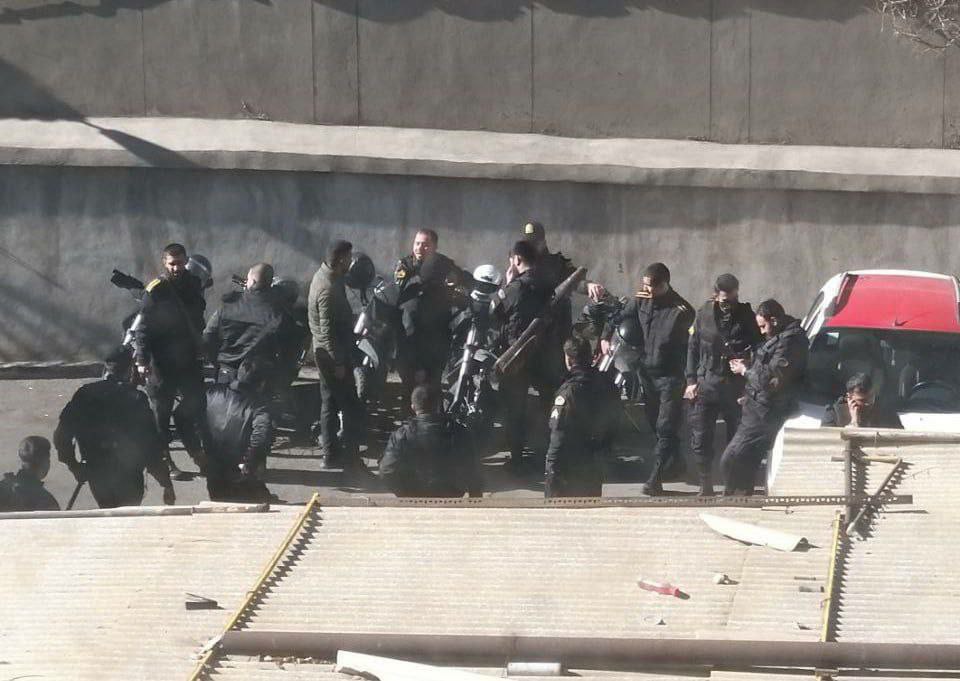
Special police units assemble, December 2025.
The nationwide wave of protests began on Sunday in Tehran, when traders went on strike over high prices and economic stagnation, and quickly spread to several provinces.
According to the Fars news agency, five civilians died in Lordegan and Azna after protesters attacked government buildings and a police station—prompting law enforcement officers to respond with tear gas. Reports also cited several arrests and extensive property damage, while authorities consistently referred to the demonstrators as “rioters.”
In the western Iranian city of Kouhdasht, a 21-year-old member of the Basij, a paramilitary force affiliated with the Islamic Revolutionary Guard Corps, was killed during overnight clashes, and 13 police officers and Basij members were injured.
The government sought to calm tensions while also promising tough action. President Masoud Pezeshkian acknowledged the protesters’ “legitimate demands” and urged action to address livelihood concerns, while authorities warned that violence would be met with a “decisive response.”
The protests have been driven by the sharp currency depreciation of the rial and inflation above 50%, which has eroded Iranians’ purchasing power for years. The unrest was further fuelled by a viral video circulating earlier this week showing a man sitting in the middle of a Tehran street facing motorcycle police—a scene some likened to a “Tiananmen moment”, referring to the 1989 anti-government protests in Beijing.